
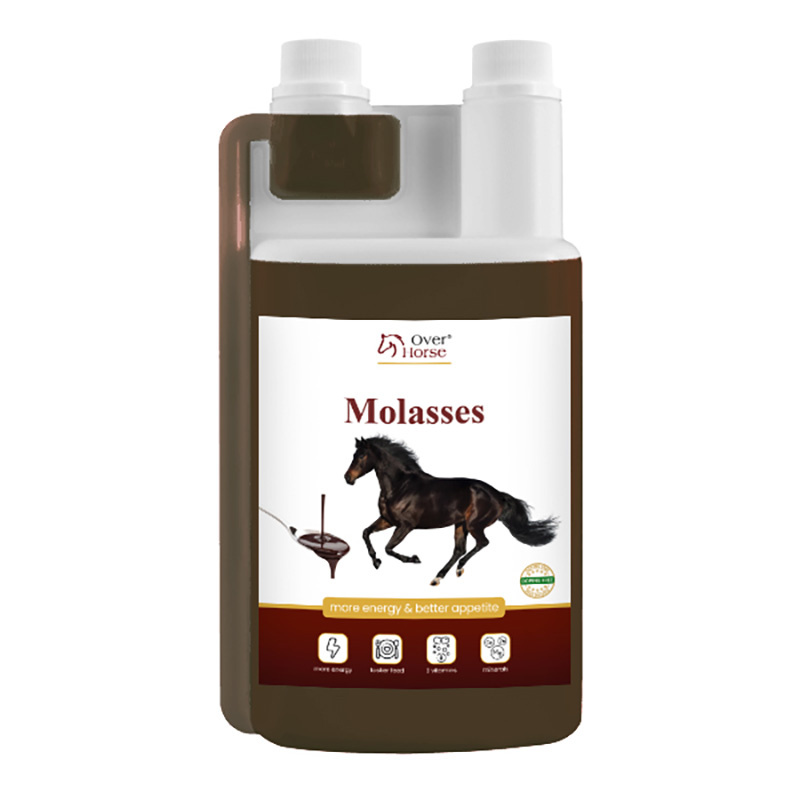
Over Horse Molasses Dietary Supplement for Horses, 1 L
Over Horse molasses is a highly digestible source of energy.It improves the palatability of the feed, making it an ideal supplement for horses that are picky eaters (e.g., during competitions).Molasses provides B vitamins and valuable minerals, m.in.potassium, calcium, phosphorus, magnesium, copper, iron, manganese, and zinc.It also contains chromium—an element with proven blood-sugar-stabilizing effects.
Molasses:
- effectively improves the taste of feed
- makes it easier to mix less palatable additives, such as supplements or medications, into food
- helps encourage horses that are reluctant to eat—such as during competitions or other stressful events—to eat
- provides readily available carbohydrates that can be quickly used as a source of energy
- contains trace elements such as potassium, calcium, phosphorus, magnesium, iron, copper, manganese, and zinc, as well as B vitamins
- The chromium found in molasses helps stabilize blood sugar levels
Horses whose diets should be supplemented with molasses:
- picky eaters
- reluctant to accept new feed supplements
- failure to consume concentrated feed during stressful situations (change of stable, competitions, etc.).)
- those in need of a source of easily digestible energy
Form: liquid
Ingredients: beet molasses (from sugar beets)4.1.4
Analytical components and levels: total sugar (expressed as sucrose), min.47.0%; dry matter content 75.0%.
Horse feed.
Store tightly closed in the original packaging, in a dry and cool place, out of the reach of children.Protect from sunlight.Do not freeze.
Usage/24 hours:
A horse weighing approximately 500 kg: 20 ml to 60 ml;
Doses: 10 ml to 30 ml.
You can divide the serving into several substantial meals throughout the day or mix it with plain (preferably lukewarm) water.Proportions as needed.
Directions: Mix with concentrated feed or administer directly into the horse's mouth using a syringe
Note!Do not use in horses with ulcers, those suffering from metabolic disorders, those that have had laminitis, or those at risk of developing the condition.