
Ticks on cats—how to protect against them, what diseases can they transmit, and how to remove them?


A seemingly harmless stroll through the garden, relaxing among the bushes, or a short walk around the property can pose a danger that goes unnoticed for a long time.An inconspicuous tick on a cat, though small, can cause serious harm—not only by irritating the skin and causing local inflammation, but also by transmitting dangerous diseases that may not show any obvious symptoms for many days.An additional risk is the improper removal of the parasite, which can lead to the formation of an abscess, infection, and, in extreme cases, the need for surgical intervention.
Have you ever wondered if a tick on a cat will fall off on its own if you don't notice it??Or maybe you've noticed a strange bump on your cat's fur that looks like a white tick, and you're not sure if it's a nymph or an adult?In this article, we’ll address your concerns and show you what to do if a parasite has already attached itself, how to remove it properly, whether ticks are dangerous to cats, and how to protect your pet from future encounters with these unwelcome guests.
Table of Contents:
- Are ticks dangerous to cats??Key facts
- Where and when do ticks most often bite cats??
- What diseases can ticks transmit to cats??
- How to properly remove a tick from a cat?Step-by-step instructions
- How to protect your cat from ticks?Effective prevention
- When to see a veterinarian?Symptoms that require medical attention
Are ticks dangerous to cats??Key facts
Yes, ticks pose a health risk to cats, though to a lesser extent than to dogs.This is due to.in.due to differences in the immune system and the fact that cats more frequently remove parasites on their own while grooming.Nevertheless, the presence of a tick on a cat can lead to local inflammation and, in some cases, to serious bacterial and parasitic infections. A tick that has broken off can be particularly dangerous, as it remains partially embedded in the skin and causes an inflammatory reaction that can lead to an abscess or a lump.
Where and when do ticks most often bite cats??
The tick problem used to be considered a seasonal phenomenon… However, in recent years, due to climate change, the risk season has lengthened significantly—these parasites remain active from February through December.
Cats that spend time outdoors—especially in gardens, on properties, or during walks in green spaces—are regularly exposed to ticks.The greatest risk is found in tall grass, under shrubbery, near fences, and on the edges of forests and parks.It is there that the parasites lie in wait for a host, climbing up blades of grass and plants.
Parasites are most commonly found in warm, hard-to-reach areas of a cat's body, such as:
- the area around the head, neck, and nape of the neck,
- the armpits and inner thighs,
- the spaces between the fingers,
- the lower abdomen and the base of the tail.
Regularly checking these areas after your pet returns home can effectively prevent the parasite from feeding for an extended period.To ensure protection, you should also use tick prevention products for cats , which reduce the risk of the parasite biting into the skin and enhance safety on a daily basis.
At the same time, it is important to remember that there are no products that provide 100% protection against both ticks and other parasites found in the environment.In addition, this is particularly difficult with scorpions, because their mechanism for locating prey relies on thermal signals rather than scent—which is why all scent-based repellents, based on m.in.herbal extracts just don't work.
In addition, cats that are let out unsupervised and roam freely are much more vulnerable to tick infestations (and parasites are just one of the many dangers they face).It is therefore worth noting that safe walks with a cat involve either using a harness and leash or keeping the pet in a properly secured yard or aviary.
What diseases can ticks transmit to cats??
Although cats are less likely than dogs to contract tick-borne diseases, this does not mean that contact with the parasite is completely safe for them. Prolonged or very intense grooming of an animal's skin increases the risk of transmitting dangerous microorganisms, which can lead to serious health problems and even endanger your pet's life.
The most commonly diagnosed diseases include:
- hemobartonellosis – an infection caused by bacteria that attack red blood cells (erythrocytes); it results in weakness, lethargy, fever, and symptoms of anemia, which can be mistaken for other conditions.Hemobartonellosis is a fatal disease for which there is no effective treatment;
- Bartonellosis – a disease also known as “cat scratch disease,” whose symptoms include fever, vomiting, swollen lymph nodes, and a decline in overall health,
- anaplasmosis – an infection that leads to immunosuppression, blood clotting disorders, and, in some cases, neurological symptoms such as seizures or lack of coordination.
It is extremely important to remove a tick from a cat as soon as it is spotted.The longer the parasite remains attached to the skin, the greater the risk of pathogens being transmitted to the animal's body.
Redness sometimes appears at the injection site, which is often downplayed.Over time, however, it can develop into extensive and painful skin lesions, such as swelling or an abscess—in such cases, a tick bite wound is often observed in cats, which requires cleaning and sometimes antibiotic treatment.
On the other hand, if your pet becomes lethargic, loses its appetite, or starts avoiding human contact, you should consider whether it has already developed complications from a tick bite.Even a single bite can trigger a systemic reaction, so any concerning changes should be discussed with a veterinarian.
How to properly remove a tick from a cat?Step-by-step instructions
Safely removing a tick from a cat requires proper preparation and a gentle touch.Improper use may result in a piece of the parasite breaking off or the wound becoming infected.
Here's how to do it:
- Have plastic tick removers, tweezers, or a special claw-shaped tool ready;
- Protect yourself by wearing protective gloves;
- Grab the tick as close to the cat's skin as possible, taking care not to squeeze the abdomen;
- Pull the tick straight out with a quick motion, without twisting it—this is the most effective way to remove it.Next, make sure that the parasite's head and mouthparts haven't been left behind at the bite site.If that happens, remove it using a medical needle;
- Disinfect the injection site and check over the next few days to see if a lump or redness develops there;
- Store the parasite in a jar or a resealable bag—it may come in handy if testing is required.
If you encounter any problems—for example, if a piece of the parasite remains at the bite site or if a tick wound develops on your cat—you should take your pet to the veterinarian.
How to protect your cat from ticks?Effective prevention
The best way to protect against ticks is consistent prevention, which can significantly reduce the risk of contact with the parasite before it has a chance to attach itself. Effective measures include both topical treatments and daily habits that can help keep your pet healthy.It is especially important to protect your cat regularly during periods of increased tick activity, from early spring through late fall.
As part of preventive care, it is a good idea to include:
- spot-on treatments – applied to the back of the neck, they form a protective barrier on the skin,
- collars with repellents – provide long-lasting repellent effects,
- anti-parasite sprays – a quick solution before going outside,
- Check your dog’s coat daily—especially after walks in meadows, gardens, and wooded areas.
Some pet owners opt for home remedies for ticks on cats, such as using essential oils—for example, lavender, geranium, or tea tree oil.Unfortunately, their effectiveness is minimal, and it’s also important to remember that not all natural remedies are safe for animals—some substances can cause irritation (especially if licked off the fur) or allergic reactions.For this reason, it is recommended that you exercise caution and consult your veterinarian each time.
Failing to take preventive measures can have serious consequences.Complications from tick bites in cats, such as inflammation, skin infections, or tick-borne diseases, often require long-term treatment and cause significant stress for both the cat and its owner; if left untreated, they can be life-threatening to the pet. That is why regularly taking care of your pet is not only a sign of concern, but above all an effective way to avoid health problems.
When to see a veterinarian?Symptoms that require medical attention
Even after the parasite has been successfully removed, symptoms may still occur that should prompt the pet owner to visit the vet’s office promptly.Some of the concerning signs include:
- apathy and loss of appetite,
- fever,
- convulsions or unsteady gait,
- difficulty breathing,
- complications from a tick bite visible on the skin, such as an abscess or prolonged redness.
A persistent lump at the site of a tick bite on a cat or a sudden change in your pet’s behavior may also be cause for concern.In such cases, there is no time to waste—prompt action can save a cat’s health and, in some cases, its life.
A cat's physical reactions after a tick bite – a comparison
| Symptom | Normal reaction | A concerning reaction |
|---|---|---|
| The bite site | Mild redness, slight temporary swelling (up to 48 hours) | Severe inflammation, pus, ulceration |
| Cat Behavior | Brief scratching or licking of the area | Lethargy, loss of appetite, aggression, or withdrawal |
| Body temperature | As usual (approx..(38–39°C) | A fever of over 39°C |
| Physical activity | No change | Weakness, reluctance to move |
| Other symptoms | No | Vomiting, seizures, difficulty moving |
Make sure your cat is fully protected; don’t let your pet go outside unsupervised, check your cat’s fur regularly after walks, and don’t ignore even the slightest signs of distress.Your vigilance and care are the best defense against these dangerous parasites.
Recommended

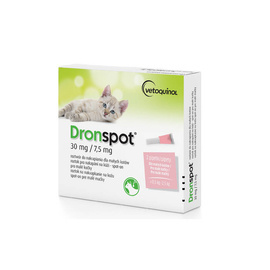
Vetoquinol Dronspot Drops for Worms and Parasites for Small Cats (0.5 kg – 2.5 kg), 2-pack