
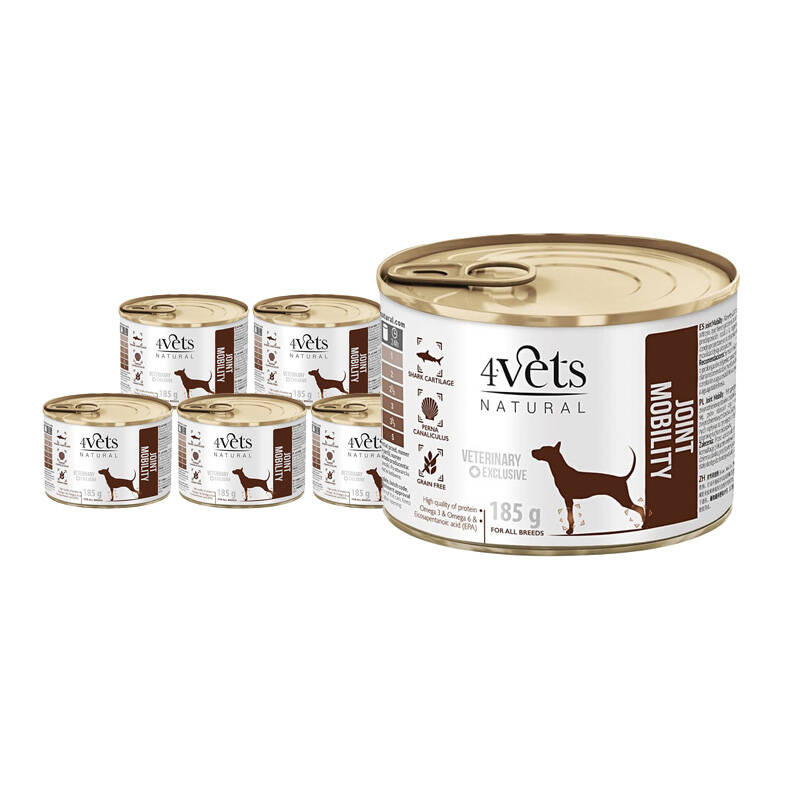
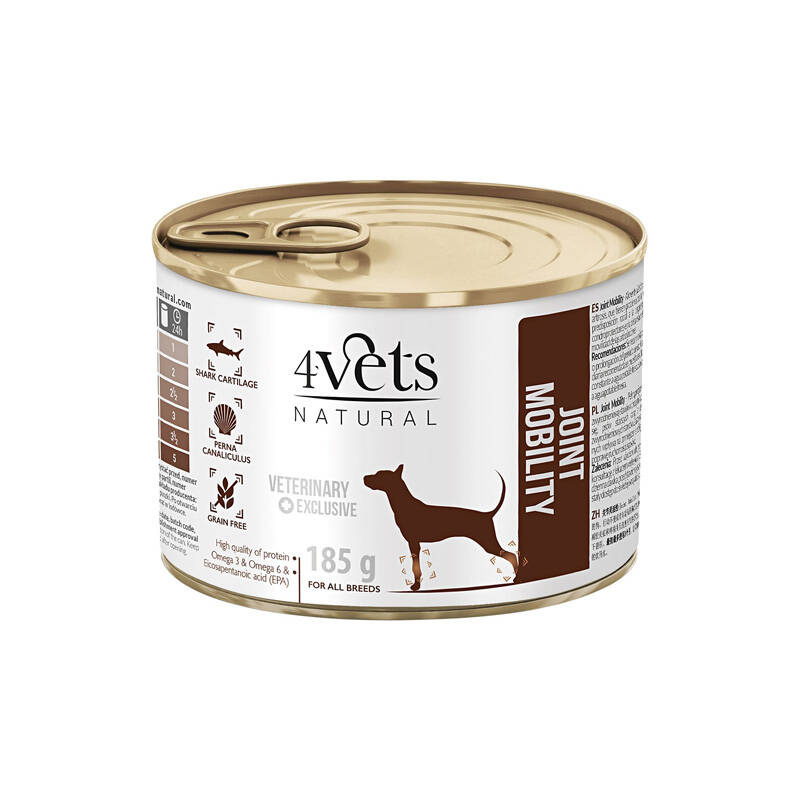
4Vets Natural Joint Mobility Wet Veterinary Dog Food for Dogs with Joint Problems, 6 x 185 g
- Musculoskeletal disorders are considered one of the leading causes of chronic pain in dogs.
In a set
4vets Joint Mobility Veterinary Diet is a complete, specialized dog food for dogs with osteoarthritis and joint cartilage disease, those with mobility issues, senior dogs, and dogs with a breed predisposition to degenerative joint conditions.The most common cause of these conditions is being overweight or obese.A diet enriched with chondroprotective substances helps reduce pain and inflammation and improves joint mobility and regeneration.It also helps slow down degenerative processes and cartilage degradation.
Recommendations:Before starting this diet, it is recommended that you consult your veterinarian to determine the proper dosage.Use initially for 3 months. Dogs should have constant access to fresh drinking water.
Key Features:High-quality protein– the food is based on sources of complete, low-fat animal protein.The addition of chicken eggs raises the limiting amino acid ratio to a level that ensures the proper balance in the utilization of all amino acids.By using these sources of protein, it is possible to provide the proper balance of energy and structural nutrients necessary for maintaining a healthy body weight—a fundamental requirement for the prevention and treatment of osteoarthritis.
The presence of fatty acids —derived from both animal-based sources (salmon oil) and flaxseed oil—ensures maximum utilization of polyunsaturated fatty acids from the Omega-3 and Omega-6 families in the biochemical regulation of pro-inflammatory cytokine production in cartilage tissue, making it less susceptible to inflammatory processes.
Eicosapentaenoic acid (EPA) – the presence of this acid helps maintain the physiological functions of the joints by specifically inhibiting cyclooxygenase (COX-2) activity, thereby controlling inflammatory processes and providing analgesic properties.Green-lipped New Zealand mussel – powdered New Zealand mussels have a positive effect on dogs with osteoarthritis and help manage degenerative joint diseases in dogs.
Chondroitin sulfate (shark cartilage extract) and glucosamine – the addition of these two key chondroprotective agents makes the Joint Mobility veterinary diet a product that, when used regularly, helps protect joints from degeneration and supports their regeneration.Glucosamine is a building block of proteoglycans found in joint cartilage, which help improve joint mobility.Chondroitin has analgesic effects and helps maintain the width of the joint space.This compound is also a powerful anti-inflammatory agent; it inhibits cartilage breakdown and promotes its repair.It increases joint hydration, reducing friction between the articular cartilage surfaces.The richest source of chondroitin is cartilage tissue, m.in.shark cartilage.The Joint Mobility diet combines chondroitin and glucosamine to take advantage of their synergistic effects.
L-carnitine – ensures targeted and facilitated transport of medium-chain fatty acids to the mitochondria, where they are metabolized.The lipolytic effect achieved in this way contributes to weight loss.
Dried brewer's yeast (a source of prebiotics: mannan oligosaccharides and β-glucans) – have a beneficial effect on the gut microbiota.Yeast also has high biological value due to its high content of B vitamins.The use of yeast in the diets of young dogs is particularly important because it stimulates a wide range of immune responses.
Mojave Yucca – this ingredient stimulates digestive functions, the absorption of nutrients from the gastrointestinal tract, and gastrointestinal motility.When added to the diet, it helps reduce the production of intestinal gas and the intensity of the odor of feces.In addition, the saponins in the Mojave yucca exhibit antibacterial activity that suppresses protozoal infections in the intestines, and the polyphenols have anti-inflammatory effects.
Psyllium seeds (Plantago psyllium L).) – combine the properties of highly soluble fiber with low fermentability in the small intestine, thereby having a positive effect on improving intestinal motility.In addition, they have the ability to bind water and form a gel, thereby regulating the passage of food through the digestive tract.