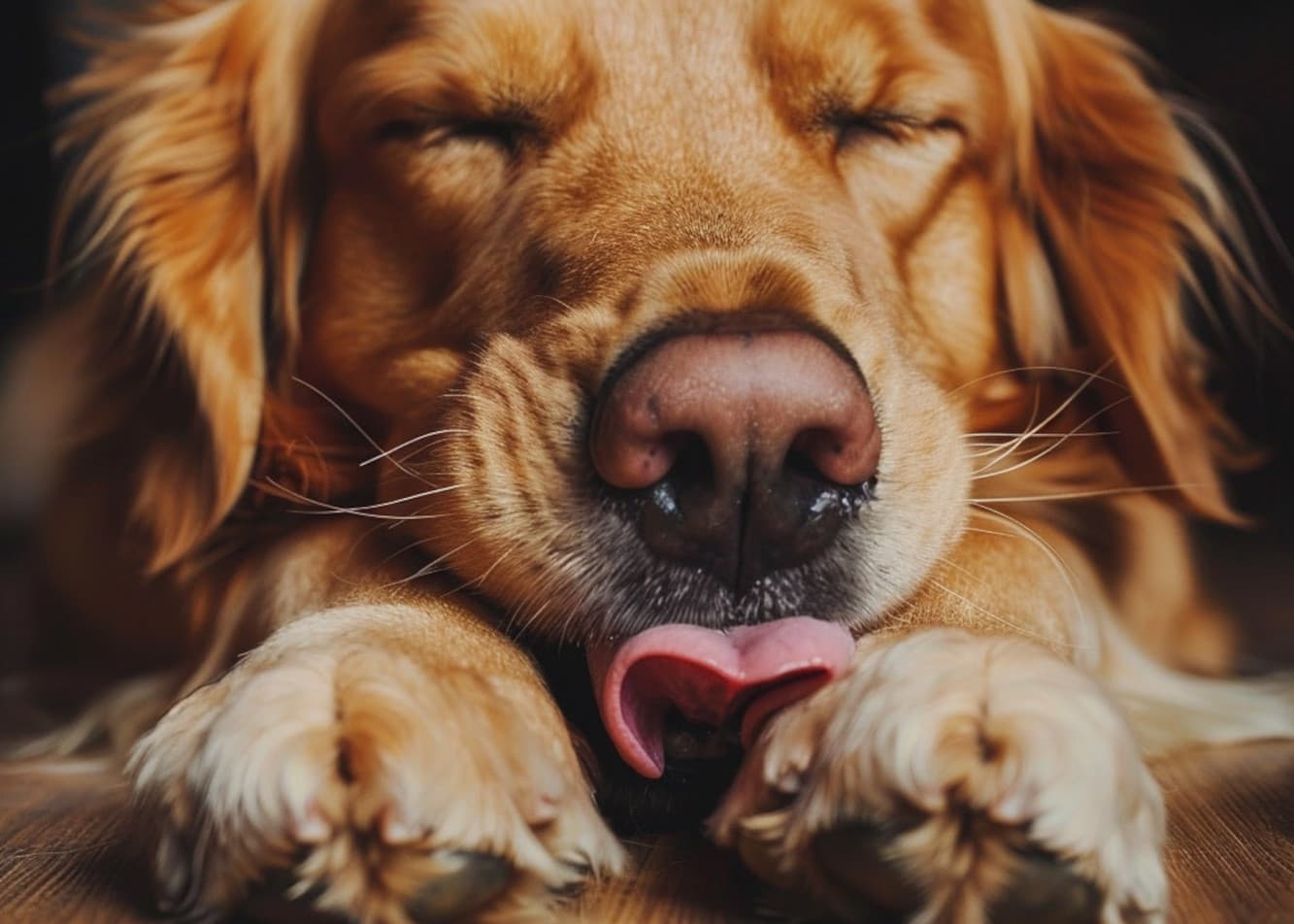
Why does a dog lick its paws?? Causes and solutions to the problem
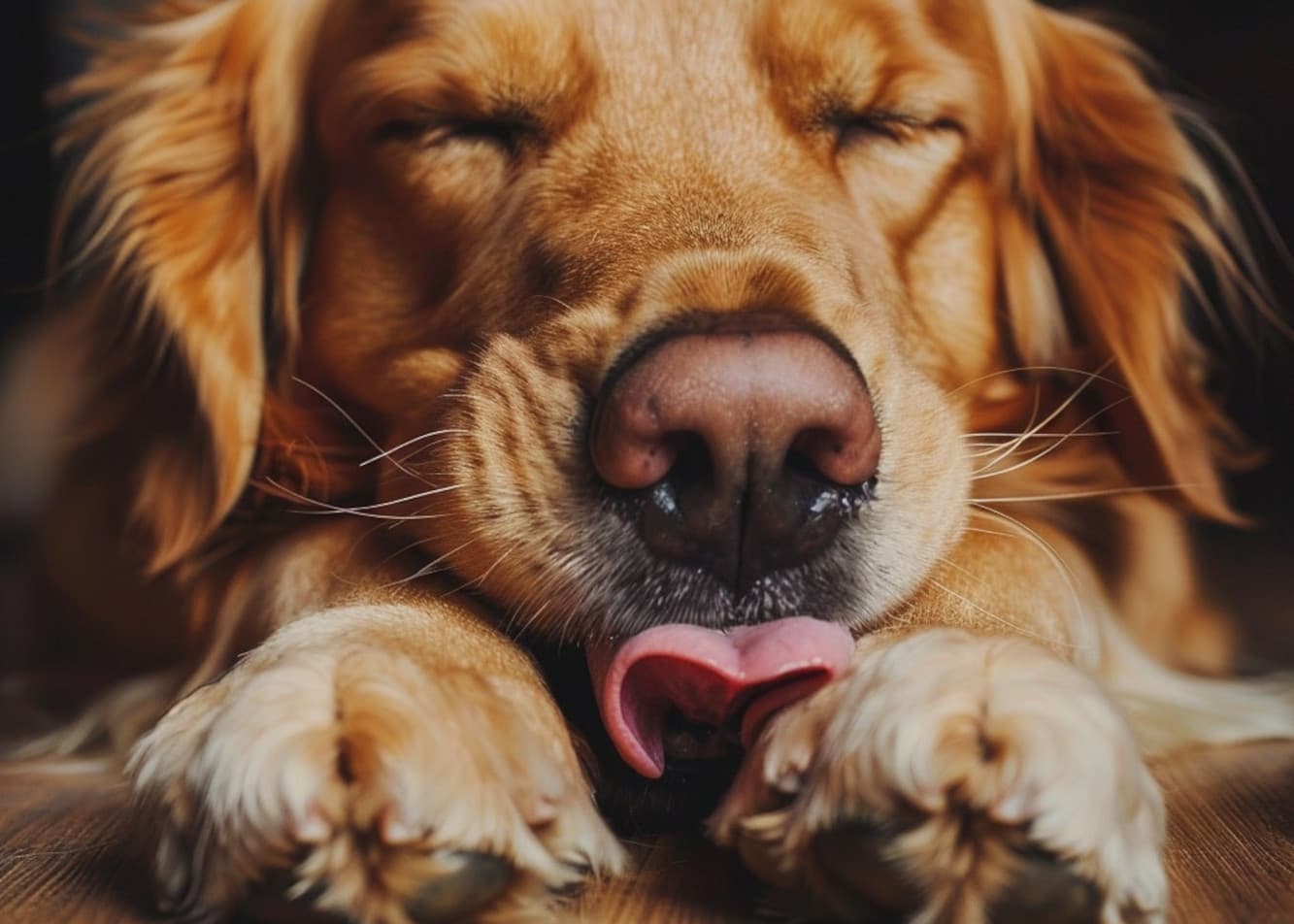
There are many reasons why a dog might lick its paws, ranging from trivial ones—such as wanting to clean its paws after a walk—to more serious health or behavioral issues.Understanding the causes of this behavior is key to preventing potential complications.In this article, we’ll discuss why dogs lick their paws, what the possible causes might be, and how to address this issue to ensure your pet’s health and comfort.
Is it normal for a dog to lick its paws??When should you be concerned??
A dog licking its paws can be completely normal behavior.Dogs usually do this after a walk to clean off dirt, mud, or salt, especially in the winter.Dogs also lick their paws as part of their grooming routine, which in itself is no cause for concern.However, if your pet spends a lot of time doing this, it may indicate an underlying health or behavioral issue..If your dog licks its paws too often, check for other symptoms such as redness, swelling, blisters, or visible wounds.If these symptoms appear, there is a risk of infection or an allergic reaction.It is particularly concerning when a dog licks its paws until they bleed, which requires immediate consultation with a veterinarian..
Why does a dog lick its paws??The most common causes
Paw licking can be a symptom of both physical and psychological problems in dogs.This is most often caused by allergies, infections, or stress, but it can also result from physical injuries, such as a grass awn or an insect bite.Regular paw licking can lead to further complications, such as skin infections or wounds, so it is important to identify and address the cause promptly.
| Reason | Description of symptoms | Suggested solution |
|---|---|---|
| Allergies (food, environmental) | Skin redness, itching, excessive licking of the front paws | Switching to a single-protein diet, avoiding environmental allergens |
| Bacterial and fungal infections | Redness, discharge, and an unpleasant odor from the paws | A visit to the vet, treatment with antibiotics or antifungal medication |
| Stress and boredom | Compulsive licking, even in one spot | Increased physical and mental activity, interactive toys |
| Mechanical injuries | Itching in one spot, swelling, pain | Removal of a foreign object, disinfection, veterinary consultation |
| Parasites (fleas, ticks) | Intense scratching, visible parasites | Use of antiparasitic agents, regular monitoring |
How to identify an allergy that may be causing your dog to lick its paws?
One of the most common reasons why a dog constantly licks its paws is allergies.Allergies can be triggered by various factors, including foods, pollen, dust, dust mites, and chemicals used on sidewalks.Allergy-related itching most often affects the front paws, and excessive licking can lead to skin irritation.
One solution might be to switch your dog’s diet to single-protein dog food , which is hypoallergenic and can reduce the risk of food allergies.It’s also important to pay attention to the environment where your dog spends time and avoid places where allergens may be present.
Bacterial and fungal infections as a cause of paw licking
Bacterial and fungal infections may also explain why a dog licks the underside of its paws.Excessive licking causes the skin to become moist, which promotes the growth of fungi and bacteria.Symptoms of infection include redness, a foul odor from the paws, and pus-like discharge.In that case, you should visit a veterinarian, who may prescribe the appropriate medication.Animals that frequently walk in damp or dirty areas are more susceptible to such infections.It’s also a good idea to check your dog’s paws regularly after walks and maintain proper hygiene to reduce the risk of infections.
Can stress and boredom be the reason for paw licking??
When a dog feels stressed, frustrated, or bored, it may start licking its paws compulsively.It's very obvious because the animal just can't stop doing it.It can even get aggressive when it wants to stop licking its paws.If you're wondering why your dog licks its front paws, here's some advice!It may be a way of coping with emotions, much like nail-biting in humans.
Dogs need enough exercise, interaction with their owners, and mental stimulation.Otherwise, their frustration may lead to such behavior.If your dog licks its paws in one spot or does so habitually, it’s a good idea to increase its physical and mental activity.Daily walks, playtime, and interactions with other dogs can help relieve stress and keep your pet occupied for longer.It’s also a good idea to give your dog health-promoting treats , which will not only keep him entertained but also boost his health.
When paw licking may indicate a health problem?Infections and injuries
Frequent paw licking may indicate injuries such as a grass seed lodged in the paw, a small piece of glass, or an insect bite.In such cases, the dog may lick the sore spot in an attempt to relieve the pain or discomfort.If your dog is licking its paw in one spot, you should carefully examine the paw for any visible injuries.
Parasitic infections, such as fleas and ticks, can also cause excessive licking.In such cases, the dog's skin becomes very itchy, causing it to constantly lick and scratch.
How to Prevent Excessive Paw Licking in Dogs?
To prevent excessive paw licking, it is essential to determine what is causing it.In cases of food or environmental allergies, switching to a grain-free dog food or limiting exposure to allergens may provide relief.It’s also important to regularly care for your dog’s paws after walks.This is especially important during the winter, when salt on sidewalks can irritate the skin.
If your dog is experiencing behavioral issues, such as stress or boredom, it’s a good idea to increase their physical activity and provide them with mental stimulation.Longer walks, playing with a ball, or other interactive forms of play can effectively keep your dog occupied and prevent compulsive behaviors, such as licking its paws.
When should you consult a veterinarian if your dog is licking its paws??
If your dog is licking its paws until they bleed, or if you notice swelling, wounds, or discharge from the paws, you should consult a veterinarian immediately.Symptoms such as chronic licking, itching, and skin lesions may indicate serious health problems, such as bacterial or fungal infections, parasites, or autoimmune diseases..
Regular health checkups for your dog and prompt action if there are any issues with their paws will help prevent complications and ensure your pet’s comfort.Licking paws may seem like harmless behavior, but if it becomes obsessive, you should take appropriate steps to protect your dog's health.
A dog licking its paws can be either normal behavior or a sign of more serious health or behavioral issues.It is essential to observe your dog and respond to any changes in its behavior.Making appropriate dietary changes, as well as ensuring physical activity and mental stimulation, can help resolve the issue.Remember that if the problem worsens or you notice any concerning symptoms, you should consult a veterinarian as soon as possible.
Recommended