
Where does fun end and conflict begin?
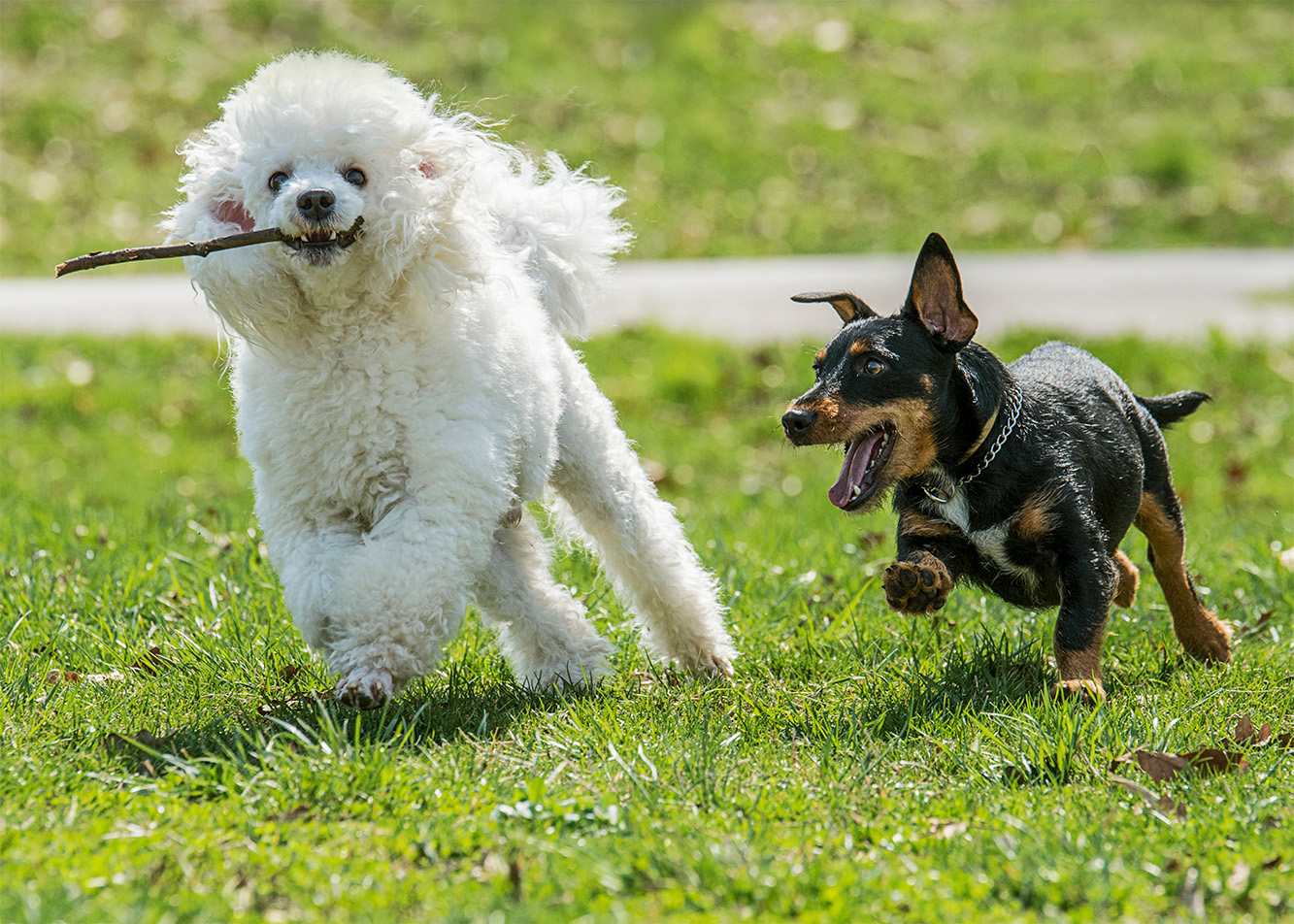

Play between dogs can take many forms.A lot depends on age, temperament, and the relationships between the pets.Through their daily interactions, young animals learn from one another, explore boundaries and possibilities, develop emotional control, hone their hunting instincts, build social bonds, and learn reproductive behaviors.Every dog has its own preferences when it comes to this type of activity.It often feels more at home in the company of other dogs of the same breed, with whom it establishes a rapport more quickly.Typical play activities include chasing, wrestling, and gentle biting, jumping, rolling around, carrying a toy together, tugging on ears or tails, nibbling on paws, leading by the collar or harness, digging holes together, or swimming—all of this resembles a carefree form of entertainment.However, sometimes what seems like harmless fun at first glance can escalate into a serious conflict.So how can we tell the difference between playful interaction and aggression??And when should a caregiver respond??
What characterizes dog play?
Interactions between dogs often seem very intense, but in reality they are full of signals indicating that both parties are comfortable spending time together.Here are some typical characteristics of proper entertainment:
- Relaxed bodies – animals move smoothly, are not tense, and do not freeze in place.
- Playful bows – the pet bends its front body while keeping its hindquarters raised – this is an invitation to play together.
- Role Reversals – one dog chases, then another; the roles switch.
- Breaks and pauses – the caretaker may notice brief moments of respite during which the animals seem to be making sure that the other party is still in the mood for more antics.Sometimes, in those moments, they lie close to each other.
- No signs of stress or aggression – the ears and tail are “soft,” and the dog does not growl or bare its teeth in a threatening manner.The animals move freely, without tension, often side by side.
- Social behavior – a pet may bring a toy to another pet or take it away, provoking a chase.He often does this on purpose, turning around so that his companion notices what’s happening and can keep up.Then they pick up the pace or change direction.
When play turns into a fight?
Sometimes one person stops enjoying a shared activity, while the other doesn't notice or chooses to ignore it.Conflicts often start subtly, so it’s important to recognize the warning signs:
- Body stiffness – quadrupeds suddenly tense up, and their movements become rapid and jerky.
- Intense staring – instead of intermittent eye contact, there is persistent staring.
- No role reversal – one animal consistently remains in the dominant role, while the other tries to withdraw.
- No breaks – interaction turns into a relentless onslaught, with no moments of pause or respite.
- Disturbing sounds — growling, barking, snapping, and even nipping combined with lunging.These sounds differ in tone from those made during play and may also include squeaks or whimpers.
- Signs of stress – flattened ears, tucked tail, licking, yawning, attempts to escape, hiding behind the owner’s legs or in tight spaces.
What to do when fun stops being fun?
The most important thing is observation.Even if the dogs were having a great time at first, the situation can change in a matter of seconds.If you notice that one of the dogs is trying to wander off, whining, running away, and the other is chasing it—don’t wait!Respond immediately.
It’s a good idea to keep a leash, a toy, or some training treats on hand so you can distract your dog if needed, or simply call him over and take a short break.
If your dog doesn't respond when called, keeps running away, and another dog is chasing him—walk over to him, stand between them, and block the intruder's path.If the situation doesn't improve, put the aggressive dog on a leash and ask its owner to take it away.
After such a disappointing play session, be sure to let your dog blow off some steam.Schedule another playdate with your dog's friend to help rebuild positive associations with playing together.
Never put your hands between fighting dogs – in a fight, the safety of both people and animals is paramount.Try to separate the animals using an object, such as a blanket, a large bag, or sticks.
It’s worth remembering that not every dog gets along well with other dogs.This is influenced by.in.the caregiver’s level of socialization, past experiences, social skills, habits, and reactions.Dogs with weaker social skills should interact with other dogs under the supervision of an experienced trainer or behaviorist, accompanied by a suitable, well-balanced companion.
Playtime between dogs is a special time—both for the dogs themselves and for their owners.Shared activities strengthen relationships, teach communication skills, and help burn off excess energy.As supervisors, however, we have a responsibility to ensure that it is safe and enjoyable for all participants.Alertness, close observation, an understanding of your pet’s body language, and a quick response—these are the keys to a fun and safe playtime.
Author: K.Bargiełowska