What should the diet for older dogs look like?
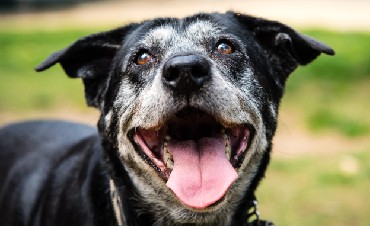

There comes a time in every dog's life when the first signs of aging begin to appear.This may manifest itself, for example, in a reduced energy requirement, a decline in vision, smell, and hearing, or graying of the coat.For dog owners, this is also a sign that it’s time to switch from a diet designed for adult dogs to one for senior dogs.How to feed an older dog and what to pay special attention to?
When you know your dog is a senior?
Generally, a pet is considered a senior when it has already lived through an average of 70–80% of its life.Of course, every dog owner hopes that their pet will live as long as possible—and that’s a very good attitude!It’s worth keeping in mind that, thanks to advances in veterinary science and ever-improving care, the average lifespan of dogs continues to increase.However, it’s good to know roughly when an adult dog becomes a senior dog so you can take even better care of him.
The point at which a dog can be considered a "senior" varies depending on the breed and size of the dog.It’s probably no secret that small dogs live the longest.It is generally accepted that a dog is considered small if it weighs less than 9 kg.Small dogs are classified as senior dogs at around 12 years of age (± 2 years).Medium-sized dogs—those weighing between 9 and 22.5 kg—become seniors at around 10 years of age (± 1.5 years).Large dogs—those weighing approximately 22.5 to 40 kg—reach old age at 9 years (+/- 1.5 years).Unfortunately, dogs classified as giant breeds—those weighing more than 40 kg—have the shortest lifespans and are considered senior dogs at around 7.5 years of age (± 1.5 years).
Of course, the age ranges listed above are approximate and may not apply to every dog.However, it’s worth familiarizing yourself with them so you know when to pay special attention to your dog and when to watch for the first signs of aging.For the owner, this will also be a sign that it's time to change the dog's diet.
How to feed an older dog?
If you’re a pet owner, no matter how old your dog is, it’s a good idea to familiarize yourself now with a few tips on how to properly feed an older dog.
Less physical activity and changes in metabolism = risk of becoming overweight
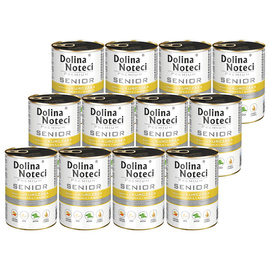
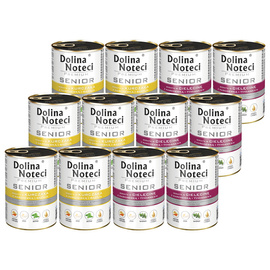
The older a dog gets, the less exercise it needs.As a dog gets older, it no longer feels the urge to play and run around all the time, but instead values peace and quiet and rest.What's more, significant changes are taking place in his body, including a decrease in metabolic rate, which makes it easier to gain unwanted body fat.As body fat increases, muscle mass decreases.All of these factors mean that senior dogs have lower daily energy needs, so they should be fed about 20–30% fewer calories than adult dogs.In that case, it’s worth trying senior dog food , such as wet food with veal, carrots, and thyme, which has a reduced fat content and is easy to digest.Of course, it’s a good idea to keep an eye on your dog to see how much their activity level has changed.In some healthy and older dogs, physical activity remains at a high level—in such cases, you should not significantly reduce the amount of food the dog eats.
Feed less, but more often
In older dogs, just as in humans, the metabolic rate changes with age.Senior dogs digest food much more slowly than adult dogs.He also has a smaller appetite.That is why feeding a large amount of food at once can cause problems such as digestive tract overload, which results in poorer digestion and reduced nutrient absorption.Therefore, it’s a good idea to feed your dog smaller portions, but serve them a little more frequently—at least 3 times a day.
Wet or dry food?
Senior dogs are much more likely to have dental problems than adult dogs.These may include conditions such as excessive tartar buildup, various types of inflammation, and even missing teeth.All of this should make pet owners ask themselves: wouldn’t it be better to switch from dry dog food to wet dog food??This way, your dog won’t feel any pain while eating and will be able to enjoy its meal—for example, a can of wet dog food with rabbit, which has been formulated according to modern nutritional guidelines for pets.
The right amount of vitamins and minerals
The right vitamins and minerals are very important in the diet of every older dog.Just as in humans, it is important to get enough vitamin D, which supports bone health, as well as phosphorus, which supports proper kidney function.Vitamin C is also very important, as it has a positive effect on brain function.A senior dog’s diet should also include minerals such as zinc, copper, and manganese, which contribute to the body’s overall proper functioning.Many people wonder whether it's worth giving their dog extra vitamins in tablet form.The answer is simple—it depends on the quality of the dog food.When it comes to wet food – all the essential ingredients can be found, for example, in senior dog food with lamb.For large-breed dogs, especially older ones, it is a good idea to add supplements containing glucosamine and chondroitin to their diet, as these help reduce the risk of joint disease.It’s also a good idea to give your dog omega-3 supplements, such as salmon oil.In addition to supporting the musculoskeletal system, they also support proper brain function.
Water is an important part of a healthy diet
Older dogs are particularly prone to dehydration.This is because they have a reduced appetite and drink much less water.This is also related to a decrease in muscle mass and an increase in body fat.That is why every dog owner should keep a close eye on their dog to know how many liters of water it drinks each day.If this is significantly less than before, it’s a good idea to encourage your dog to drink, for example by praising them or frequently replacing the water with fresh water.
Nutrition for Senior Dogs – Summary
As you can see, diet is extremely important for older dogs.It helps them stay not only fit but also healthy—and after all, we all want our dogs to stay in good shape for as long as possible.So make sure to feed your dog the highest-quality senior dog food, rich in essential minerals and vitamins.Don’t forget about daily physical activity either—it will keep not only your dog but you in good shape as well!
Recommended
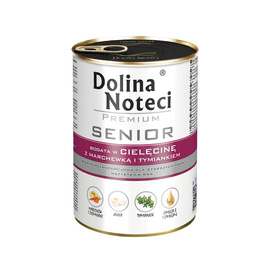
Dolina Noteci Premium Senior Wet Dog Food, Rich in Veal with Carrots and Thyme, 400 g Can