
What is your cat trying to tell you?
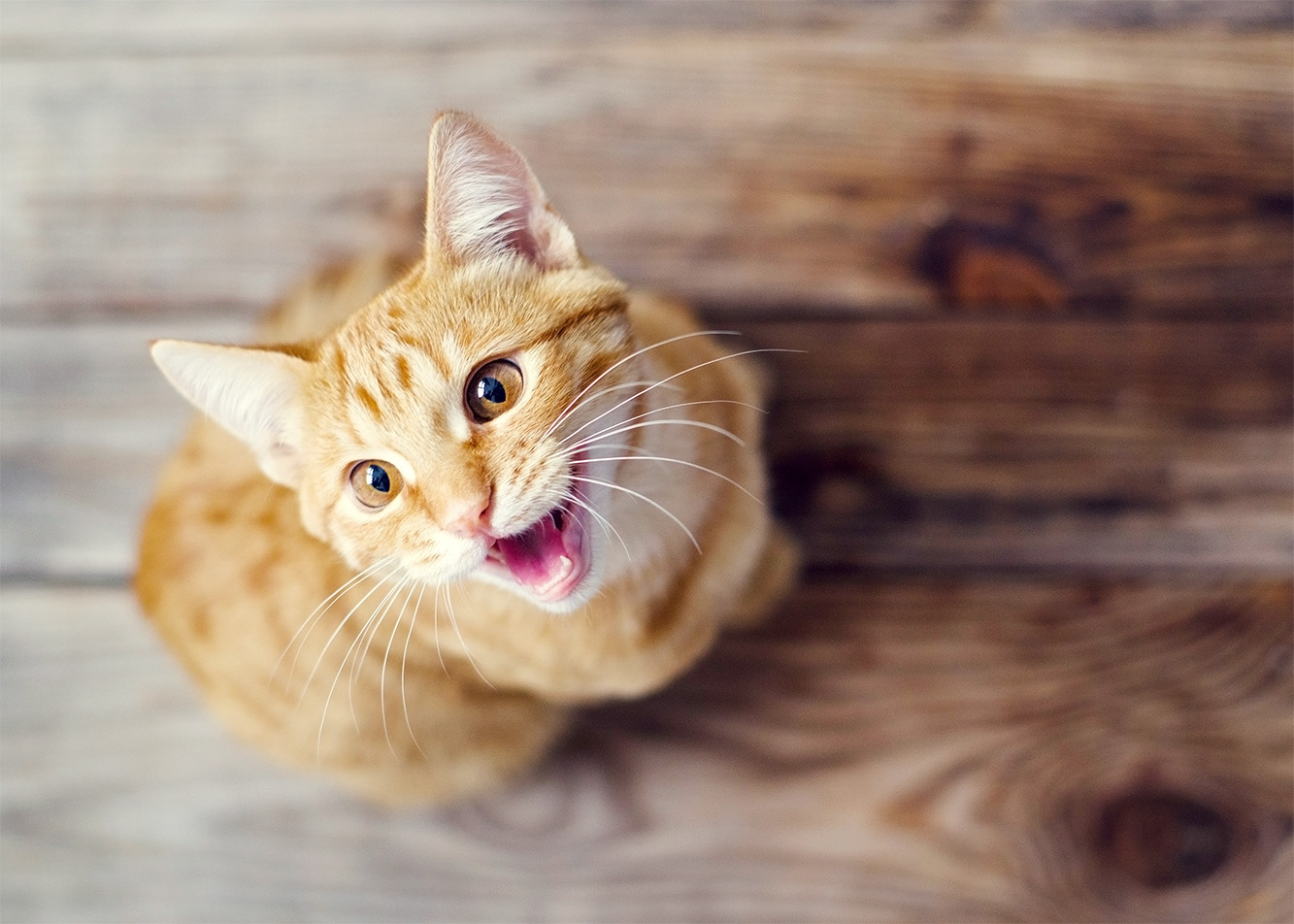
Hundreds of research papers, articles, guides, and books have been written on the subject of cat communication.Despite this, many people still have trouble correctly interpreting the signals their pets send and responding to them appropriately.That is why we would like to highlight a few key points from this broad topic that will help you understand how communication between cats and humans works.
The Basics of Cat Language
In the feline world, three types of signals are used to communicate with other individuals (both of their own species and of other species): vocal, visual, and olfactory.It’s similar in our world, except that olfactory communication has been greatly reduced over the course of evolution and has largely fallen outside our conscious control, while so-called nonverbal cues (e.g., posture, facial expressions, hand/during a conversation, etc..) have taken a back seat in Western culture.So what are we left with??Vocalizations—specifically, those that cats use the least in the wild.
In cats, the most prominent forms of communication are scent-based signals (using pheromones or urine/feces) and nonverbal cues such as body posture, specific movements, and facial expressions.Why?Because this information can be sent and received remotely, which reduces the risk of direct confrontation.Odor-based signals can be left in a specific location like a "sticky note" that the recipient will "read" when they happen to be in the area.On the other hand, it is possible to read emotions and intentions from body language or movement even from a distance of several dozen meters.Verbal communication, on the other hand, requires proximity—you have to be within earshot.And while these strategies work perfectly in the cat world, they start to fall short when it comes to communicating with humans.
Custom modifications
From a cat's perspective, we are communication illiterates.We don’t pick up on pheromone signals at all (we react more to the actual gestures associated with sending them, such as scratching or rubbing their cheeks against us or objects), we usually do not understand information conveyed through feces, and we most often ignore body signals unless they suit us or are so obvious that they cannot be misinterpreted (such as approaching a person with a tail held high, often slightly curved at the tip).On top of that, we often apply cross-species analogies in communication, most commonly from dogs to cats (a cat that shows its belly is often interpreted as one that is surrendering, yet nothing could be further from the truth).Generally speaking, people cause chaos and don't really understand cat language.
So what did the cats do??They began to adapt their messages to our limited capabilities.This is clearly illustrated by the example of animals that have expanded their vocal communication by making greater use of the sounds to which humans respond more strongly.This explains the mystery of individuals who seem to say "ma-ma" or imitate a baby's cry.They simply realized that the result was better that way.
The same applies to gestures.The previously mentioned signal of a raised tail, used to greet humans, is a unique example of the adaptation of an intraspecific communication signal to a different species.In fact, it is kittens who first raise their tails in this way, as a response to their mother’s calls.It's kind of like shouting, "Here I am!"!", which makes it easier for the mother cat to locate her kittens, for example in tall grass.When interacting with people, raising the tail while walking toward us means “It’s nice to see you.”!".It often serves as a prelude to rubbing and so-called "sheep-like behavior," as well as the affection the pet is looking forward to.
The more important the issue, the stronger the message
Cats, whether communicating with us or with each other, adjust the intensity of their message depending on how important the matter they are trying to convey is to them.This is particularly evident when a pet starts to get annoyed by our touch, for example, during "mechanical" petting or brushing.First, the cat changes the expression on its face: the position of its whiskers and ears, or how wide its eyes are open.If nothing changes after these signals, she usually adds tail movements (ranging from intense wiggling of just the tip to vigorous wagging).If we still don't react, there are two possible outcomes: either the cat will hiss at us, which means, "I don't like what you're doing; stop right now,"!", or else we'll get bitten or scratched, and the pet will run off unhappy after this scolding.You can see here a beautiful progression designed to protect us from the most painful consequences.If we don't learn to pick up on all these signals and respond quickly enough, we're going to get the short end of the stick.
It is also worth taking a closer look here (both literally and figuratively) at communication involving feces.Cats use both urine and feces to alert their owners to a problem—in 75% of cases, this indicates physical discomfort caused by health issues, and in 25% of cases, purely psychological issues (anxiety, stress, mental tension, group conflict, problems with the availability or quality of resources, etc.).).Therefore, feces found outside the litter box should never be ignored or dismissed as a whim or mischief!This is an important indication that something is wrong and that action should be taken as soon as possible, starting with a proper medical evaluation.
A Short Glossary of Cat Communication
Below are a few examples that are often misinterpreted by caregivers, leading to many misunderstandings.It should be noted here that every cat is different, and the signals sent by a particular cat may vary slightly:
- rubbing their muzzle against our face, hands, or legs — this is very friendly behavior that also helps create what’s known as a “group scent”: when a cat rubs against a person—for example, after they return home—it leaves its scent on the person and takes on the human scent.The combination of these scents constitutes the group’s scent, which allows members of a given social group to be detected by smell and identified—a process that is crucial for distinguishing between “insiders” and “outsiders”;
- licking the caregiver's face or hair – this behavior is also a mirror image of feline interactions.In cat groups, there is no gesture more affectionate than licking each other’s heads, muzzles, and ears.If a cat directs this behavior toward us, it means we are very important to it, and this is how it shows its affection for us;
- "cooing"- is a specific type of meow intended to invite us to play or interact.This is the sound cats make when they are content, but also curious about a particular phenomenon.If your cat purrs at you, be sure to figure out what it wants, or you might upset it;
- kneading and drooling— this behavior is carried over from the first stage of life, when kittens knead their mother’s nipples with their front paws while drinking milk, thereby stimulating milk production.Therefore, this behavior itself is associated with pleasant feelings, safety, and relaxation for the cat, and is often accompanied by purring.Sometimes, some cats can purr and relax so deeply that they end up producing too much saliva, which drips from their mouths.There's nothing to worry about; it's simply proof of the cat's great happiness;
- blinking– is a reassuring signal that says, “I like you, I mean no harm, I’m peaceful”.Cats often blink to relieve tension, and, interestingly, they do this not only to themselves but also to us.And we have the opportunity to respond in kind!Closing your eyes tightly for about.For a cat, 1–2 seconds is a signal that “Everything is fine, there’s no need to be afraid.”.“I recommend trying this on your pets—the results are amazing;
- sitting with its tail wrapped around its front paws– this position is often called a “statue” because a cat sitting this way actually looks like a very elegant sculpture.And that is exactly how we should treat him, because this body language is nothing more than a signal saying, “I’m an observer, but I don’t want to get involved; leave me alone and keep your distance.”.Therefore, approaching such a cat simply shows a lack of understanding of its behavior, which may be met with justified disapproval on the cat’s part;
- hissing— this signal is often mistakenly associated with aggressive behavior, whereas its actual purpose is to create distance.It's used by a pet that feels uncomfortable in a certain situation and wants a particular thing or action to stop immediately.If we ignore this warning, we must expect the cat to resort to threatening signals, and if even those fail to produce the desired result, it may decide to attack.
Summary
As you can see, communicating with a cat is a very complex issue.However, what matters most is reciprocity.Cats that "talk" to us expect specific reactions—or even answers—from us!Without them, the exchange of information will not take place, because the reciprocity essential to this process will be lacking.That is why we strongly recommend, on the one hand, taking some time to explore the mysteries of feline communication, and on the other, observing your cat closely and mindfully, while also considering the situational context (which plays a very important role in feline communication).!).Only when we learn to recognize our pet’s cues and connect them to specific needs or events will we be able to say that we are beginning to understand this magical and complex creature with whom we share the world.
