What is the Himalayan cat's temperament, and how should you care for it?
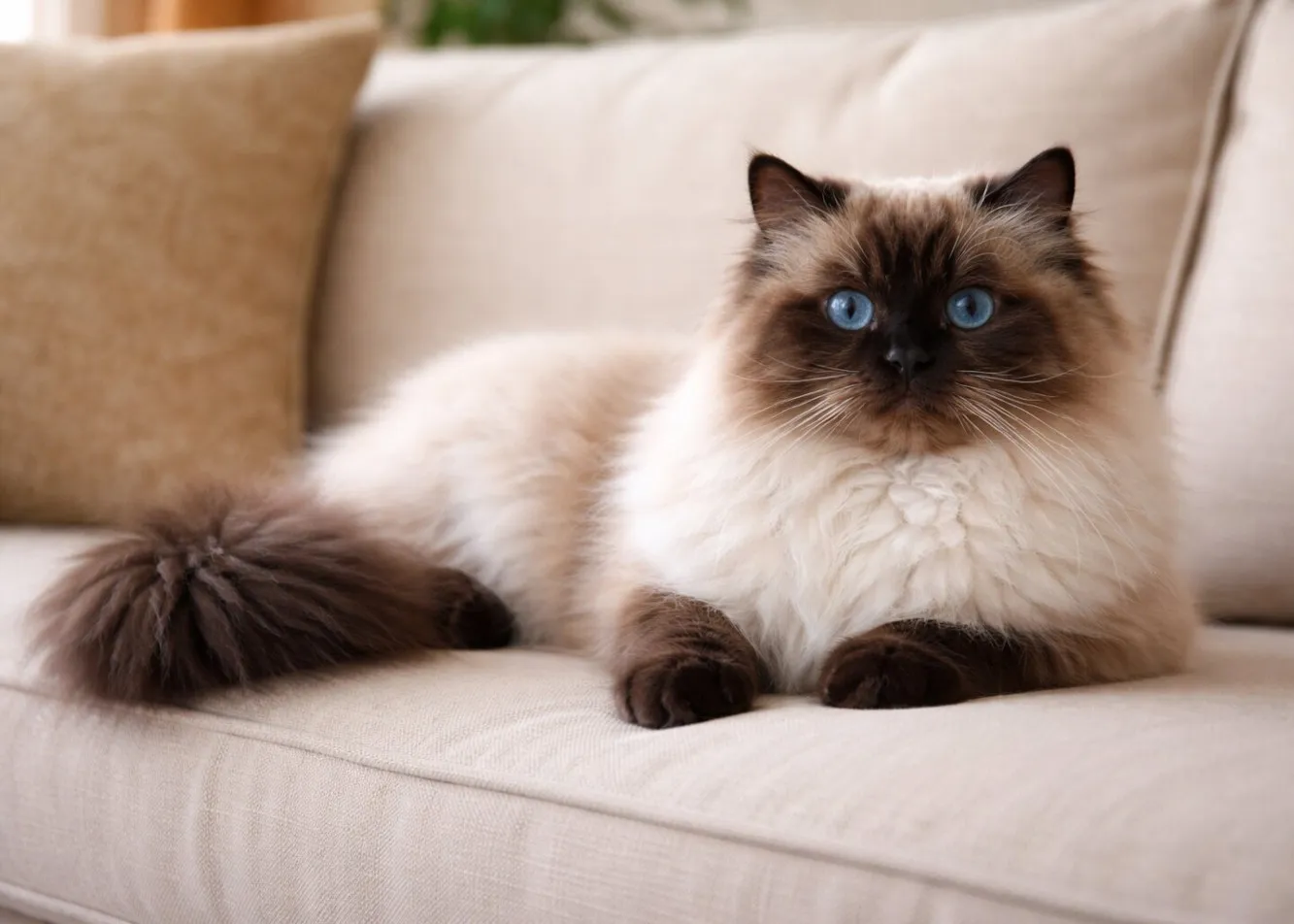
If you're looking for a calm cat with a beautiful point-patterned coat, a Himalayan cat might catch your eye.This is a long-haired variety of the Persian cat, created by crossing Persians with Siamese cats.Effect?A cat with a round head, thick fur, and blue eyes, whose temperament typically combines the gentleness of a Persian with a greater inclination toward human interaction.It’s worth remembering, however, that along with their good looks come significant grooming needs and a higher risk of health issues typical of brachycephalic cats (those with flat faces)..
What is a Himalayan cat??Breed description, temperament, grooming, and health
The Himalayan cat is best suited for people who are looking for a family pet, enjoy a daily grooming routine, and can devote time to their pet.This breed isn't particularly energetic; it's calm and enjoys close contact.This does not mean, however, that the Himalayan is “self-sufficient”—if left alone for long periods, it may have a harder time coping with a lack of attention, and its health requires vigilance and preventive care.
Basic information about the Himalayan cat breed
- Origin: a breed developed from the Persian (a colorpoint variety); depending on the organization, it is sometimes classified as a variety of the Persian or as a related breed
- Body weight: approx..3.5 kg (females) – 6 kg (males)
- Average lifespan: usually 12–15 years, sometimes longer with good care and a stress-free environment
- Build: stocky, sturdy, medium to large; short, strong legs; round feet (tufts of hair between the toes are often desirable)
- Head and eyes: round and massive head, full cheeks, large round eyes that are always blue (generally, the more intense the color, the better)
- Ears and tail: ears small, rounded, set wide apart; tail short, thick, with a rounded tip
- Coat: long, very dense, soft, and silky; distinct ruff around the neck
- Coat color: colorpoint (point) — light body, darker “points” (muzzle/mask, ears, paws, tail), no white
- Fun fact: Their distinctive point coloration can vary in intensity depending on the ambient temperature—the cooler the conditions, the darker the areas around the muzzle, paws, and tail will become.
The History and Origins of the Himalayan Cat
Unlike many natural breeds, the Himalayan cat is the result of selective breeding.The first breeding programs involving Persians and Siamese cats (aimed at producing a Persian body type and long coat with Siamese colorpoint markings) began in the first half of the 20th century.Over time, the desired traits became established, and the breed/variety gained popularity, particularly among Persian cat enthusiasts who were looking for “the same type” with a more striking coat.
The Himalayan Cat – Appearance and Characteristics
This cat has a "plush" appearance: a round head, thick fur, a stocky build, and a distinctive mask on its face.Some cats have a less flattened muzzle, while others have a more flattened one—which has real implications for their health.
Body type
The Himalayan is a sturdy, compact dog with short, strong legs and a broad chest.This cat isn't usually a fan of heights—he prefers sturdy shelves, a low scratching post, and cozy spots to watch the world go by.
Coat and color
The long hair and thick undercoat cause the fur to tangle and mat easily.The colorpoint coat gives him a "Siamese elegance"—his darker legs, tail, ears, and face beautifully contrast with his lighter body.
The personality and temperament of the Himalayan cat
Himalayan cats are most often:
- calm and gentle,
- strongly people-oriented,
- affectionate but not intrusive,
- smart and attentive,
- not very confrontational.
They usually enjoy being petted and having their owner within sight.They don’t need all-day, high-energy play, but they do appreciate short, regular play sessions—especially fishing games, gentle chases, or simple toys to “hunt down”.
Himalayan Cats and Children and Other Pets
He feels most at home in a quiet house.He usually gets along well with children, as long as they respect his boundaries.It often gets along well with other gentle cats and small dogs, especially if properly socialized.
How to care for a Himalayan cat?Requirements and Care
This is a breed that requires regular grooming—and it’s worth making it a daily routine.
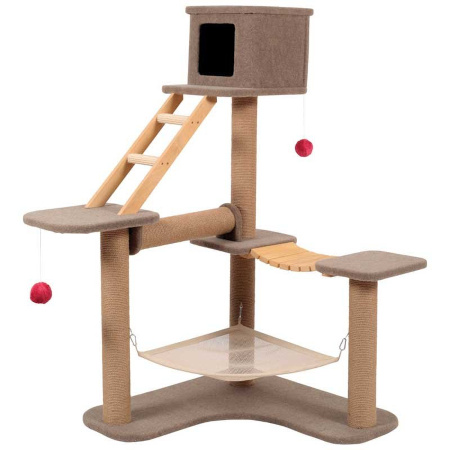
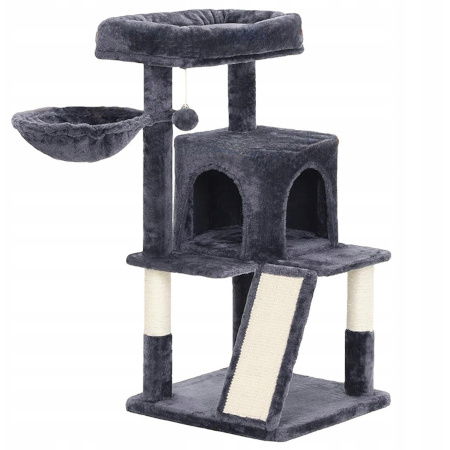
Home decor and accessories
- a comfortable bed,
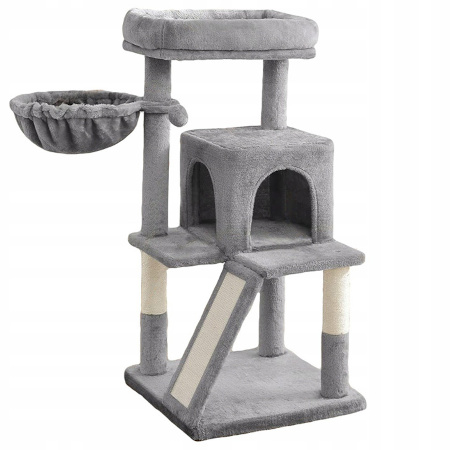
- , a medium-sized scratching post (stable, no need to climb high),
- easy access to favorite spots (steps/landings instead of high jumps).
Grooming the fur and the area around the muzzle
- brushing every day or almost every day (for shorter periods, but regularly),
- Check for mats: armpits, belly, neck, tail area,
- bathe as needed and dry thoroughly (moisture can lead to skin problems),
- for cats with flatter muzzles: regularly wash the areas around the eyes and nose (tearing and dirt buildup are more common),
- dental prevention: bite alignment and oral hygiene (tartar buildup and even inflammation are more common).
If you don't have any experience, it's very helpful to consult with a groomer (about choosing brushes, combs, and grooming techniques).
Himalayan Cat Health – Common Health Issues
The Himalayan cat—a variety of the Persian cat that often has a brachycephalic skull—may be more prone to:
- breathing difficulties (constricted nostrils, louder breathing, snoring),
- eye problems (watery eyes, inflammation, blocked tear ducts),
- eye conditions that can lead to vision loss (e.g., cataracts, progressive retinal diseases—depending on the line),
- kidney disease, including PKD (a risk known to affect Persian cats),
- skin problems (irritation, fungal infections—especially when the undercoat is damp and not thoroughly dried),
- dental problems (malocclusion, tartar, inflammation).
That is why the following are essential: regular checkups with a veterinarian, choosing a cat from a responsible breeder (with health screenings for the parents), and responding quickly to symptoms related to breathing and the eyes.
Feeding a Himalayan cat
A diet should:
- support skin and coat health (fatty acids, high-quality protein),
- help maintain a healthy weight (this breed tends to be less active),
- minimize the risk of hairballs (hydration, wet food, regular brushing).
For many cats of this breed, high-quality wet food and constant access to water (e.g., a water fountain) work well.
Who is the Himalayan cat best suited for??
This is a good choice for people who:
- are looking for a calm, friendly cat to keep them company,
- are ready for regular, thorough grooming,
- can devote time to their cat and do not plan to be away for long periods of time,
- they want to approach the issue responsibly and are mindful of health.
It may not be the best choice for someone looking for a very active cat that doesn’t require much attention, or who doesn’t have the space or time for grooming and preventive care.
How to Choose a Good Breeder?
A purebred cat should have a multi-generational pedigree and come from a licensed cattery.Look for breeders who are members of feline organizations that require:
- proper socialization,
- kittens may not be released before 12 weeks of age.week of life,
- transparency regarding research and family health.
For Himalayan cats, it is particularly important to inquire about a family history of respiratory and eye problems and to screen for hereditary diseases.
FAQ - frequently asked questions
Is the Himalayan cat suitable for beginners??
Yes, if the caregiver is willing to brush the pet regularly, care for the areas around the eyes and nose, and take a proactive approach to preventive health care.
Is this a very active cat??
Usually not.He prefers a quiet lifestyle, short play sessions, and plenty of rest.
Do Himalayan cats shed a lot??
It may shed seasonally and lose a lot of fur.Regular brushing and a proper diet significantly reduce the problem.
Author: M.Biegańska-Hendryk
Recommended
Dolina Noteci Premium Wet Cat Food with Salmon Fillet, 12-pack (185 g each) + Free DNP Salmon Fillet (185 g)
Natural Taste Niewąska Gąska Wet Cat Food – Goose Flavor, 12-pack (185 g each)
Piper Animals Junior Wet Cat Food with Veal, 12-pack (185 g each)