
Water in a cat's diet
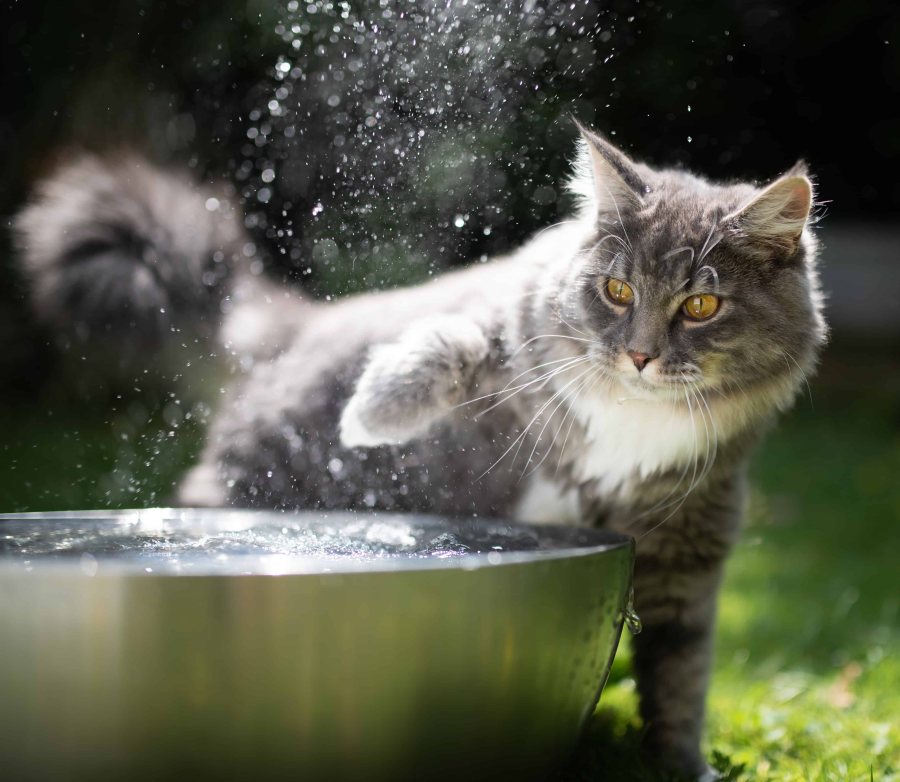
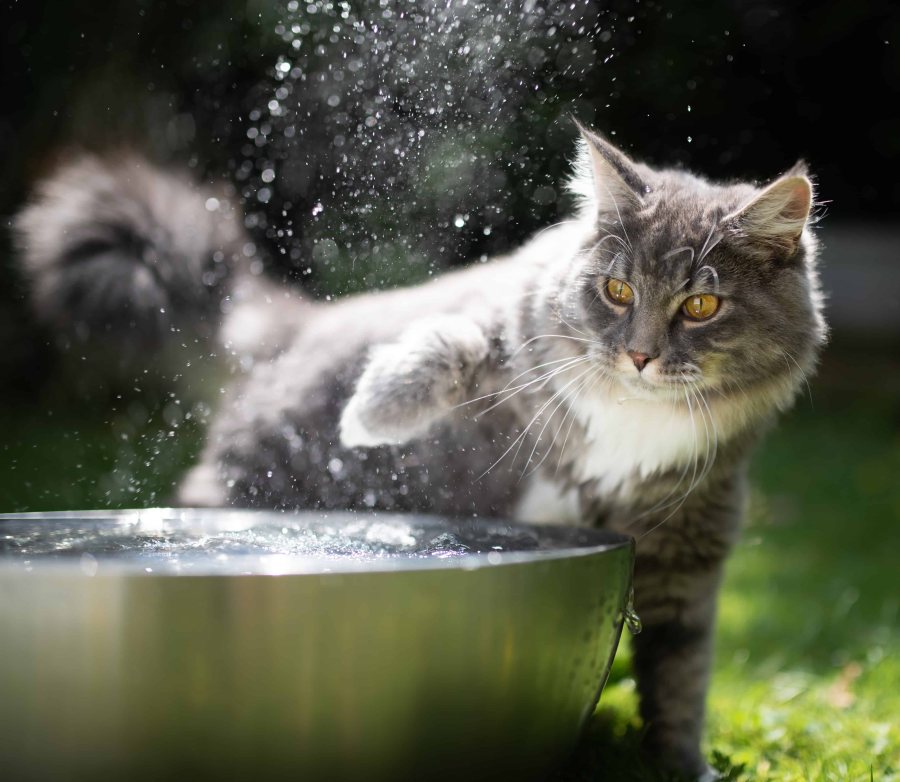
Many cat owners notice that their feline friends show almost no interest in drinking water.Where does this come from, and how can it be addressed??These are two key questions that are important in the day-to-day care of a cat.
Feline origins
To understand why cats aren't big fans of drinking, you have to think about their evolutionary roots.This is because these animals originate from desert regions, where water sources are not readily available.To avoid suffering from a constant feeling of thirst and to survive more effectively in these rather demanding environments, evolution has deprived cats of the sense of thirst typical of other species.
So where does a cat get its water from in the wild??Given that it is a carnivore, the answer is: “primarily from food”.It’s important to remember that most living organisms are composed largely of water, and cats have simply learned to take advantage of this fact.This meant they could stop looking for streams or puddles and focus on what they did best—hunting.
Water Trap
Unfortunately, what was once an advantage has, in a domestic setting, become a curse for some animals.The inability to drink enough water, combined with a diet consisting solely of dry food that is also high in carbohydrates, has begun to cause a range of metabolic and health problems in modern cats.In many cases, cats fed exclusively dry food suffer from chronic dehydration, and human tricks—such as placing bowls in various spots around the house or buying different types of fountains or water dispensers—don’t do much good.Pets simply don't think about drinking, and drinking large amounts of water is unnatural for them.
The following statistics illustrate just how dangerous dehydration can be: a mammal’s body can lose virtually all of its body fat and 50% of its muscle mass and still survive.However, losing just 15% of the body's water can have tragic consequences.That is why proper hydration is one of the key elements of healthy functioning.
How to provide water for your cat?
The easiest way to do this is to follow nature’s plan—that is, through food.Studies show that for a healthy adult cat, food with a moisture content of over 67% meets the daily fluid requirements necessary for proper functioning.Meanwhile, most wet foods contain about.80% humidity.Therefore, a high-quality, high-meat-content, and balanced wet diet should, in most cases, solve the problem of excessive drinking in cats.Of course, this doesn’t mean you should remove the water bowl—your cat should still have easy access to it, but it should be considered a supplement rather than the main source of fluids.
There are also other ways to ensure your cat stays hydrated, which are particularly important, for example, for cats with lower urinary tract diseases.You can add a small amount of warm water to the food, which makes it more palatable and helps your cat drink more fluids.You can also use flavored sauces, serve the so-called "broth"—that is, the unseasoned water left over from cooking meat—or use ready-made products with similar characteristics.There are also "flavored" waters for cats on the market (e.g., with catnip flavor), but these solutions rarely work in the long run.
What to watch out for?
Definitely not water with a high mineral content—a large amount of minerals can put a strain on a cat’s kidneys, leading to an imbalance in the body and resulting health issues.
You should also not downplay a situation in which a cat suddenly starts drinking very heavily.This behavior is very concerning and may indicate a developing condition such as kidney failure or diabetes.Vomiting clear fluid should also be a cause for concern.In any of these situations, you should therefore go to a veterinary clinic immediately and have your pet undergo the necessary tests—including blood and urine tests.
CAT BEHAVIOR EXPERT
Małgorzata Biegańska-Hendryk