Water for cats—can cats drink water?
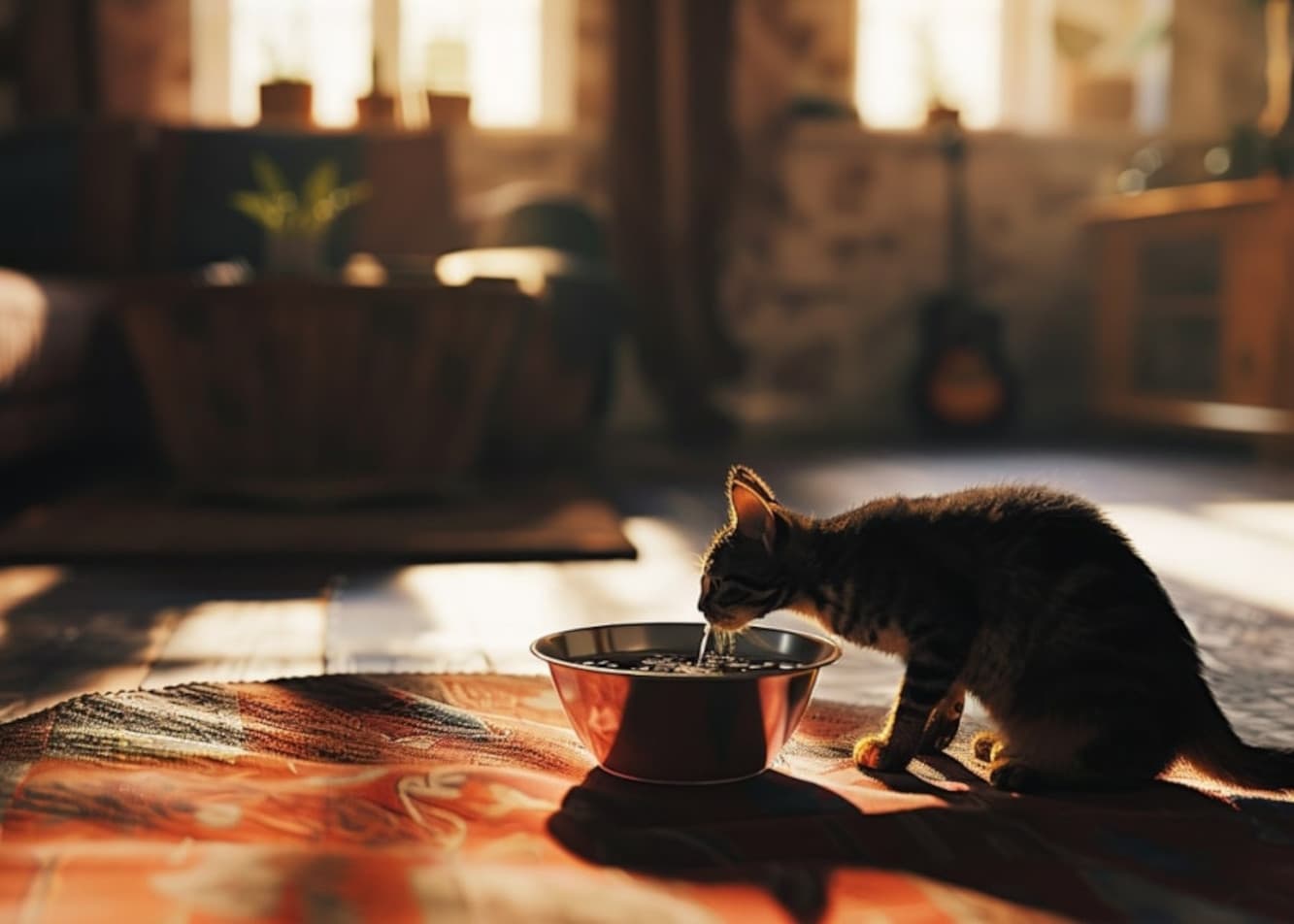
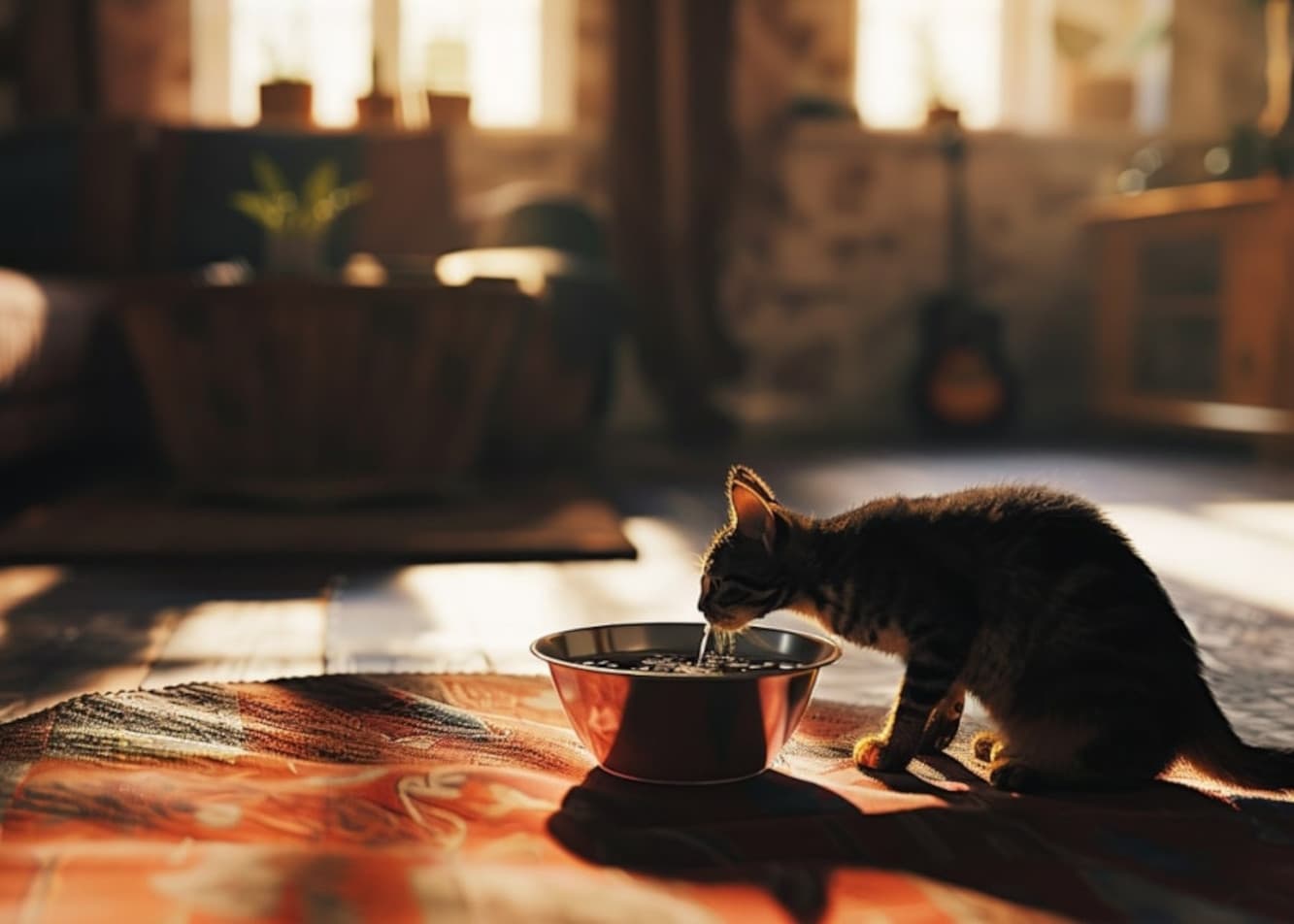
Cats have always been shrouded in an aura of independence and mystery—even when it comes to something as mundane as drinking.For years, many people believed that a cat's favorite drink was milk.The image of a cat leaning over a saucer of milk still lingers in our minds, even though experts have long warned that most cats are lactose intolerant and that milk—especially cow’s milk—can cause them serious digestive problems.On the other hand, there are also plenty of pet owners who notice that their pets rarely drink from their water bowls—even on hot days.That’s when the question arises: are we doing something wrong, or maybe the cat just doesn’t need to drink much?
Contrary to appearances, the topic of cats drinking water isn't as straightforward as it might seem.Many myths have arisen around this topic, and a lack of knowledge on the matter can lead to health problems, particularly with the kidneys and urinary tract.So, what’s the real story with drinking??Can cats drink water??
Table of Contents:
- Do cats need water??The Role of Hydration in a Cat's Health
- A Desert Predator: The Cat's Origins and the Need to Drink Water
- How much water should a cat drink??Daily requirement
- What should I give my cat to drink??
- Can a cat drink tap water??Water quality for cats
Do cats need water??The Role of Hydration in a Cat's Health
Water for a cat isn't just something to put in a bowl—it's absolutely essential for health and proper bodily function.In adult cats, water accounts for about 60% of body weight, and in kittens, even more.It is responsible for a number of key processes: it aids digestion, helps the kidneys eliminate toxins, regulates body temperature, and ensures proper hydration of the joints and tissues.Scientific studies show that the body can lose nearly all of its body fat and 50% of its muscle mass and still survive, but after losing just 15% of its water, it dies.
Many cat owners wonder if cats need to drink water if they eat wet food.The answer is: yes, but it depends on your diet.Cats that eat mainly wet food, which contains as much as 70–80% water, often get enough fluids from it.On the other hand, cats fed mainly dry food (which contains only about 10% water) need to drink additional water to avoid dehydration.
Unfortunately, research shows that a species-specific reduction in the sensation of thirst (more on this later) means that even when given constant access to water, cats fed a dry diet consume, on average, three times less water than those fed wet food.This is very harmful to them and puts a strain on their bodies, and over time it can lead to the development of many health problems.
Although cats naturally have a weaker thirst than other animals, a lack of adequate hydration can lead to kidney and urinary tract problems, as well as a general decline in immunity. That’s why it’s absolutely essential to always provide your cat with access to fresh water, and if your cat is reluctant to drink, you might consider setting up a water fountain at home or mixing a little water into its food.It’s also important to keep water sources away from where the cat eats, as this is more in line with its natural behavior.
And if you're interested in thermoregulation, check out our article: How to keep your cat cool in hot weather – there you'll find proven and safe ways to help your cat stay cool on hot summer days.
A Desert Predator: The Cat’s Origins and the Need to Drink Water
Today's domestic cat still carries the genetic legacy of its wild ancestors, which has shaped its attitude toward water.These animals evolved in regions with very limited access to water sources—in the arid climates of North Africa and the Middle East.There, the cat's water did not come from rivers or puddles, but from the bodies of its prey.Rodent and bird meat contains up to 70% water, which allowed cats to meet their basic needs without having to seek out other sources of water.
Over time, their bodies have developed unique mechanisms to limit fluid loss—ranging from a high ability to concentrate urine to highly efficient water management in tissues.Thirst is no longer the cat’s primary motivator, since it would not be able to quench its thirst effectively in the wild anyway.That is why modern cats have a significantly reduced need to drink and rarely show this need in a noticeable way, or only in extremely rare situations: for example, when severely dehydrated, during illness, or due to functional abnormalities in the body (m.in.(such as diabetes, chronic kidney disease, digestive problems, or chronic pain).
Increased thirst can also be observed in nursing cats (water is needed for milk production) and in older cats.Nevertheless, we should be far more concerned about a cat that drinks a lot and often than one we hardly ever see near the water bowl—especially if the cat is being fed a proper wet or raw meat diet (balanced BARF).
Later in this article, you’ll find out how much water a cat should drink—keep reading!
How much water should a cat drink??Daily requirement
Water is essential for a cat’s health, but the amount it should drink each day depends primarily on its diet, as well as its weight, age, activity level, and ambient temperature.
Cats that eat mainly wet food get most of the fluids they need from their food—cans and pouches contain as much as 70–80% water.In such cases, a cat may drink very little or not at all, yet still be properly hydrated.
To check whether your cat is actually drinking enough water, you can measure how much water it drinks and compare that amount to the nutritional guidelines.It is generally accepted that a cat’s average water intake is related to its life stage and is as follows:
- 40–50 ml per 1 kg of body weight for a growing cat,
- 30–40 ml per 1 kg of an adult cat’s body weight,
- min.25 ml per 1 kg of body weight for older cats.
Another way to check whether a cat is properly hydrated is to perform a urine test and measure a parameter called specific gravity.If the specific gravity is too high (a reading above 1.060), it may mean that the cat is not drinking enough water, causing its urine to become highly concentrated, which in turn can lead to health problems, such as bladder infections.
What should I give my cat to drink??
So what can you do to get your cat to drink the water it needs??The answer is very simple— the best solution is to feed him a high-meat, balanced, wet food with the right composition.It turns out that any food containing more than 67% moisture (which means practically all wet food) meets the daily fluid requirements of an adult, healthy cat.On the other hand, you should avoid feeding your cat dry food because, even with constant access to a bowl of water, it will have a dehydrating effect on the cat’s body.Cat food and treat manufacturers have addressed this issue by adding various types of flavored soups and sauces to their product lines.If you want to add some variety to your cat’s meal, you should choose products that simply list “broth” or “stock” made from a specific type of meat (such as chicken) in their ingredients. Not only can this addition be a good source of fluids, but it can also make the meal more appealing thanks to its strong scent (remember that cats have an excellent sense of smell but a very poor sense of taste).You can also add a small amount of water to wet food to make it even more liquid (approx..1 tablespoon per serving of food).The water added to the bowl also takes on the aroma of the cat food, making it more appealing to drink.What to avoid, on the other hand?
We should definitely never give adult cats milk—not even the kind labeled “for cats” or “lactose-free”.Milk is the first FOOD (not a drink)!) in mammals, which provides them with nutrients; however, the ability to digest it properly declines with age, along with the weaning stage.Therefore, once kittens have stopped drinking their mother’s milk, this feeding practice should never be resumed—for the health and well-being of your feline companions.At the same time, I would like to remind you that while cats enjoy the taste of milk, it puts a strain on their kidneys and pancreas and can lead to digestive problems such as vomiting and chronic diarrhea.For the same reason, cats should not have any dairy products, such as milk, yogurt, etc., in their diet.
Food plays an important role in ensuring adequate hydration.wet cat food, which contains 70% to 80% water, helps meet your cat’s nutritional needs in a natural way.It is also easier for cats to digest, and its composition more closely resembles a cat's natural diet.It’s important to remember to choose foods labeled as “complete” or “balanced” for your cat’s daily diet, as only these provide all the necessary nutrients, vitamins, and micro- and macronutrients to ensure your cat’s health and proper functioning.
Can a cat drink tap water??Water quality for cats
If the tap water in your home is safe for human consumption, then the water for your cat from the same source is usually safe as well.Water from the municipal water supply is regularly tested and meets hygiene standards, which is why many pet owners choose to give it to their pets.However, it’s worth noting that the chlorine in the water can affect its taste and smell, so it’s best to let it sit for a few hours before serving. If in doubt, a good solution is to filter the water through a pitcher with activated carbon, which improves the water’s taste and smell.There’s no need to buy bottled water—a cat doesn’t need mineralized fluids if its diet is nutritionally complete.However, if for some reason you need to give your cat bottled water, make sure it is spring water, not mineral water.
From our article, you already know what cats drink and how important it is to ensure they get enough fluids in their diet.Although they should have constant access to fresh, clean water—preferably in several quiet spots around the house—the type of food they eat is also crucial.
By feeding your cat high-quality wet food, you naturally help keep them hydrated, which is crucial for the health of their kidneys and bladder, as well as their overall well-being.Change the water daily and wash the bowls regularly—but it is a proper diet, rich in moisture, that is most effective in maintaining proper hydration levels.
Recommended
Dolina Noteci Premium Sterilised Wet Cat Food: Duck Flavor 10 x 85 g + Free Tuna Flavor 85 g
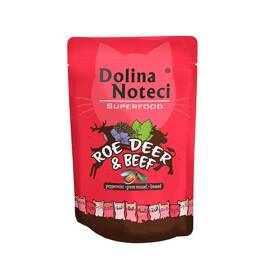
Dolina Noteci Superfood Wet Cat Food with Venison and Beef, 85 g pouch