The Havana Brown – Personality, Appearance, and Breed Requirements
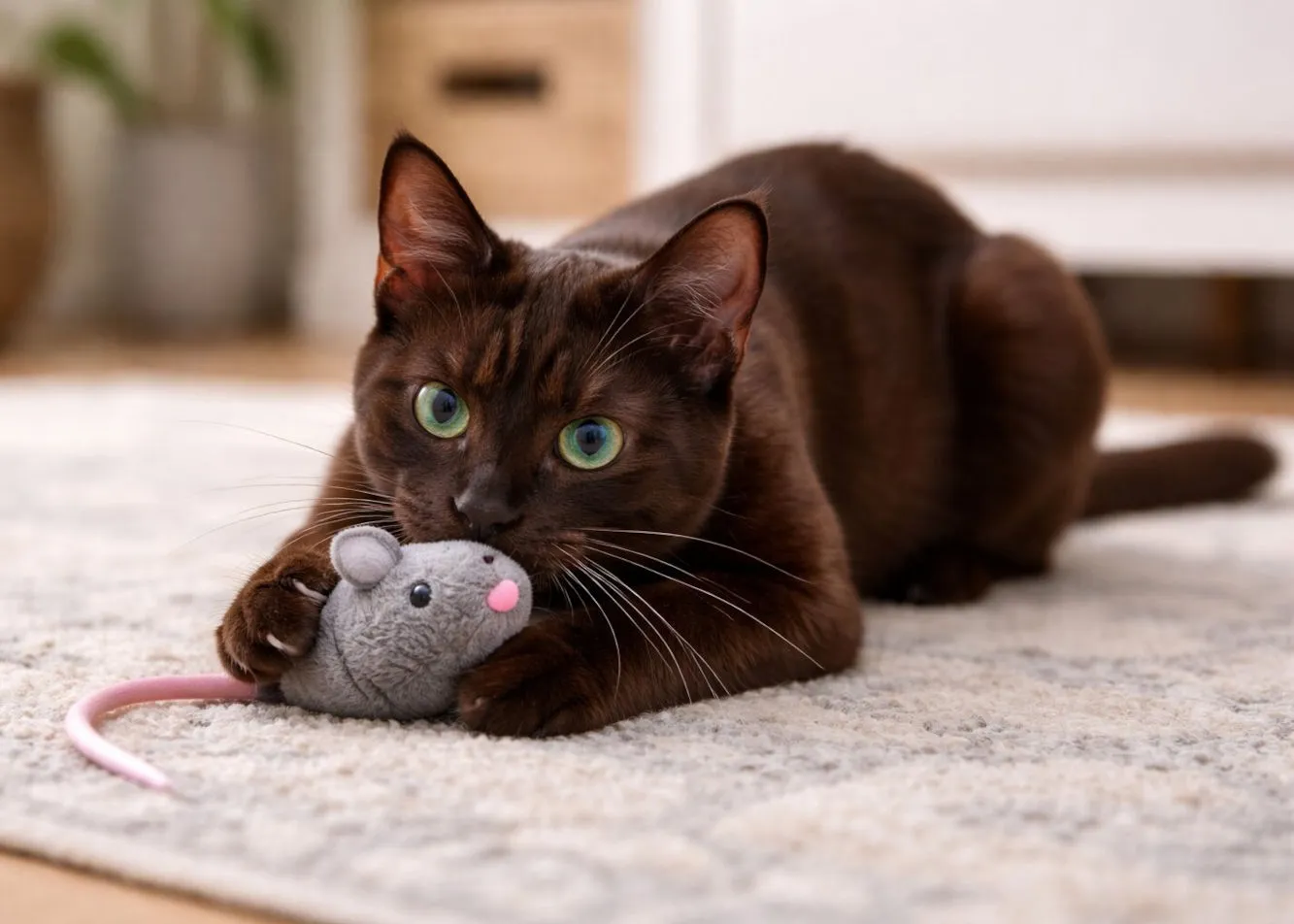
The Havana Brown, also known as the Havana cat, is one of the most elegant and, at the same time, rarest cat breeds in the world.It captivates with its deep, chocolate-brown coat, green eyes, and exceptionally friendly personality.Although it is extremely rare in Poland, more and more people are becoming interested in this breed.Find out what the Havanese is like, what its needs are, and whether it’s the right fit for you.
Havana Brown – Basic Information About the Breed
- Origin: United Kingdom/USA.
- Weight: between 3.6 kg (females) and 4.5 kg (males).
- Life expectancy: 12–15 years.
- Body type: slender, muscular, elegant.
- Eyes: green, almond-shaped.
- Ears: large, tilted slightly forward.
- Characteristic features of the breed: solid chocolate coat; shiny, short coat; pink paw pads and nose tip; brown whiskers (rare in cats).
- Fun fact: The breed’s name most likely refers to the color of Cuban cigars.
The origins of the Havanese
The Havanese is a breed created by humans.It was founded in the 1950s.in the 20th century in the United Kingdom by crossing chocolate-colored Siamese cats with black-coated shorthaired cats.The breeders' goal was to produce a cat with a uniform, warm brown coat.The breed quickly made its way to the United States, where it was officially recognized in 1959.It is still being developed today, though it remains very niche.
What does a Havanese look like??
The Havana Brown is a cat with an elegant, well-proportioned build.
Body type
- medium-sized, well-proportioned figure,
- well-developed muscles,
- a long, slender tail,
- small, rounded paws.
Head and snout
- a slightly rounded head,
- a broad nose,
- distinctive, square chin.
Coat
- short, smooth, and shiny,
- close-fitting,
- Solid chocolate (no markings in adult cats); kittens may have faint stripes, which fade with age.
The Havana Brown's Personality – What Kind of Cat Is It??
The Havanese has the temperament typical of Oriental breeds, but is a bit gentler.
Key features:
- very sociable and very attached to his owner,
- smart and curious,
- active and eager to play,
- communicative,
- who enjoy attention and social interaction.
This is a cat that wants to be part of the family's daily life.He doesn't handle loneliness and being ignored well.
The Havanese and Children and Other Pets
Havana Brown gets along well with the family, though she prefers spending time with older, calm children.He gets along well with other animals and enjoys playing with them.He feels most at home in a house where there's always something going on and someone is always there.
Havanese Cat Care and Requirements
Caring for a Havanese is relatively simple, but it requires consistency and dedication.Caring for your cat's skin and coat is especially important , as it helps keep their fur in excellent condition and supports your pet's overall health.
1.Activity and Fun
This is an energetic breed, so it needs:
- everyday play,
- interactive toys,
- mental stimulation (e.g., puzzles).
2.Hair care
It doesn't require much maintenance.Includes:
- brushing once a week,
- checking the ears and claws,
- basic oral hygiene.
3.Nutrition
Given their active lifestyle, their diet should be high in meat; high-quality wet food works best.
The Health of the Havanese
Although the breed is considered relatively healthy, it may be prone to diseases typical of Oriental cats.
Common problems:
- hypertrophic cardiomyopathy (HCM),
- dilated cardiomyopathy (DCM),
- polycystic kidney disease (PKD),
- progressive retinal atrophy (PRA),
- eye problems (e.g., strabismus),
- genetic disorders (e.g., gangliosidosis).
Regular checkups and choosing a reputable breeder are essential.
Keep in mind that this is one of the rarest cat breeds.It is virtually nonexistent in Poland, which is why buying a cat often involves traveling abroad.Most of these farms are located in the United Kingdom and the United States.
Who is the Havanese suitable for??
This is the perfect choice for people who want a sociable, affectionate cat and have time to play and engage in activities together.However, it won't work for people who are often away from home and are looking for a calm, independent cat.
How to Choose a Good Breeder?
A purebred cat should have a multi-generational pedigree and come from a legally operating, ethical cattery.It is safest to choose breeders affiliated with federations under the World Cat Congress (WCC)—this increases the chances of proper socialization and ensures that kittens are not sold before they are 12 weeks old.week of life.Otherwise, it is easy to unwittingly support breeding practices focused solely on profit at the expense of animal welfare.
FAQ - frequently asked questions
Is the Havanese a noisy breed??
He is talkative, but less noisy than Siamese cats.
Is this breed suitable for apartment living??
Yes, provided that she is kept active and engaged.
Does Havana Brown like being alone??
No—it’s a very sociable breed that doesn’t do well when left alone for long periods of time.
Recommended

Dolina Noteci Premium Wet Cat Food with Salmon Fillet, 12-pack (185 g each) + Free DNP Salmon Fillet (185 g)
Natural Taste Niewąska Gąska Wet Cat Food – Goose Flavor, 12-pack (185 g each)
Piper Animals Junior Wet Cat Food with Veal, 12-pack (185 g each)