
The Bengal Cat – Personality, Needs, Grooming, and Health. Is a Bengal the right cat for you??
Meet the Bengal—an energetic, intelligent cat that captivates with its beauty but demands a lot from its owners.Find out if this miniature domestic leopard fits your lifestyle and if you’ll be able to provide it with what it really needs.
What is a Bengal cat??Breed description, temperament, grooming, and health
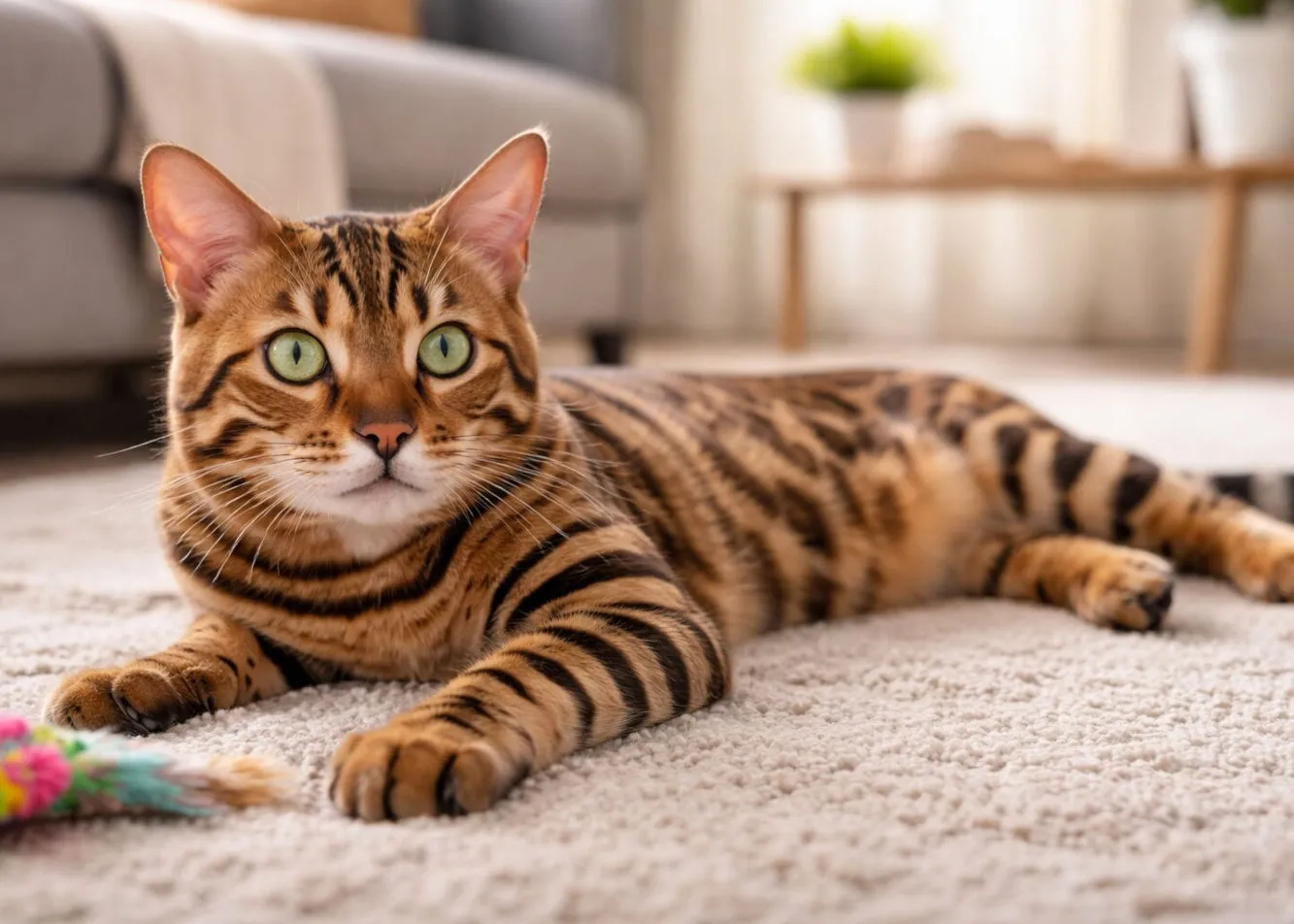
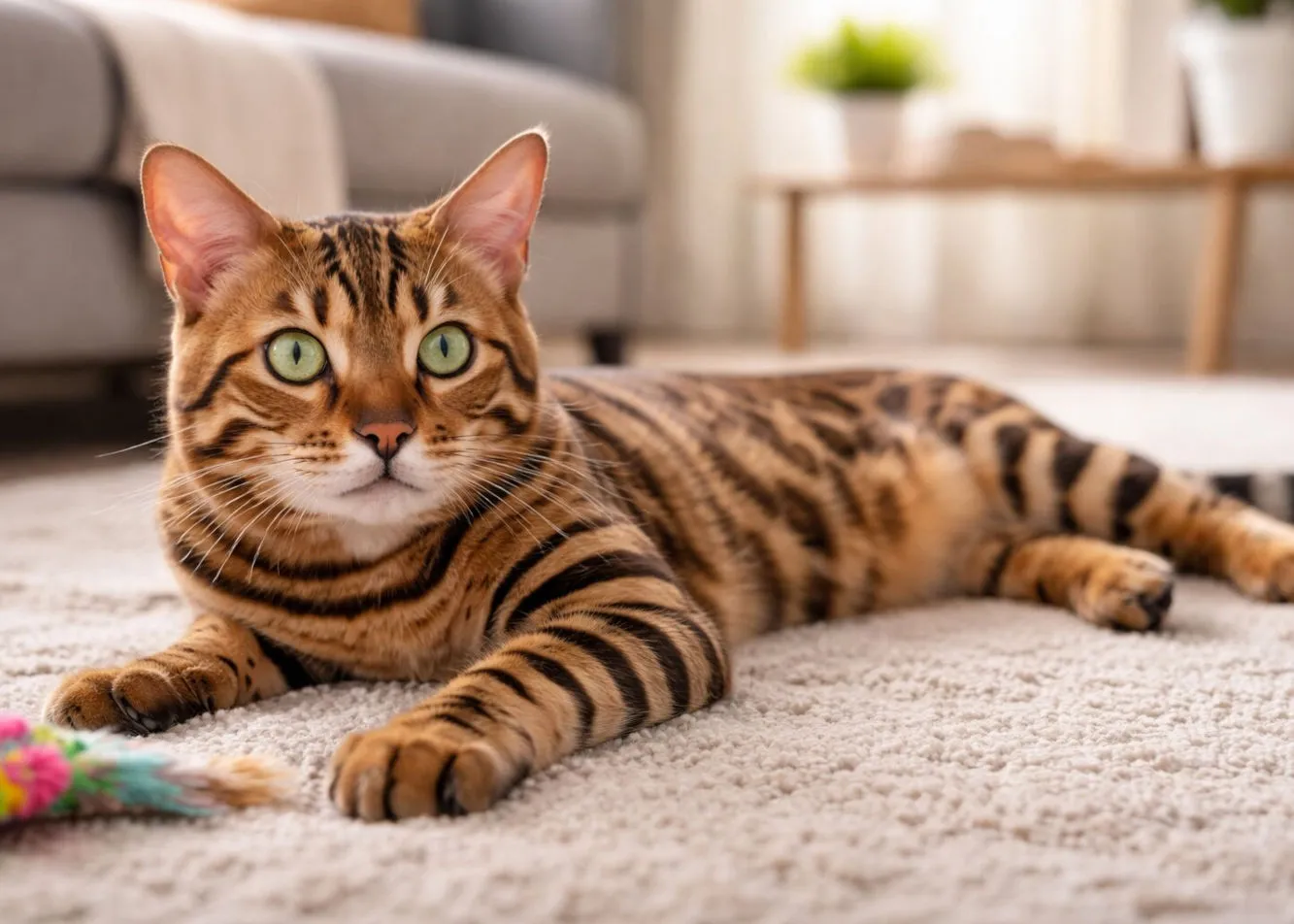
The Bengal cat is a short-haired breed known for its striking spotted or marbled coat and muscular build.It looks like a wild cat—and that’s partly no coincidence, since the breed was created by crossing a domestic cat with a wild Bengal cat.
But let's be clear: a Bengal isn't your typical lap cat.This is a very active animal that requires constant stimulation, consistent training, and attentive care.For some, it will be a partner in their daily activities; for others, a source of frustration and chaos at home.
Basic information about the Bengal cat breed
- Country of origin: USA
- Body weight: approx..3 kg (females) – 8 kg (males)
- Average lifespan: usually 12–16 years
- Build: slender, long, but very muscular; body slightly raised toward the rear
- Head and eyes: head rather small, round, slightly elongated; chin pronounced, cheekbones high; eyes large, oval/almond-shaped, yellow, amber, green, or brown
- Ears and tail: small to medium-sized, rounded ears; medium-length, thick tail with a dark tip
- Fur: short, silky, shiny
- Fun fact: Wild Bengal cats have webbed feet, which help them swim—some domestic Bengals have inherited this love of water.
The History and Origins of the Bengal Cat – Where Did This Breed Come From??
The Bengal breed is one of the so-called hybrid breeds.The first deliberate crossbreeding of domestic cats with wild Bengal cats took place in the United States in the 1960s.20th century (a project associated with Jean Mill).
It is worth noting that the creation of hybrid breeds remains a source of considerable ethical controversy to this day.In practice, the first generations of hybrids were unsuitable for life in homes—they exhibited wild behavior and high levels of stress.For this reason, in breeding, only the fourth generation is considered fully domesticated and safe for further breeding.The breed was officially recognized in 1986.
The Bengal Cat – Appearance and Characteristics
The Bengal looks like a miniature panther or ocelot.This breed was developed so that its "wildness" would be apparent at first glance—while retaining a domestic-type build.
The Bengal's physique
The Bengal cat is strong and well-built.It has well-defined muscles, long legs, and exceptional agility.He moves lightly and quickly, and jumping and climbing are second nature to him.
The Bengal's coat and coloration
The Bengal's coat is short, very smooth, and often has a distinctive "glittery" sheen.The most common coat colors are:
- spotted/rosette-patterned (most "leopard-like"),
- marbled (patterns resembling veins).
The contrast between the background and the pattern should be distinct—this is one of the breed’s key characteristics.
The Personality and Temperament of the Bengal Cat – Is It a Cat for Everyone??
Bengals are most often:
- very active and energetic,
- smart and quick learners,
- confident, brave, curious,
- vocal – they can "talk" a lot, often loudly,
- creative—unfortunately, sometimes a little too much.
These are cats that need daily challenges and exercise.Without them, they’ll find something to do on their own—and it’ll usually be something their caregiver won’t be too thrilled about (tampering with safety locks, hunting for plants, climbing on the curtains).
Many Bengals really love water: dipping their paws in a bowl, playing with the faucet, and even trying to “keep company” with their owners in the bathroom.
Bengals and children and other animals
With proper socialization, a Bengal can be sociable and outgoing, but its temperament means it won’t get along with every other pet or child.They usually get along well with younger family members, as long as the children understand the rules for interacting with the cat and don’t provoke it by making noise or chasing it.He usually gets along well with other animals, but he can be possessive of his owner.Socialization is a patient process (ideally involving gradual exposure) and requires a willingness to accept that it won't always work out.
How to care for a Bengal cat?Requirements and Care
The Bengal isn't difficult to groom, but it has very high environmental and behavioral needs.
Fur Care
- brushing every now and then (usually 1–2 times a week is enough).It’s worth buying good-quality cat brushes ,
- checking the skin and coat during the shedding season,
- basic grooming: nails, ears, teeth.



Home conditions
Bengals need space to move around vertically and get daily exercise:
- tall, sturdy scratching posts,
- shelves, cat walkways, and climbing spots,
- secure windows and balconies (a Bengal can get through flimsy screens),
- a varied environment (puzzle toys, tunnels, hiding places).
Activity and Fun
The most important rule: hunting practice every day—preferably in several short sessions.Each one should end with a reward (a small meal or a treat), because this completes the "hunting cycle" and truly satisfies the cat's needs.
Bengals also thrive in:
- command training,
- clicker training,
- agility,
- walks in a harness (if the cat accepts it and it’s introduced without pressure).
The Health of the Bengal Cat – Common Health Issues
Like every breed, it has its own genetic predispositions.The most commonly mentioned are:
- hypertrophic cardiomyopathy (HCM),
- progressive retinal atrophy (PRA),
- polycystic kidney disease (PKD).
In addition, the following may occur:
- eclipse,
- a tendency to dislocate the patella.
Regular veterinary checkups, as well as heart and eye exams, significantly reduce the risk of health issues.
Feeding a Bengal – How to Feed a Bengal Cat?
The Bengal needs a high-protein, well-balanced diet tailored to its high activity level.It is important to pay attention to the quality of cat food and the animal protein content.For very active cats, it is important to ensure constant access to food; for less active cats, weight must be monitored, although Bengals are less prone to weight gain than other, calmer breeds.


Who is the Bengal cat for??
This is a great choice for people who:
- have the time and desire to play with and be active with their cat every day,
- they like intelligent, "dog-like" breeds that are eager to learn commands,
- are consistent and know how to set boundaries,
- They want a sociable cat.
A Bengal may not be the right choice for someone who:
- is looking for a calm cat that doesn't require much attention,
- spends most of the day away from home,
- there are no conditions in place to secure the area and ensure traffic flow.
How to Choose a Good Breeder?
A purebred cat should have a multi-generational pedigree and come from a legitimate, ethical cattery.The safest option is to choose catteries that are members of federations affiliated with the World Cat Congress (WCC).This increases the likelihood that the kitten:
- will be properly socialized,
- will be issued no sooner than 12.week of life,
- comes from a line of individuals screened for genetic diseases.
FAQ – Frequently Asked Questions About Bengals
Is a Bengal cat suitable for first-time owners??
It's usually not recommended as a "first cat".It requires experience, patience, and a lot of effort on the part of the person.
Is the Bengal a very active cat??
Yes—it's one of the most energetic breeds.He needs his daily dose of exercise and stimulation.
Do Bengals meow a lot??
That's often the case.Bengals are known for their vocalizations and can loudly express their needs or boredom.
Author: M.Biegańska-Hendryk
Recommended