
Should a cat be allowed outside?
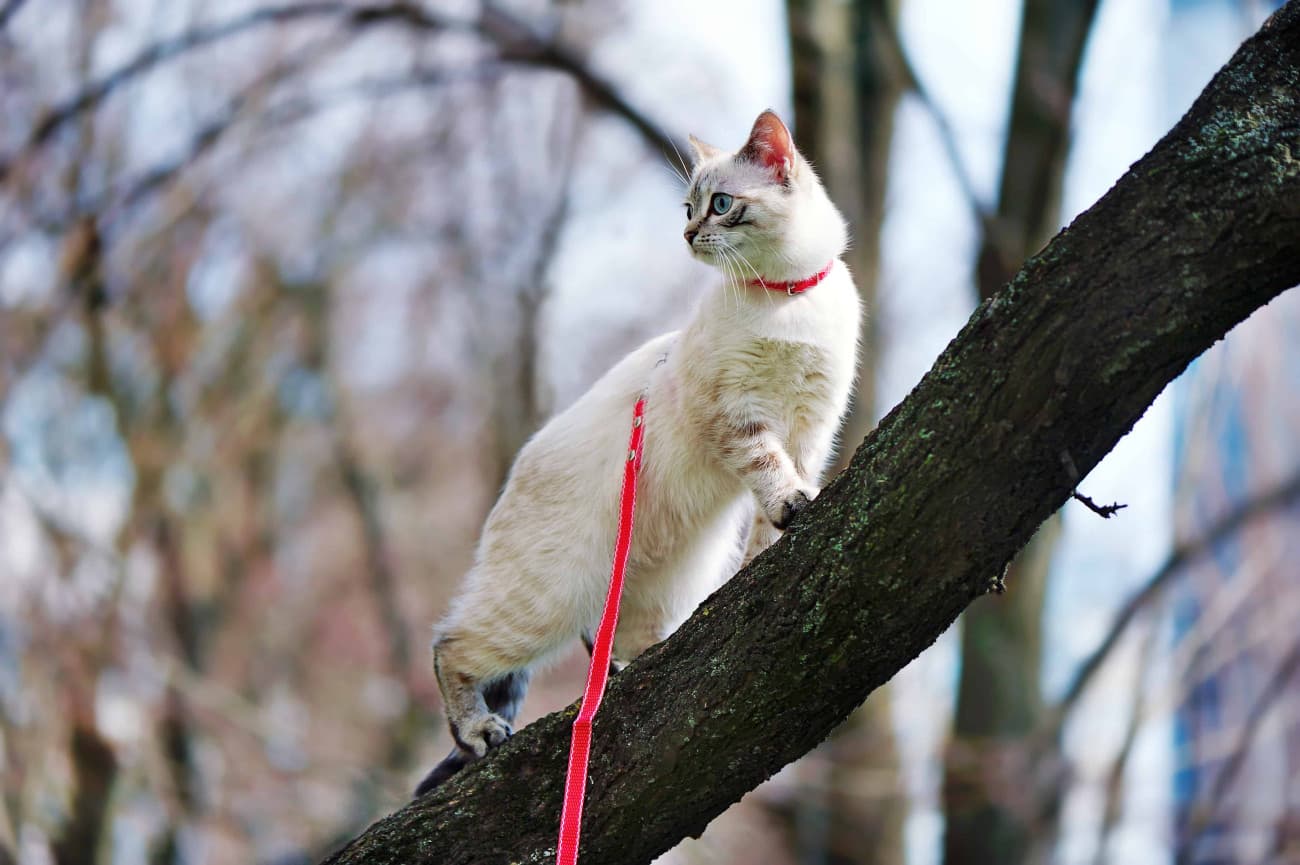
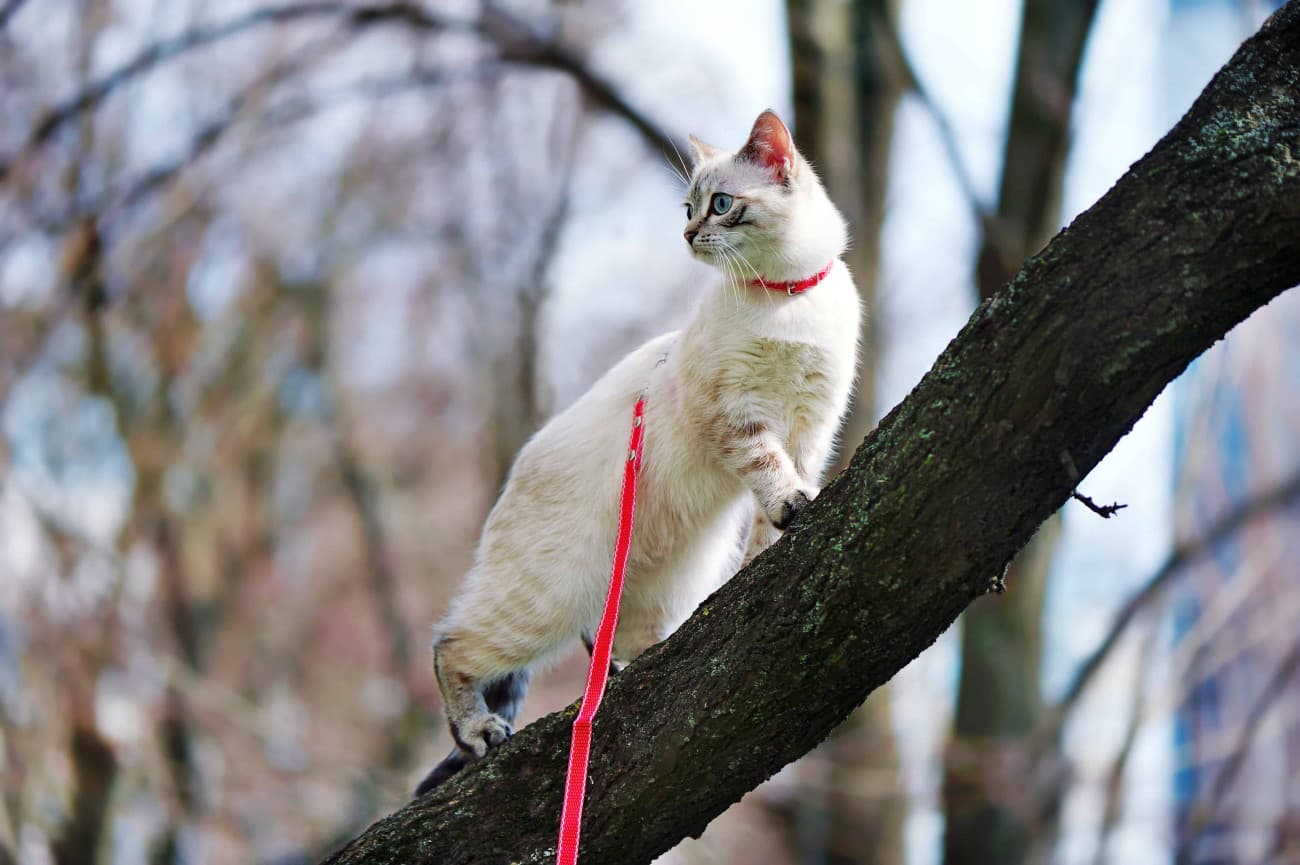
The debate between those who let their cats roam freely and those who believe these animals should stay indoors at all times seems to be one of the most heated debates one can encounter when surveying the opinions of pet owners.Some talk about the need for freedom and independence, while others focus on the lurking dangers and the safety of their pets.
Having followed this debate for years, I must unequivocally side with the other group.As both a cat owner and a cat behavior specialist, I believe that cats should generally stay indoors.Does that mean he can't leave the apartment at all??Of course it can!As long as it's done properly and under control.
Cat vs. the Environment
The domestic cat (Felis catus) is an introduced and invasive species in our region—that is a fact.Historically, small cats originated in central and northern Africa and the Nile Valley, extending as far as Mesopotamia, and they reached Europe (as well as other continents) alongside humans.Their expansion was not particularly rapid, but it was certainly effective, and felines adapted to life in areas that differed greatly both geographically and climatically.
It is precisely this ability to adapt that has, to some extent, become the cat's curse.Even today, people tend to view cats as animals that can manage perfectly well without our active involvement.Meanwhile, the facts are quite different.
Why cats shouldn't go outside?
In its natural habitat, the cat plays a dual role: that of both predator and prey.Furthermore, despite the fact that we are dealing with a domesticated species, the cat has not undergone the so-called shortening of the hunting chain, which occurred during the evolution of the dog.This means that a cat, even one born and raised indoors, will still instinctively hunt.Often not to eat, because his motivation isn't hunger, but the need for entertainment.Yes, hunting provides cats with variety and fulfills one of their basic instinctual needs!So one could say that a house cat, well-fed and enjoying the privilege of living in a warm home, kills for fun.
Unfortunately, the consequences of these activities are disastrous for the local environment.Most pet owners are unaware of the extent of this phenomenon, claiming that “my cat doesn’t kill because it doesn’t bring home any prey.”.It turns out, however, that we, as pet owners, see only 1/15 of what our pet actually catches.From a holistic perspective, the situation is even worse: a 2019 study conducted in Poland estimates that 130 million birds and 580 million small mammals are caught by cats ANNUALY in rural areas!On top of that, the cat can't tell the difference between protected species and others, so it hunts whatever it can.In this way, it contributes to the accelerated extinction of endangered species, decimating one after another.We must not disregard this data.
Dangers for outdoor cats
This is the other side of the issue, which should not be ignored either.Above all, however, you need to realize that there is NO such thing as a “neighborhood safe for letting your cat out”.It's a myth meant to justify opening the door for a meowing, whining pet.Meanwhile, just outside the door lies a world in which, in the long run, our little house cat might not stand a chance!
He faces not only obvious dangers, such as cars, dogs, and other territorial animals in the area.Mouse or snail bait scattered in gardens, as well as the possibility of a cat catching a rodent that has already been poisoned, can lead to the cat's death.Pesticides that someone has sprayed on their lawn, as well as architectural obstacles (such as fences or windows) where an animal might get stuck or hang, especially if it is wearing a collar, also pose a danger.Less obvious threats also pose a risk: incurable viral diseases that can survive in the environment and remain infectious for up to a year (!), bites, parasites, being caught by larger predators (including foxes and birds of prey), or people who intentionally seek to harm the animal “just because”!".
No, these aren't imaginary situations.This is a daily occurrence for veterinarians, foundation volunteers, and those pet owners who were lucky enough to find their pet in time to help it.Unfortunately, statistically speaking, this is rare, and in the end, it is the cat that bears the consequences—including the worst ones.
What if we think our cat should be allowed to go outside, but at the same time we want to make sure it stays safe??Or if we come across a stubborn cat who absolutely refuses to stay indoors?You'll find out how to handle such situations in the next article.
CAT BEHAVIOR EXPERT
Małgorzata Biegańska-Hendryk