
Planning a training session for your dog
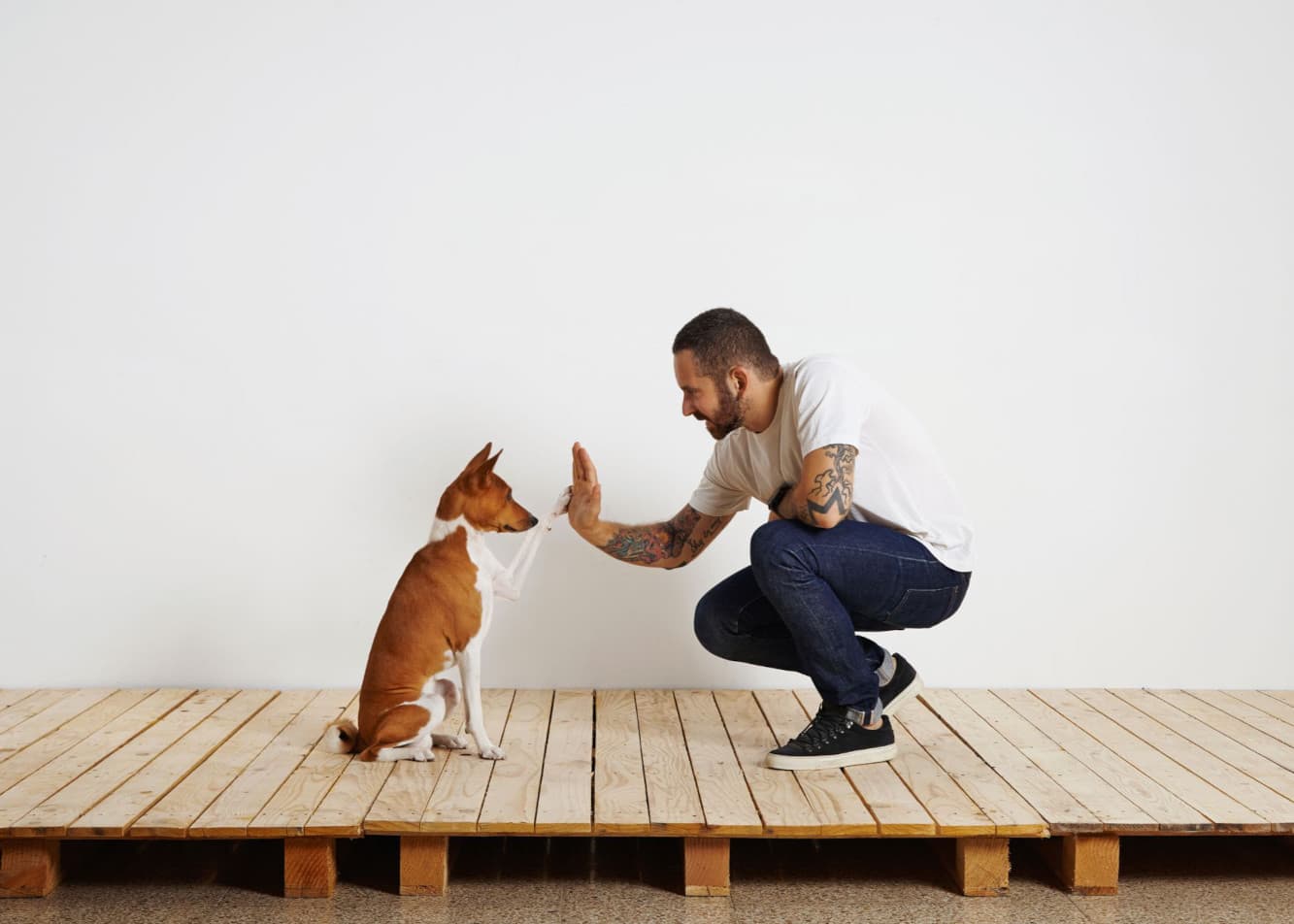
When we buy or adopt a dog, we want to teach it something right from the start.In the age of the Internet, it’s not hard to find information on how to teach a dog useful commands or impressive tricks.However, the first feelings of frustration and discouragement set in when things don't go as planned.Sometimes it also happens that a dog performs a learned behavior perfectly at home, but on a walk acts as if it had never heard of it.So how can you plan a training session in a way that avoids frustration and failure??How many behaviors should be taught in a single session??And most importantly—how to generalize behaviors so that they also work during a walk?
When should you start training your dog??
It's a seemingly simple question, but not quite.When you have a puppy, it goes without saying—the sooner, the better.However, when it comes to adoption, the situation is different if we're talking about traditional obedience training.A dog's age isn't the only factor; its history is also very important.Training should be fun, so in this case, it’s worth waiting a few days or weeks until our four-legged friend gets used to the new surroundings and people.Especially since learning isn't just about memorizing facts, but also about discovering the world around us.
With every dog, it’s best to start from scratch.Introducing him to the world around him orto dog toys is already the first step in training.When the dogs are withdrawn, not imposing yourself on him is also a lesson—and a very important one!That's why a dog's training begins from the very first day it's with us.
Choosing training methods and how to reward your dog
It’s a good idea to stick to positive training from the start.Rewarding desired behaviors is very effective, and a dog that is praised more often is more likely to perform a given action because it has received a reward.In addition, positive methods help build and strengthen the relationship with the caregiver, which is very important throughout the entire time they spend together.
Before starting training, it’s a good idea to figure out what motivates your pet.One dog will do anything for a treat, while another will do anything for its favorite toy.Sometimes just giving your dog a treat won’t work, so you have to play the role of a good “marketer” or let your dog hunt it down.The value of the reward should be commensurate with the difficulty of the task.For a simple task,dog treats from might be a suitable reward, but when teaching the "come" command, it’s worth pulling out your ace in the hole.
Stages and distractions during dog training—how to handle them?
When teaching our pet new skills, we’d like to see the results right away.We raise the bar very quickly, because as soon as the dog performs a given step correctly once or twice, we immediately expect more.This causes excessive frustration, which in turn discourages the dog from continuing to work.
A very important aspect is breaking the exercise down into stages and being consistent in following them.Once we reach a certain stage, it’s a good idea to reinforce it for a while to make sure the dog has learned it.The initial stages should be practiced in a relaxed environment, free from distractions from the outside world.This way, we can be sure that our pet will stay focused on the task at hand.
When training dogs, it is important to take a step-by-step approach.Before you teach your dog a specific command, make sure it can perform the action correctly.For example, if you want your dog to stand next to you, first focus on teaching him the correct position.Once your dog is able to stand properly by your side, give the appropriate command, such as "heel." This will prevent your dog from misinterpreting the command and adopting an undesirable posture.Although there are some exceptions, such as the commands "stay" or "come," where you can introduce the behavior and the command almost simultaneously, it’s usually best to focus first on the action itself and then name it.
The final step is to generalize the behavior.The idea is that we can ask someone to perform an exercise regardless of our position or location.It is very important to do this gradually.If we want to extend this behavior to a walk, we start with a familiar area, after taking care of their basic needs and letting them sniff around.Keepingdog training treats on hand in situations like these will definitely help us maintain these habits.
Dog Training - Summary
When planning a training session, we need to remember to find out what motivates our dog.Learning isn't just about memorizing facts—it's also about exploring new spaces and surroundings, and positive reinforcement helps strengthen our bond.When adding terms, let’s keep in mind what we want to name, so let’s start by learning the behaviors.Let’s not expect our pet to learn overnight; every dog learns at a different pace, and patience is the key to success.
Mateusz Glazik
dog trainer and behaviorist
Recommended