
Oral hygiene – how to care for your cat's teeth?
Where does tartar come from, and what are the risks??
Dental calculus is mineralized bacterial plaque that builds up every day on the sides of the teeth, mainly where they meet the gums.When exposed to calcium and magnesium salts—which are present in saliva as well as in the food we eat—it hardens and deposits form.Plaque begins to build up on the teeth, often leading to further problems such as gingivitis, bleeding in the mouth, pain while eating, and the proliferation of bacteria that adversely affect the entire body, including the.in.on the digestive tract and kidneys.In extreme cases, tartar can lead to tooth loss in cats.
Unfortunately, it is impossible to determine with 100% certainty when tartar will begin to build up in a given individual, as this depends on many factors, such as m.in:
- age – the older a cat gets, the more prone it becomes to tartar buildup – it’s a matter of statistics,
- diet – cats that forage for food on their own have significantly fewer problems with tartar than those fed commercial pet food (especially dry food).This is likely due to the fact that they eat various types of tough animal tissues, which act as a “natural toothbrush” and regularly remove at least some of the plaque from their teeth,
- your pet's individual saliva pH level – a cat's saliva pH can change over the course of its life, which is why it may become more prone to tartar buildup at certain times.
One thing is certain, however: if the stone appears, it won’t disappear on its own.
How to remove tartar from a cat's teeth?
It must be made clear that there is only one way to remove tartar: during a dental procedure using an ultrasonic scaler.This procedure is performed under general anesthesia, which requires appropriate blood tests beforehand; for cats older than 8 years or those in a high-risk group—for example, due to their breed—a cardiac ultrasound is also required.
Why is anesthesia necessary??Since the procedure itself is unpleasant, and a conscious animal simply won’t let the veterinarian remove all the tartar deposits—including subgingival tartar—.In addition, it is advisable to have a dental X-ray taken during the scaling procedure to assess the condition of the tooth roots, check for any issues below the gum line (such as the formation of odontoclastic erosions), whether any teeth are fractured, and whether any teeth are candidates for extraction.It is best to perform all necessary procedures during a single anesthesia session so as not to place an additional burden on the body.
Is there another way to effectively remove mineralized bacterial plaque??No, there isn't.Neither food nor treats, nor any liquids or wipes, can remove the tartar.If you have any doubts about this, you can take a piece of that treat or a ball of cat food and try scraping it against a tile in the bathroom.I guarantee there won't be any effect, and even if there is, it will be the same.
However, specific preventive measures can be taken to prevent tartar buildup, and that is exactly what we should focus on.
How to prevent tartar buildup?
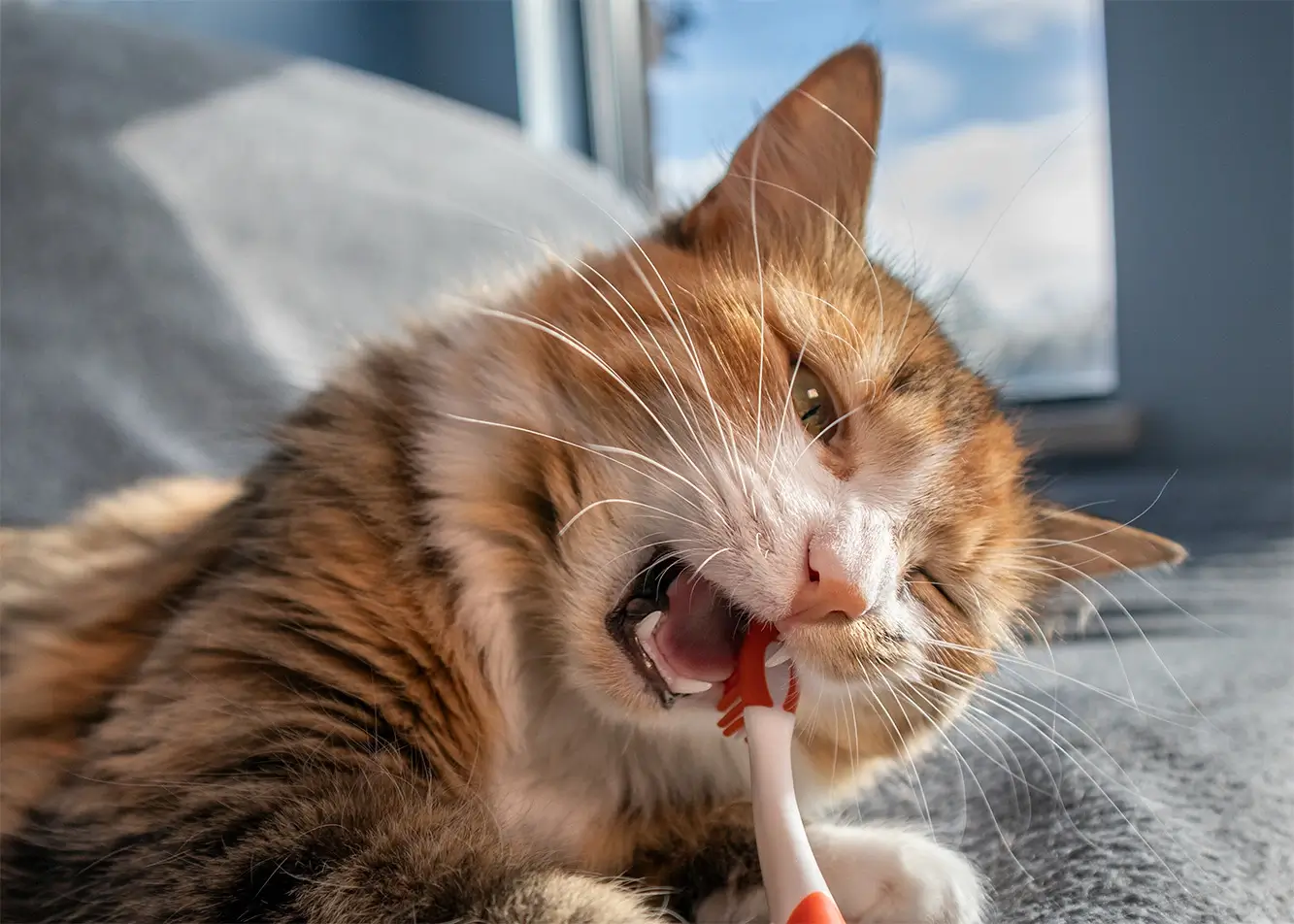
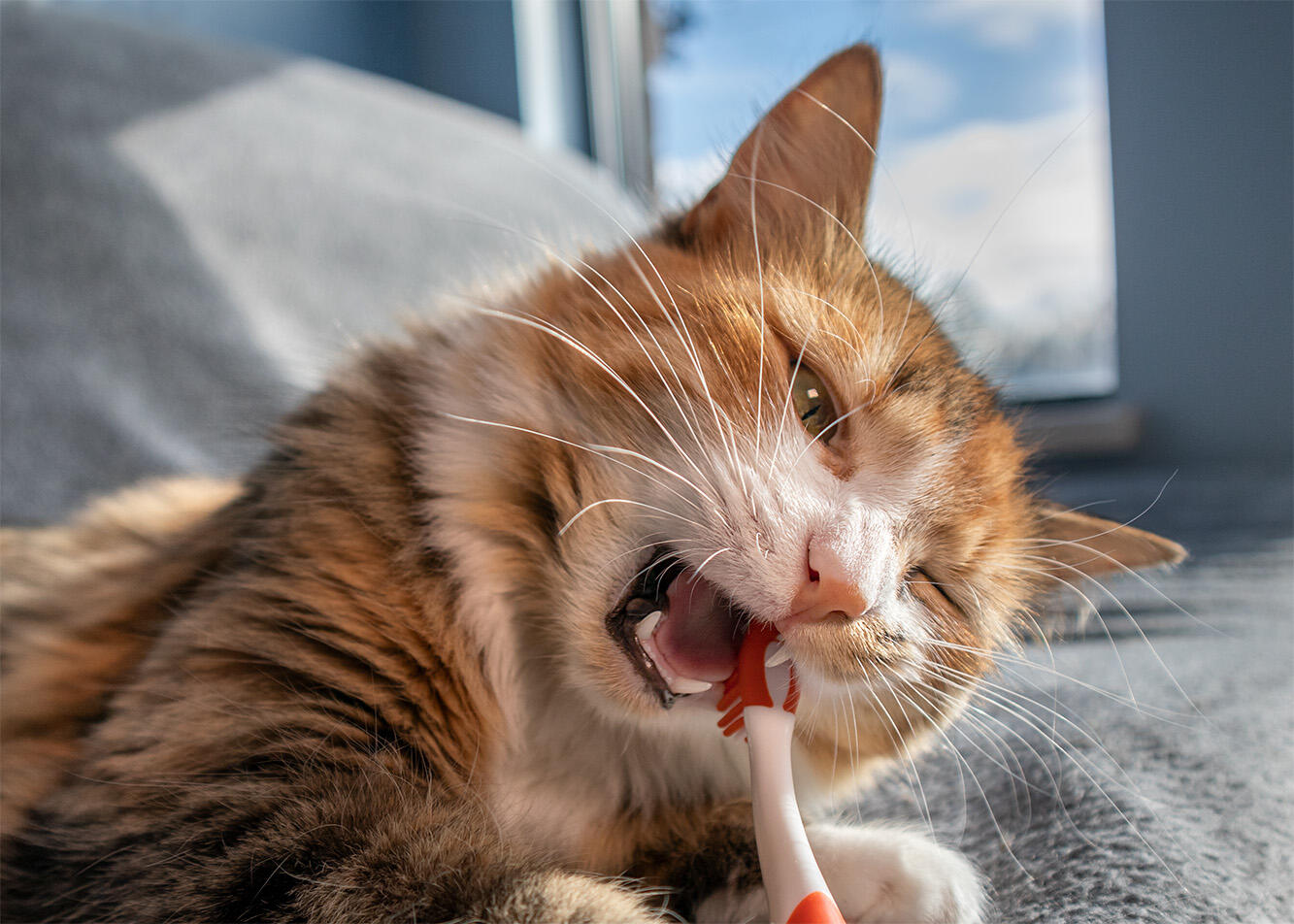
The best way is to brush your cat's teeth regularly.Special toothpastes and double-headed toothbrushes designed to fit a cat’s mouth are used for this purpose (for cats, size XS is usually best, or size S for large breeds).Apply a small amount of toothpaste to the toothbrush, then brush your upper and lower teeth several times.Ideally, this should be done every day, but even if the caregiver does it just 1–2 times a week, the results will still be much better than if oral hygiene were neglected entirely.
If your cat won't let you use a toothbrush to clean its teeth, you can use a special finger sleeve or simply a gauze pad wrapped tightly around your fingertip.We still use a paste for cleaning, as it is the most effective due to its abrasive properties.Alternatively, you can use special gels or wet wipes soaked in appropriate antibacterial solutions.However, it is important that these products be either flavorless or have a taste that your pet enjoys.Otherwise, the discomfort may be too great, and the entire teeth-cleaning procedure will cause unnecessary stress.
It is particularly important to brush your teeth immediately after a tartar removal procedure.It is often observed that tartar builds up quite quickly in cats after such a procedure, which is why regular cleaning is essential.Especially since bacterial plaque begins to form on the teeth as early as 15 minutes after brushing, and then only continues to build up.
What Not to Do?
You definitely shouldn't feed cats dry food to remove tartar, because we already know that it doesn't work at all.Keep in mind that dry kibble particles, combined with the fat that is sprayed onto many such products during the manufacturing process, stick to a cat’s teeth, creating an ideal breeding ground for bacteria—which is where the whole problem begins.
It is also not advisable to give cats any additives or supplements that alter the pH of their saliva—whether in the form of liquids added to their water or powder sprinkled on their food.In the case of the first solution, it is usually ineffective because cats have a species-specific reduced sense of thirst and drink too little for the product to have a real effect on their condition.The second option, on the other hand, is usually based on powdered brown algae, which are m.in.source of iodine.Iodine, on the other hand—especially when added to the diet on a regular basis—can lead to the development of hyperthyroidism if taken in excessively high doses.Cats are genetically prone to this condition, especially as they age past 8 years.Therefore, this type of supplementation is particularly not recommended for mature and older animals.
Some people also recommend giving cats hard meat treats to chew on to help prevent tartar buildup—whether these are pieces of meat on the bone or long strips of raw or dried meat.Snacks of this kind can certainly be included in your pet’s diet, but this method isn’t effective for all cats, so you shouldn’t rely on it as the only way to prevent the problem in question.
Summary
Untreated tartar in cats leads to pain and discomfort, can have serious consequences for a cat’s health, and may also cause adverse behavioral changes.In fact, cats suffering from oral health issues often exhibit abnormal or aggressive behavior.Therefore, cats should have regular dental checkups, at least once a year, along with routine blood and urine tests.It’s also a good idea to teach cats to brush their teeth as part of their regular daily care routine.Regular dental care for cats can indeed spare them a lot of trouble in the future.
Małgorzata Biegańska-Hendryk
Master's degree in history, veterinary technician, certified companion animal behaviorist, feline nutritionist.For the past 10 years, he has been building the brand "kocibehawioryzm".en.Author of books, articles, and a blog.In her personal life, she is the owner of three cats (Stefana, Buni, and Imbir) and a Sphynx named Gack.