
Nosework – what is it?
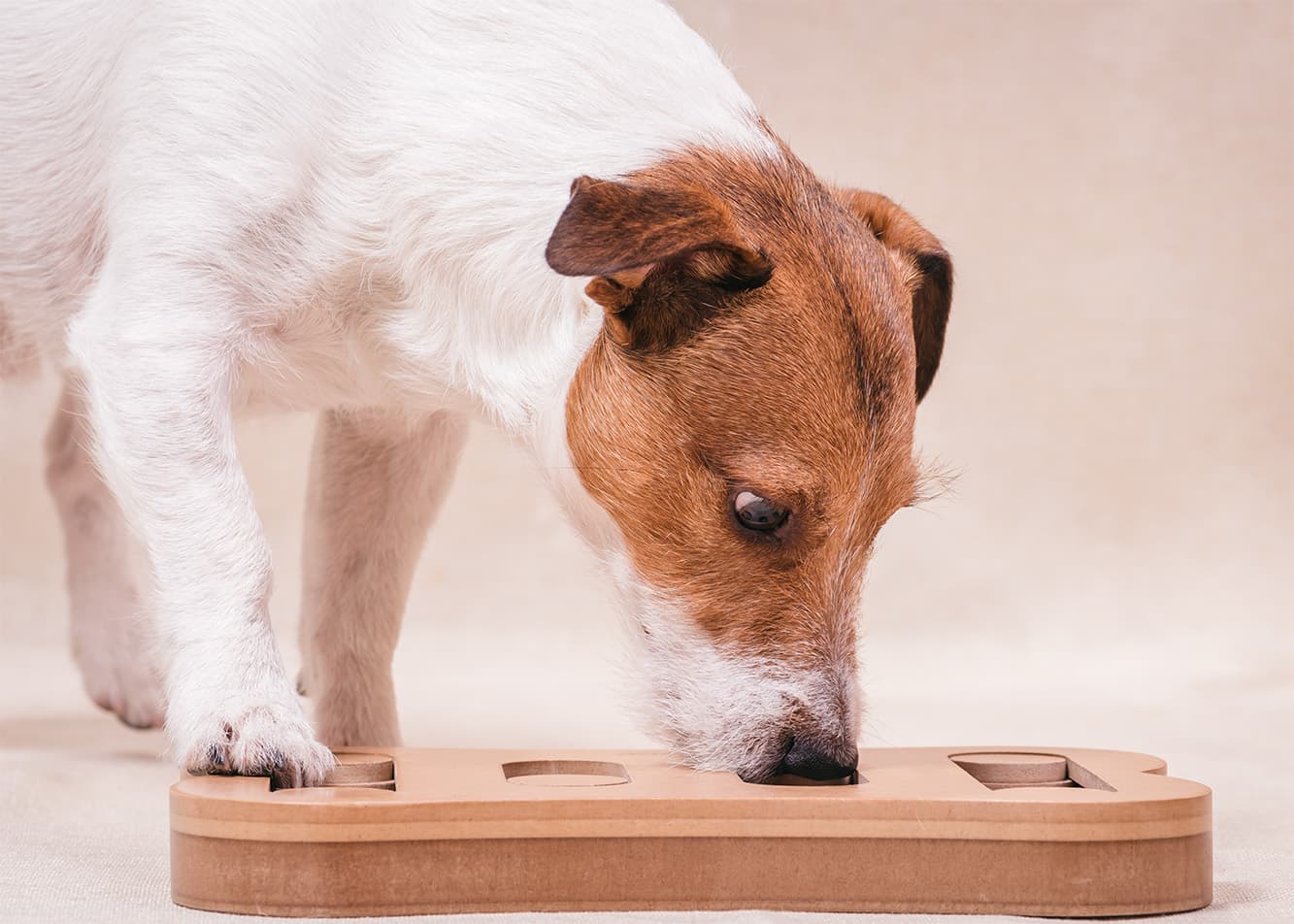
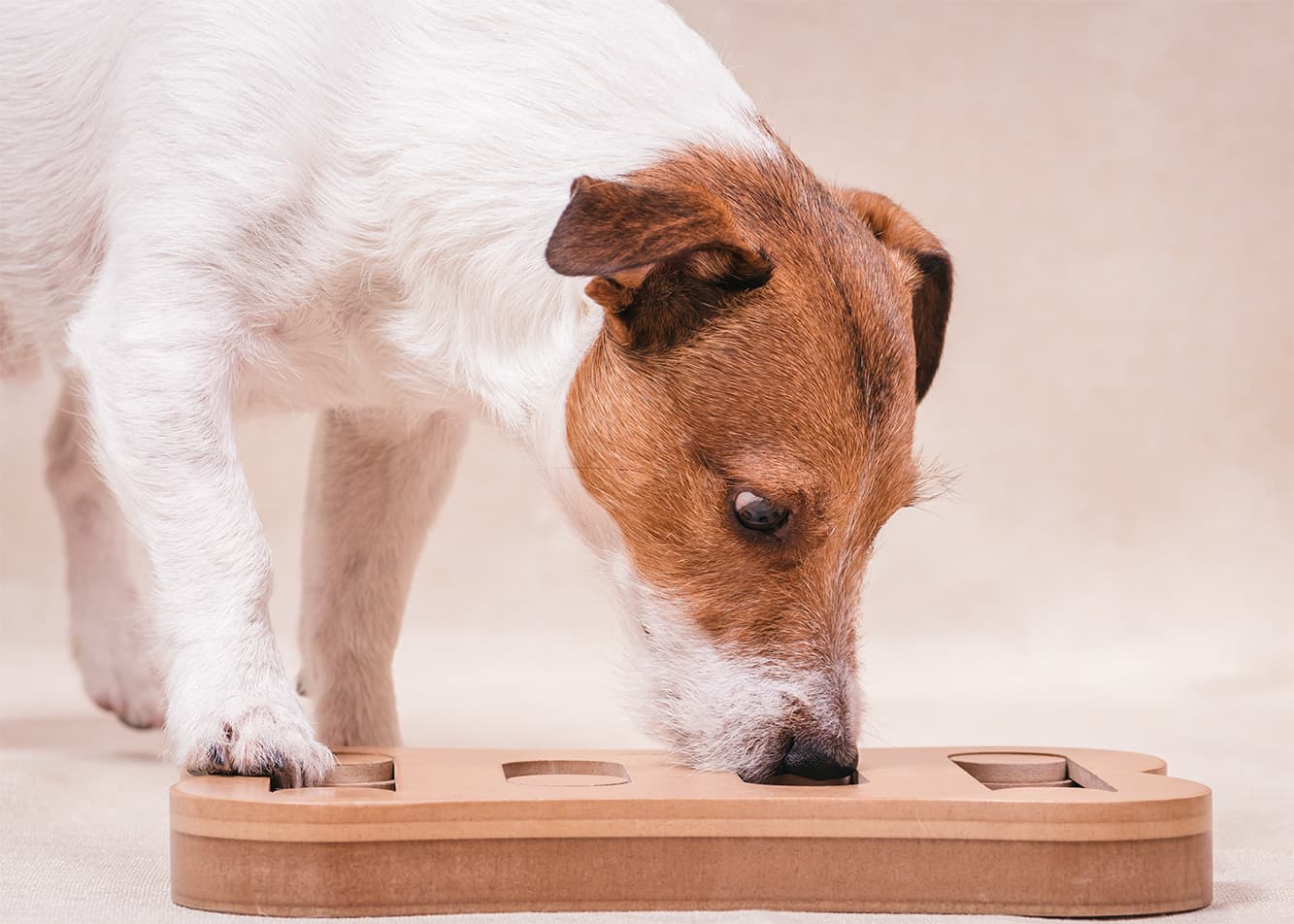
When we hear about dog sports, we often think of Frisbee or agility—that is, physical sports.Even in our human world, team sports and track and field are the first to go.But chess is actually a sport, too.And nosework is exactly that kind of mental exercise for dogs.What exactly is it??Why is this activity interesting for a dog??
A sport that’s fascinating in its own quiet way!
Nosework is a sport based on the hunting instinct.This is a sequence of behaviors that enables a predator to catch its prey.In addition, the sport of nosework has its roots in working dogs.The difference is that the dog isn't going out to hunt game or illegal substances, but rather for things like cinnamon, aromatic cloves, or fragrant orange peel.
When we watch a dog working to find a specific scent, at first glance we don’t notice anything out of the ordinary.However, this time should be very important to us, because as we search, we can observe changes in the dog’s behavior, which will make it easier for us to tell during a walk when the dog has picked up on something interesting and when it’s just sniffing around.
In addition, nosework is a sport based on the hunting instinct mentioned earlier.This is because the dog has to track down the scent of, say, cinnamon, find it, and eat the treat it receives from its owner.Since the hunting leash has always been and will always be a part of our dogs' lives, it is important to use it properly.
The most common view of nosework is that it teaches independence.And that's how it is: the dog first learns to work under easy conditions, and then gradually applies that skill to more difficult ones.Let’s remember that observing the dog during the search (which is the essence of this sport) is important.When a pet detects a scent, it moves from one edge of the “scent cone” to the other, sniffing as it goes (in rescue operations, this concept can be visualized as a triangle whose apex radiates from the scent source and is carried by air currents).In this way, he narrows down his search area and locates the source of the scent more precisely—or perhaps he is still in the process of looking for it.
By keeping a close eye on our pet, we can determine whether it needs help.This ban also applies to service dogs.In difficult situations, it is the owner's responsibility to help the dog search.
Nosework teaches you how to communicate better with your dog!
During a search, the dog learns independence, and we learn how to communicate with it.Proper training can help a dog in difficult situations.Observing body language is the art of dialogue.
As a guide in nosewalking, we learn to position our bodies in a way that suggests to the dog where to go.With our support, skittish dogs can enter places they would otherwise be afraid of, or ignore the person they are with.
After all, communication is key, and learning through play is more enjoyable.And most importantly, we can apply this knowledge in our daily lives to build a stronger bond with our dog.
A calm work environment is the key to success
Nosework is also suitable for reactive dogs, i.e., those prone to aggression.That’s why it’s worth remembering that well-trained nosework can be helpful in such situations.It is important to not only develop an awareness of scent but also to cultivate a calm approach to searching through methodical work.It is important that the dog does not rush into the ring, scanning for objects that remind him of where a scent might have been hidden, but instead checks every relevant part of the room or designated area step by step.It is precisely this kind of work that teaches calmness and is very important when dealing with reactive dogs.
Changes in behavior during a walk
Dogs that use their sense of smell develop it further, pick up on more scents, and become more independent and confident.You can see this on a walk, when the dog walks more calmly for longer and spends more time sniffing around.This is a very welcome outcome, because let’s not forget that dogs explore the world with their noses!The more scents he experiences, the more of the world he'll want to explore.A dog's sense of smell is its strongest sense, so it's important to nurture and develop it.
How to get started
Nosework is a relatively inexpensive sport.We need scent carriers, such as tins or tubes, and scents like cloves, orange peel, and cinnamon.You can use essential oils or natural fragrances.It’s a good idea to start by working with an instructor who can show you how it works.There are several ways to introduce scents, and it’s important to choose the right one for your dog.The storage of fragrances is of great importance, just as is the creation of samples.Be sure to keep the flavor carriers separate—for example, in a zip-top bag—to prevent them from mixing.Failure to follow these rules may result in the dog marking the wrong spots or ignoring small scent sources.In addition, when applying the scent to the carrier or placing it in a specific location, you should wear gloves, as the scent may transfer to you or to objects you touch.This is not recommended during the initial phase of training.
Summary
Nosework is a fantastic sport for every dog, regardless of age or breed.However, it’s a good idea to start your journey into the world of fragrances under the guidance of an instructor.You can do this in person or online to find out all the details, because in this case, they matter.Getting it right now can pay off in the future.
