
Is this a game?
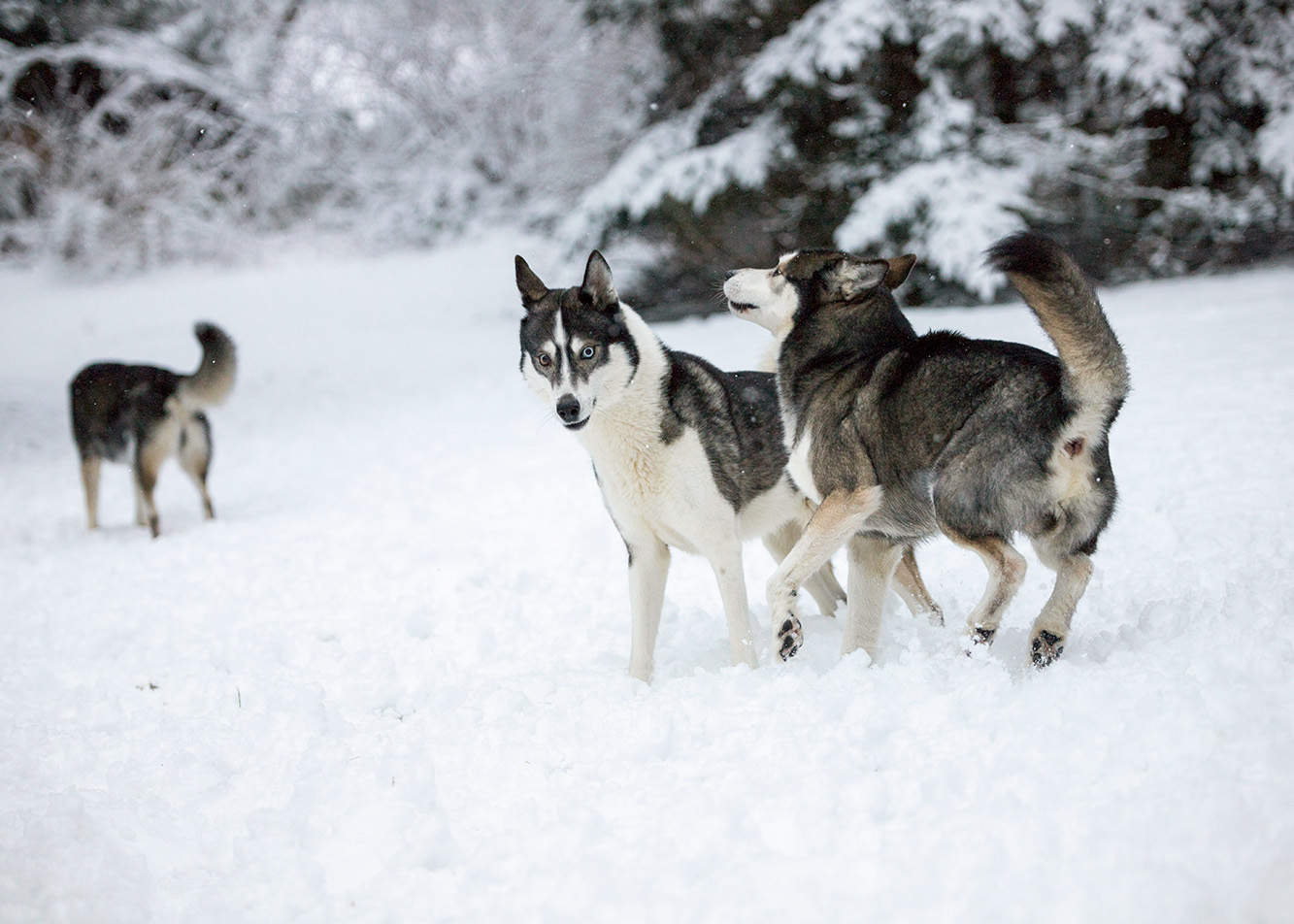
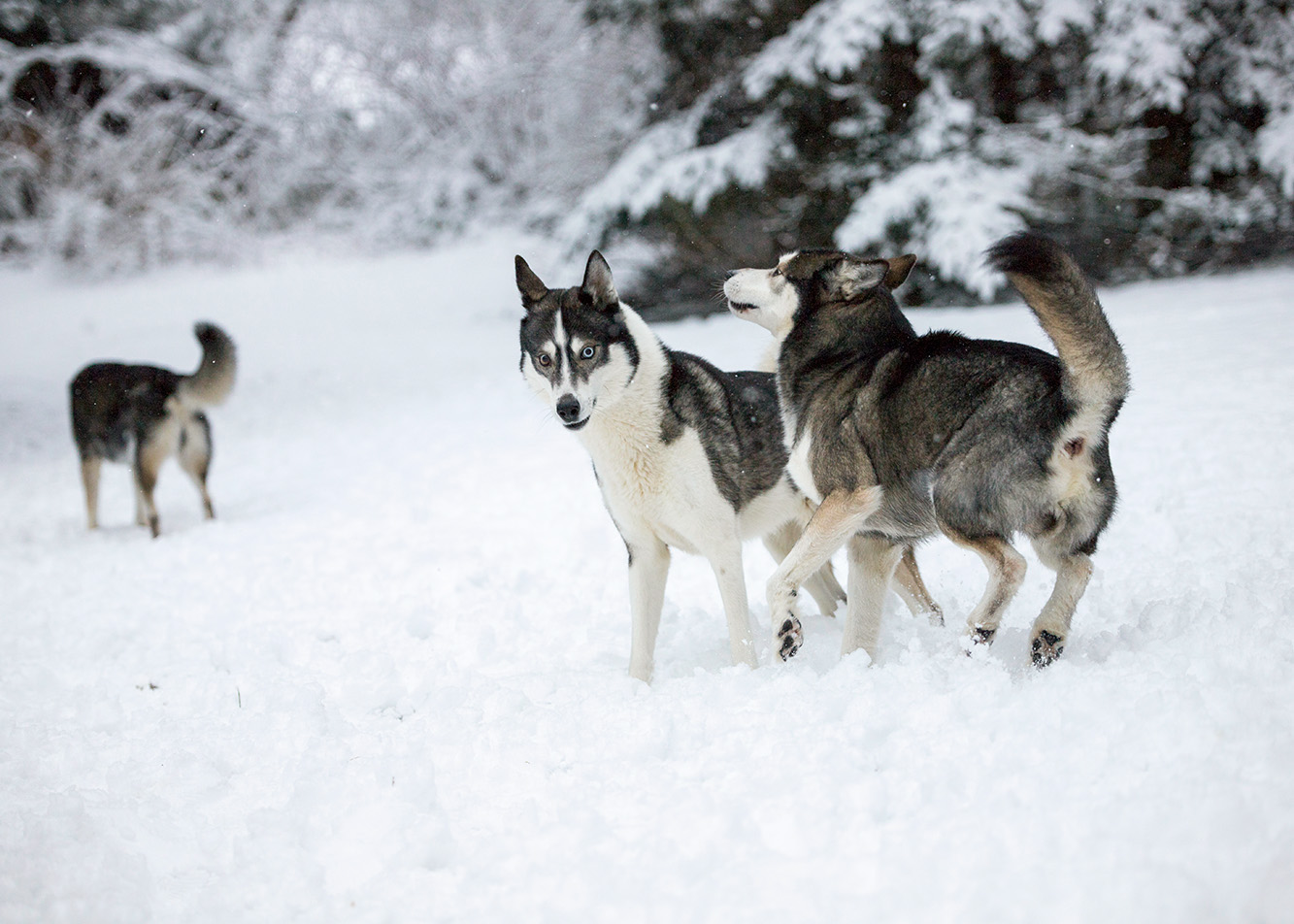
Dog play—how to recognize it?
For some dog owners, seeing packs of dogs running around is a beautiful sight.They hope their pet will be calmer at home.Behaviorists, seeing this, recognize the potential danger. As social animals, dogs need interaction with other dogs.However, it cannot be random.It's only fun when the people involved get to know each other.And that requires space, distance, and time.That doesn't mean that dogs that happen to meet never play with each other—they do.That’s why it’s worth learning the ins and outs of how our pets play, so that their social interactions are meaningful.So what should you look for in it??
Loose body
Above all, play is about having fun.It's a time when worries fade into the background.This helps relieve muscle tension and, along with it, stress.You could compare it to our human experience.If we're in a place where we don't feel comfortable, we're tense and can't let loose and have fun.Dogs are the same.If we want to know whether our pet feels comfortable in a given situation, let’s pay attention to its muscles.If his body is tense and stiff, that’s the first sign for us that maybe we should end the interaction.We shouldn't have any trouble reading this.A dog with a loose body will slip through our hands when we pick it up.
If you want to better understand your pet’s body language, it’s a good idea to record these moments and then watch them at your leisure at home.
Caregiver-centered approach
It’s worth paying attention to whether our pet can easily tell where we are while playing.Does he ever glance at the guide on his own from time to time, and when called, can he come running and stay with us??If he's in a competition or a fight, he won't do it, even if the summon has always worked.This is because he does everything he can to survive.He can't take his eyes off his opponent, and turning his back could leave him vulnerable.
When we talk about caregiver-centered care, we must not confuse it with taking advantage of the caregiver.It’s a common sight to see a small group of people standing in a circle while dogs run around in the middle.In this situation, outbursts usually mean: "Get me out of here.".And jumping on another pet's owner might mean: take your pet with you.
Joint breaks
One of the most important parts of playing is taking breaks together.If one dog needs a rest, the other respects that and just waits for him.During this time, the other animals do not try to influence the behavior of the individual who needs a break.Sometimes a freeze frame lasts a second, and sometimes longer.
This element is missing from the competition.In such situations, animals exhibit instinctive behaviors that give them a chance to survive, and pausing is not one of them.
Changing position and imitation
When we play together, we can see the dogs switching positions.One minute the dog is chasing, and the next the tables are turned.The same goes for rolling onto your side.Once one of them does that, the other will be lying down too in a moment.Very often, interchangeability goes hand in hand with exaggerated and clumsy behavior.If one dog gently touches another, and the other falls as if "struck by lightning," then we're talking about reciprocity.The animal behaves this way because it doesn't feel threatened by the other animal.
Imitation is the copying of behavior.A dog might start sniffing because another dog started it, or lie down because another dog did.However, in the second case, we also need to consider muscle tension, because lying down can be a sign of perceived danger.
Disorder
Having fun is, above all, about letting loose and embracing chaos.Behaviors typical of a hunting pack, such as sneaking up on prey or nipping at it, may occur.However, they are not intended to cause harm and are presented in random order.
Dogs with malicious intent will demonstrate the behaviors of the hunting sequence in the correct order: tracking, observation, stalking, pursuit, and capture.
Summary
If you want to socialize your pet effectively, it’s worth learning what behaviors are displayed during play.Let’s also keep in mind all the most important rules.It's better to walk dogs one-on-one rather than in groups.In a pair, it is easier to observe and interpret their behavior.In a random collection of individuals, there is chaos, which usually leads to nothing good.
It’s also better to walk around than to stand still or stay in a fenced-off area.Let’s try to always be active with our dogs, because exploring the area together makes it easier to socialize :)
