Is the Russian Blue the perfect calm house cat?
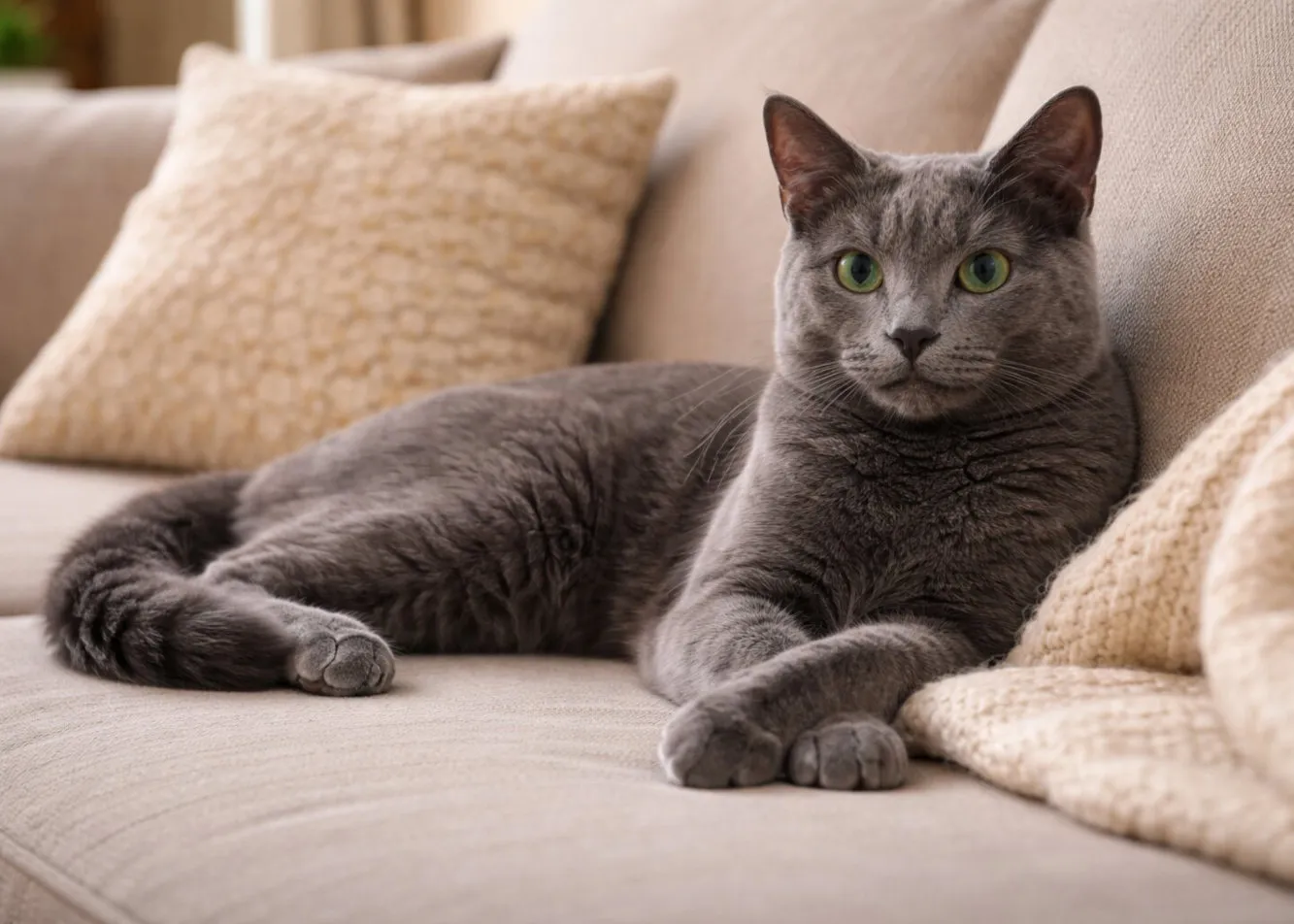
If you're looking for a pet with an elegant appearance and a calm temperament, a Russian Blue cat might be the perfect choice.This breed captivates with its silvery-blue coat, slender build, and exceptional grace.No wonder it is sometimes compared to a “feline sculpture”—it has a harmonious build and moves with remarkable grace.The Russian Blue is also a natural breed, shaped by harsh conditions, which may have contributed to its sensitivity and wariness toward strangers.For this reason, he does not tolerate being forced into anything and needs time to trust new people.Find out what the Russian Blue cat is like, how to care for it, and what its needs are at home.
What is a Russian Blue cat like??Breed description, temperament, grooming, and health
Russian Blue cats are intelligent, usually calm, and become very attached to their owners.In everyday life, they often observe the home "from the sidelines," without imposing themselves, yet at the same time they enjoy closeness and rituals.This is a breed that thrives best in a predictable environment—chaos, noise, and sudden changes can stress it out.
It’s worth remembering that the Russian Blue isn’t a breed with significant health issues, but its sensitive nature requires a careful approach: respect for its boundaries, gentle socialization, and plenty of activity to help relieve stress and prevent boredom.
Basic information about the Russian Blue cat breed
- Country of origin: Russia (Arkhangelsk region)
- Body weight: approx..3.5 kg (females) – 7 kg (males)
- Average lifespan: usually 13–18 years, and with good care, up to 20 years
- Body type: slender, elegant, yet muscular, with a delicate bone structure
- Head and eyes: wedge-shaped head, flat skull, fairly broad at eye level; large, widely set eyes, usually almond-shaped; desired eye color: green
- Ears and tail: ears large, set wide apart, triangular with slightly rounded tips; tail long, slender, tapering toward the tip
- Coat: short, very dense, with a thick undercoat; the tips of the hairs are lighter in color, creating a silvery effect
- Fun fact: Cats of this breed were once used as… a source of fur.This is evidenced by the garments on display at the Viking Museum in Paris, which are made from their hides.Although these artifacts are dated to the 9th century,.e., the tradition of cat hunting was to survive much longer in Russia.It is precisely this that some people associate with the gentle nature and innate wariness of members of this breed.
The origins of the Russian Blue cat – where did this breed come from??
Although modern Russian Blue cats have short fur, in the past they may have had thicker coats.Its origins are linked to the northern regions of Europe.References to the breed's ancestors appear in what is now Norway, Finland, and northern Russia.
There are also accounts suggesting that the Vikings contributed to the spread of the ancestors of this breed: the animals may have ended up on their boats.in.to Malta, Spain, and the British Isles.Over time, they were given various names depending on the region where they were found, but they eventually became most closely associated with Arkhangelsk, from where the cats were transported to Europe.
In England, Russian Blue cats became more common in the early 19th century.The first recorded exhibition of the breed took place in London in 1883.During World War II, in order to maintain the population, measures were taken to.in.crossbreeding with Siamese cats.After the war, some of the lines had a more "Siamese" appearance, but later they returned to their pre-war look.
The breed standard was established in 1937, and the desired type was consistently bred for in the decades that followed.Importantly, although other color variations have been developed in some countries, many cat breed organizations do not recognize coat colors other than blue as conforming to the standard.
The breed has become popular in Poland relatively recently—the first Russian Blue cats appeared here around 1990.
The Russian Blue's Personality – Who Is This Breed Best Suited For??
The Russian Blue is sometimes referred to as the aristocracy of cats: it is intelligent, well-balanced, and usually “keeps its composure” even in new situations—though it often needs time to warm up.
The most common characteristics of the breed are:
- high intelligence and a good memory,
- sensitivity,
- distrust of strangers (especially at first),
- strong attachment to a caregiver,
- a rather quiet temperament and a moderate need for social interaction.
When a Russian Blue cat takes a liking to someone, it can become very attached.For this reason, being apart can be difficult for him.At the same time, he doesn’t like too much stimulation—if it’s noisy at home or someone tries to pet him “too much” (like children), he might withdraw and look for a hiding spot.It's a normal trait of the breed—no need to panic.
It’s also worth noting that this breed typically doesn’t display aggression or confrontational behavior—rather than “fighting,” the cat is more likely to run away and hide.
The Russian Blue Cat's Needs: Activity, Home, and Grooming
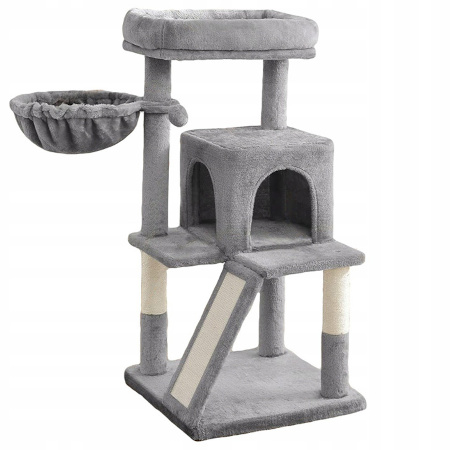
Russian Blue cats are agile, energetic, and love to jump.A home should therefore provide:
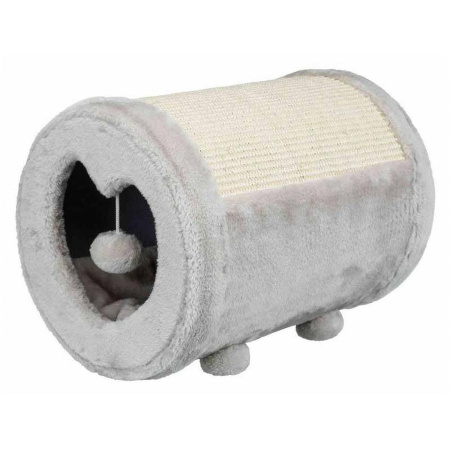
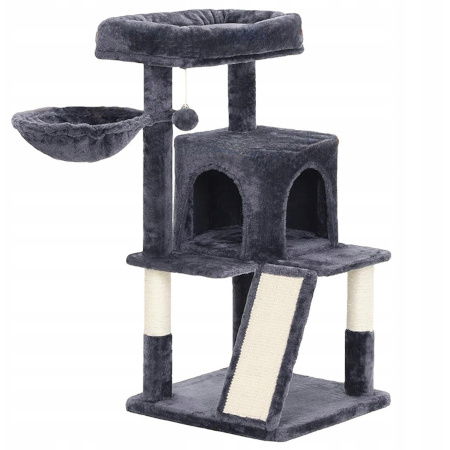
- tall scratching posts, shelves, and climbing routes,
- hiding spots (safe places where no one disturbs you),
- toys for hunting: fishing rods, mice, balls,
- regular play sessions that end with "catching prey" (this is important for a cat's well-being).
These are cats that respond well to training and challenges: they can learn to fetch or follow simple commands, especially if the play is calm and reward-based.
Fur Care
In terms of grooming, the Russian Blue isn't very high-maintenance, but it's important to keep its thick undercoat in mind:
- brush gently (with a soft brush),
- Don't overdo it—for some cats, brushing too often can actually make their coat look worse,
- Keep an eye on your pet's skin and coat during shedding seasons.
The most important things this breed needs on a daily basis are peace and quiet, a sense of security, and the owner’s attention.Everything else—such as accessories and extras—is of secondary importance.
The Health of the Russian Blue Cat – Common Health Issues
The Russian Blue is considered a relatively healthy breed with no typical serious genetic predispositions.However, some individuals may experience:
- allergies and hypersensitivities,
- digestive problems,
- behavioral issues (stress, withdrawal), especially when the cat isn’t getting enough stimulation or, conversely, feels overwhelmed.
In practice, the key factors are: preventive veterinary care, a good diet, a stable environment, and careful attention to mental well-being (boredom and inactivity often have a very negative effect on this breed).
Remember!
A purebred cat is an animal with a multi-generational pedigree, purchased from a legally operating cattery.When choosing a cattery, it’s best to check whether it is affiliated with federations that are members of the World Cat Congress (WCC).This increases the chances of proper socialization for the kittens and ensures that a kitten does not go to its new home before 12 weeks of age.week of life.Otherwise, you may unwittingly be supporting profit-driven breeding at the expense of animal welfare.
FAQ - frequently asked questions
Is the Russian Blue cat suitable for first-time owners??
Yes, provided that the owner provides a calm environment, regular playtime, and respects the cat’s boundaries.This is a sensitive breed, so it doesn't do well in chaotic environments or with constant changes.
Is this breed noisy??
Usually not.This is a rather quiet and reserved breed that tends to communicate through body language rather than loud meowing.
Do Russian Blue cats shed a lot??
It sheds moderately, usually seasonally.Regular, gentle brushing (without overdoing it) and a healthy diet help keep their coat in great condition and reduce the amount of hair in the house.
Recommended

Dolina Noteci Premium Wet Cat Food: Tuna Meal 10 x 85 g + a free 85 g tuna meal

Natural Taste Wet Cat Food: Chicken – Chicken Delight, 12-pack (185 g each)