
How to help your dog lose weight? Obesity in Dogs and How to Deal with It
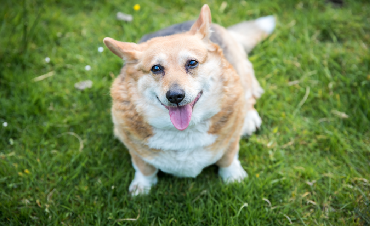

Unlimited snacks and hours of lazy napping on the couch aren't conducive to maintaining a healthy weight.In recent years, the number of pets struggling with excess weight has been steadily increasing.Being overweight can lead to serious health problems in dogs and significantly reduce their quality of life.How can you tell if your pet’s weight has shot up dangerously??How to help your dog lose weight?
Causes of obesity in dogs
The tendency for pets to gain excessive weight is a very complex issue.Excess weight in dogs can be caused by genetic, environmental, health, and dietary factors.Regardless of the underlying cause, it occurs when the amount of energy provided by food exceeds the body’s energy needs.A dog's body is unable to fully utilize the energy it receives, so it stores it as body fat.
In practice, it all starts off quite innocently: with an extra snack or a second helping at a regular meal.The pet's lifestyle is of considerable importance in this regard.A dog that eagerly dives into its food bowl but spends little time playing or going for walks has a harder time staying slim than an energetic, food-loving dog.Dogs that have been neutered and those between the ages of 5 and 7 are particularly prone to weight issues, as their metabolism slows down and their physical activity decreases.Obesity in dogs can also be caused by certain medical conditions (such as hypothyroidism) or be the result of breed predisposition (e.g., in Labrador Retrievers).
Overweight Dogs – How to Tell If Your Pet Is Overweight?
A dog's fluffy coat does a good job of hiding extra weight.To detect weight issues in your pet early on, it’s a good idea to regularly monitor your pet’s body condition using the BCS scale.According to these guidelines, an obese dog loses its waistline, its belly becomes saggy, its ribs are barely palpable, and folds of fat appear around the loin and tail.
When it comes to purebred dogs, it’s always a good idea to compare their weight to the breed standard.It is generally accepted that a dog is considered overweight when its body weight is more than 10% above the optimal weight.A dog is considered obese if its weight exceeds the ideal weight by more than 20%.
The Effects of Dog Obesity
Obesity in dogs should never be taken lightly.As a pet’s weight increases, so does the risk of cardiovascular disease, metabolic and hormonal disorders, joint problems, and cancer.Being overweight also has a detrimental effect on a dog's health and well-being.Overweight pets have a hard time handling intense exercise and temperature changes.They have difficulty moving around, which prevents them from enjoying their favorite activities.This affects their mood—obesity in dogs can lead to frustration and apathy.
The best way to help your dog lose weight?
Helping your dog lose weight is a long process that requires patience and consistency.How to help your dog lose weight safely?Restrictive diets simply don't work for pets.An overweight dog should lose no more than 1–2.5% of its body weight each week.The entire weight-loss process can take several months.
The caloric content of your pet’s meals should be reduced gradually by 10% per week until it reaches 60–70% of the original amount.To help reduce your dog’s hunger, consider increasing the number of meals and using accessories that prolong mealtime (such as slow-feeding bowls).Increasing the duration and frequency of physical exercise should also be an integral part of the weight-loss process.
Weight-loss diet
A proper diet plays a key role in combating obesity in dogs.How to help your dog lose weight using commercial dog food?Veterinary diet foods are designed for pets struggling with excessive weight gain.Wet food is recommended for overweight dogs because, due to its high water content, it contains fewer calories than dry food.
Dietary dog food helps dogs gradually lose weight without the risk of nutritional deficiencies.This light-formula canned dog food has a reduced fat content.Thanks to its high fiber content, it keeps your dog feeling full for longer and helps prevent sudden spikes in blood sugar.A high protein content in the food helps maintain strong muscles.An important ingredient is L-carnitine, which helps metabolize energy derived from the oxidation of fatty acids in adipose tissue.
Diet for an overweight dog
For an overweight pet, it’s a good idea to choose products containing psyllium seeds, beta-glucans, and mannan-oligosaccharides, which help regulate bowel movements and prevent uncontrollable hunger pangs.To ensure that an overweight dog can still enjoy its meals, it’s best to offer it highly palatable foods, such as those containing a variety of meats and organ meats.
Recommended
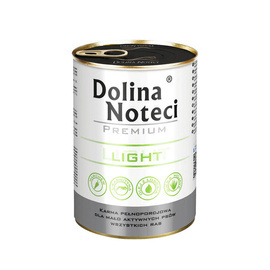
Mokra karma dla psów z nadwagą Dolina Noteci Premium Light puszka 400 g