
Everything You Need to Know About a Cat's Purring
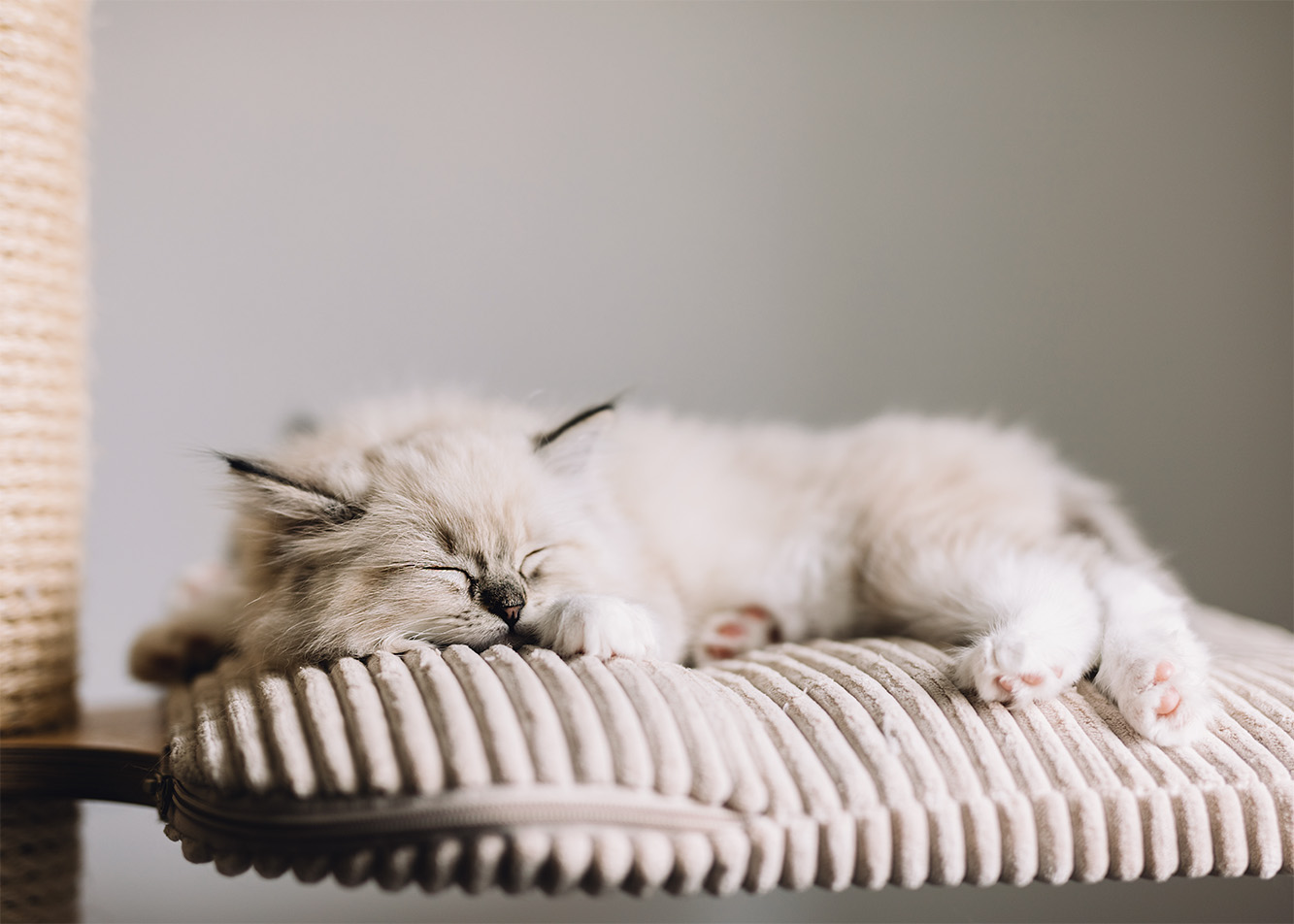

Although we usually associate purring with house cats, it is not a sound reserved solely for them.They purr.in.big cats, such as lions and pumas, but gorillas, rabbits, raccoons, and even elephants also purr.What is the purpose of a cat's purring??
A cat's first message
Purring is a sound that originates in the larynx—it is primarily the muscles of this organ that produce the characteristic low, vibrating sound emanating from the cat’s throat.Cats purr with their mouths closed, and they do so both when inhaling and exhaling.The frequency range of a cat's purring is quite broad, ranging from 25 to 150 Hz.Interestingly, however, all cats—regardless of breed, sex, or age—purr at the same rate, generating 25 purrs per second.Cats can purr for just a few seconds, or they can vibrate continuously for up to several hours.It all depends on the situation and the goal.
Purring is one of the first signals a newborn kitten receives.This is because the vibrations it produces relieve pain and help relax the muscles.For this reason, it’s common for female cats to purr during labor, and these vibrations are automatically transmitted to the kittens.
In addition, the mother cat purrs while feeding and keeping her litter warm, which helps to calm the kittens.For their part, they help the little ones who have strayed from their mother’s teat to find their source of food again.Kittens, on the other hand, begin to purr when they are just a few days old, usually while being fed or groomed.So, from the very beginning, a cat’s purring has been associated with positive feelings—with warmth and security.But is that all??
Purring has many dimensions.And while a purring cat may indeed be perceived as a relaxed and happy animal, it is always important to interpret this behavior by analyzing the cat’s overall behavior..So if the baby is relaxed, lying comfortably, or, for example, kneading the blanket or bedding with their hands (this is a behavior from infancy, when the baby stimulates milk flow from the mother by pressing on the nipple area), then there’s probably nothing to worry about.However, if we find him curled up in a tense position, hiding under the bed, inside a closet, or in a cat house, purring with a look of tension on its face, this may indicate an attempt to cope with severe pain—in which case it should be taken to a veterinary clinic for an examination as soon as possible.
Cats also use purring in social interactions.If one cat is lying down and another approaches it purring, it could be an invitation to play or simply a desire to lie down next to it and rest together.Sometimes, if there’s tension between pets and one of them suddenly approaches the other while purring loudly, it’s a message that says: “Relax, I don’t mean any harm this time”—so here we see purring being used as a calming signal.
What if a cat suddenly starts purring at the vet's office during an examination??It’s important to remember that stressed cats also purr, as this is their way of trying to calm themselves down.Sometimes the nervous purring in the exam room is so loud that it’s impossible to properly auscultate the feline patient.
Why do cats purr??
Depending on the situation, not only does the way a cat purr change, but so does its intensity.Shy and withdrawn cats can purr so quietly that it’s often easier to feel the vibrations with your hand than to hear the sound you’re hoping for.On the other hand, there are also cats that purr so loudly that they can wake up a sleeping person.
Imagine that there are cats whose intense purring is accompanied by excessive drooling or a runny nose.There's nothing to worry about—it's simply the result of vibrations, which stimulate saliva production in some animals, so there's no need to be concerned.
The therapeutic benefits of a cat's purring
For years, it has been said that a cat’s purring has a beneficial effect not only on the animals themselves, but also on humans.And although purring requires extra energy, even sick or injured cats still do it.At this point, it is believed that purring has the following beneficial effects on pets:
- improved healing of bone fractures,
- faster muscle growth and tendon recovery,
- easier breathing,
- reduction of pain and swelling,
- faster healing after surgery.
It’s no secret that infrasound is used in physical therapy to promote tissue regeneration, and its frequency range matches that of a cat’s purr.Frequencies ranging from 25 to 50 Hz strengthen bones, while sounds at around 100 Hz accelerate muscle and skin regeneration.So, we could say that cats are our little home healers, and their purring helps keep our body’s tissues in good condition.
In addition, people who spend time with cats (including purring ones) are less stressed and more relaxed.
Summary
As you can see, a cat's purring is a highly complex phenomenon.We still lack a great deal of information about feline behavior, but researchers are continuing their efforts to learn as much as possible about these remarkable animals.For now, then, it’s worth remembering that purring, though pleasant to our ears, isn’t always a sign of comfort and contentment.So let’s take a holistic approach to our cats to avoid any mistakes and make sure we don’t overlook anything.
