Dogs and humans: differences in nutritional needs


Every body needs the right nutrients, including micronutrients, macronutrients, and vitamins, to function properly.A properly balanced diet can provide us with these nutrients.Due to their physiology, lifestyle, and natural adaptations, dogs and humans have very different nutritional needs; therefore, a dog will not be getting the proper nutrition it needs if it eats your dinner instead of its own balanced dog food.Learn about the differences in nutrient requirements between humans and dogs.
What are nutrients??
Nutrients are essential for the body’s growth and development in order to maintain cell structure and function.They can be obtained from a variety of sources, including plant-based sources, vitamins, and minerals.The primary functions of nutrients, in both humans and animals, are to provide energy, build tissues, and regulate bodily processes.We can divide them into three groups: carbohydrates, proteins, and fats, each of which has a specific function and is recommended in different proportions for different organisms.
Can dogs eat the same food as humans??Definitely not.Anatomical and physiological differences, as well as lifestyle, determine quite different nutritional requirements for these species.Learn about these differences and see what a healthy diet should look like for dogs and humans.
Basic nutritional requirements in humans
The human body needs many different types of nutrients.Macronutrients are the body's main source of nutrition.These include carbohydrates, fats, and proteins.They provide energy and nutrients in a form that the body can process during moderate exercise.Micronutrients are compounds that the body cannot produce on its own but must obtain from external sources, such as fruits, vegetables, and grains.These foods also provide the body with energy, but they require more effort to process and digest than macronutrients.
Trace elements are a category of substances that most people do not get enough of because they are present in only small amounts in food sources.These include essential minerals such as iron and zinc, which play an important role in maintaining vital functions such as oxygen transport within cells and DNA synthesis.
The human body's needs depend largely on a person's age and stage of life.For this reason, in people over 65.In their current stage of life, they differ significantly from those in previous decades.
It could be said that every food we eat on a daily basis provides us with certain nutrients.Some of them are rich in compounds that are essential and healthy for our bodies, while others are highly processed and offer virtually no nutritional value—except, perhaps, for their taste.Following a proper diet tailored to our needs, lifestyle, and taste preferences will help us stay healthy for a long time.So what should be included in our daily meals??
- Water
- Meat—preferably lean poultry
- Whole-grain cereal products
- Fatty saltwater fish
- Dairy products
- Vegetables and fruits
- Nuts and seeds
- Legumes
- Vegetable oils
- Herbal infusions, coffee, tea
Basic nutritional requirements for dogs
When it comes to canine health, there are significant differences in nutritional requirements compared to human nutrition.Different breeds of pets have different nutritional needs, and feeding them food they are not accustomed to can lead to certain health problems.That is why many dog owners choose specialized dog food instead of feeding their dogs dry kibble alone.
To check whether your dog is getting enough vitamins, you need to compare the nutrients in their food with the minimum daily requirements for dogs set by FEDIAF (the European Pet Food Industry Federation).
A dog's diet should, of course, be sufficiently rich in fats, protein, and carbohydrates.The minimum fat content in dog food is at least 5.5 g per 100 g of dry matter for adult dogs and 8.5 g per 100 g of dry matter for puppies.
A dog's protein requirements depend on many factors: age, physical activity, physiological condition, and any underlying health conditions.As one might expect, puppies, pregnant dogs, and lactating dogs have a much greater need for this nutrient.Even for sick or malnourished dogs, the protein content should be higher than in an average dog's diet.On the other hand, highly active dogs generally have a higher caloric requirement for all nutrients, so protein is automatically provided in the appropriate amount of food.Protein is the body's primary building block and is responsible for maintaining protein balance; anabolic processes were compensated for.
Where to get protein in a dog's diet?For our four-legged friends, animal protein is much easier to digest than plant-based protein.Their digestive system is adapted to quickly digest and break down this component.That is why it is important to choose high-quality dog food—both dry and wet—to ensure that it is rich in all the necessary nutrients and vitamins.Grain-free dog foods typically have the highest meat content.
Carbohydrates are a controversial topic when it comes to dog nutrition.In practice, however, virtually every brand of dog food contains carbohydrates, and there’s nothing wrong with that.Wet food generally contains fewer carbohydrates than dry food, which is due to the production process and the proportions of ingredients in the formula; in wet food, the carbohydrates typically come from vegetables and fruits.Just like in humans, carbohydrates provide dogs with energy, so we shouldn’t be afraid of them—we should just feed them in appropriate amounts.Like everything else, they can be harmful in excess.
What are the differences in nutritional needs between humans and dogs??
All of the nutrients listed are essential for the proper functioning of the body’s organs and its development, just as minerals are.
Calcium and phosphorus are essential for healthy bones and teeth.Magnesium, potassium, and sodium are essential for the proper functioning of muscles and nerve connections.Many other minerals, such as iodine, selenium, manganese, and copper, are essential for the proper functioning of biological processes in a pet’s body.The bioavailability of minerals is also determined by the fiber content in food.A deficiency or excess of these nutrients will result in serious disruptions to the body's functioning.
Here are a few key differences in nutritional requirements between humans and dogs:
- Dogs produce only small amounts of vitamin C from their diet, whereas humans can produce more of it from their diet through a process called synthesis.
- Dogs need larger amounts of many vitamins per kilogram of body weight than we do, because they have a faster metabolism (due to their constant activity level).For example, in a single day, a dog can use up to five times more vitamin B-6 than a human would need in the same 24-hour period.
- Dogs have a greater need for protein and fat than humans, but a lower need for carbohydrates.They also need more vitamin D, B6, B12, copper, niacin (B3), zinc, and calcium than humans.
- Dogs have lower requirements for micronutrients such as vitamins A, E, and K compared to humans.
- The different carbohydrate requirements are mainly due to the fact that canine saliva lacks amylase, which in humans is responsible for the initial digestion of starch in the mouth; and therefore, saliva does not hydrolyze starch into maltose..
What dog and human nutrition have in common is moderation and common sense.For both dogs and humans, it is essential that the diet be rich in the right amount of nutrients.An active person needs a different amount of calories and vitamins than a typical couch potato.It works the same way with dogs..It is important that your dog receives food containing the right balance of nutrients and minerals.
The structure of the digestive system, as well as metabolism, differs significantly between humans and dogs.Therefore, we should make sure to choose the right food for our pet, because leftovers from our dinner certainly won’t be a good choice.For some dogs, a single-protein diet may be better, while for others, a weight-management diet may be more suitable if they are overweight.
Recommended
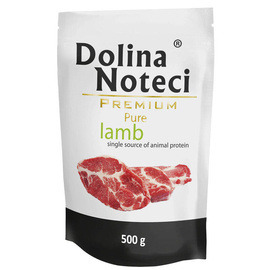
Dolina Noteci Premium Pure Wet Dog Food for Dogs with Allergies, Rich in Lamb, 500 g pouch
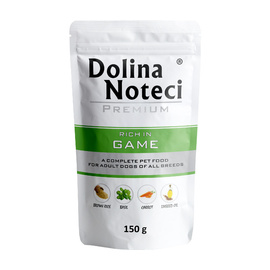
Dolina Noteci Premium Wet Dog Food, Rich in Venison, 150 g pouch