
Could your pet be suffering from depression?
2017-11-16
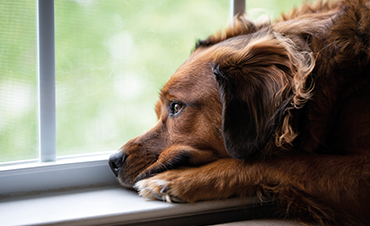
Can a cat or dog get depressed??The decline in well-being in the fall isn't limited to humans.Our pets are also susceptible to similar mood disorders.However, they affect cats more often than dogs.Apathy and discouragement may be early signs of depression.What are the causes??How to recognize it?
No sun
A lack of sunlight affects all living creatures, and our four-legged friends are no exception.This results in a loss of energy, drowsiness, and lethargy.Changes begin to take place in the body; for example, during the fall and winter months, it produces more melatonin, known as the sleep hormone.Vitamin D and serotonin deficiencies also contribute to our pets' low mood, as serotonin helps maintain emotional balance.What’s more, dogs are very sensitive to our emotions—if we’re feeling down or sluggish, that mood rubs off on our furry friends too.Something's wrong
An animal with low spirits behaves unusually.She's sleeping more than usual and doesn't feel like playing.The dog, who used to greet us so happily, comes to the door barely wagging his tail, and then immediately goes back to his bed.The cat, who used to jump for joy at the sight of a ball or a fishing rod, now looks at the toy with indifference and hides in the farthest corner of the house.A symptom of depression, just like other illnesses, is a loss of appetite.Sometimes, a cat will start to relieve itself outside the litter box, and a dog might do its business on the floor.Exercise is good for everything!
The best way to distract your pets from feeling down is to find the right kind of stimulation for them.Encouraging them to play their favorite games or buying a toy that requires their active participation can be very helpful.It’s worth spending a little extra time with your cat—a born hunter—and running around the apartment with a mouse on a string, rolling a squeaky ball, or entertaining your pet with a laser pointer.Hunting is a cat's natural instinct, so he should eventually give in to the temptation.A little catnip—a scent to which cats are very sensitive—can help overcome an apathetic pet’s initial reluctance.Products containing cat pheromones—available as special collars, diffusers, or plug-in refills—can also help improve your mood.You could also set up a new, interesting spot for your cat—a perch from which it can observe its surroundings, a crinkly tunnel, etc..It’s also a good idea to leave a light on if you’re coming home late.Even when it's raining, don't skip active walks with your dog—play fetch and have him jump over obstacles.During physical activity, the body releases endorphins, which are responsible for feelings of happiness.You can sign up for an engaging training class with your dog—absorbed in learning new tricks, he might forget his gloom.Above all, let’s give him plenty of attention, talk to him while we’re doing chores around the house, and don’t skimp on cuddles and the occasional treat.Further assistance
If our efforts don't work and the animal becomes increasingly lethargic, it's a good idea to have blood and urine tests done to rule out any possible physical causes of the problem.If it turns out to be a red herring, you can still consult a pet behaviorist to assess your pet’s behavior; after observing the animal, the behaviorist will identify the possible cause of the pet’s distress and recommend a course of action—a specific type of therapy.Drug therapy is a last resort.How to Treat Depression?
Depression is a state of physical weakness in which the body has completely lost its ability to adapt to environmental changes.Depression is characterized by a loss of initiative; we observe a state of anxiety accompanied by a strong tendency toward excessive attachment and disturbances.Based on many years of research and clinical observations, two stages in the progression of depression in dogs have been identified:
•acute depressive state (reactive depression) – here we primarily observe apathy.The dog is indifferent to its surroundings, whines, refuses to eat, drinks very little, and sleeps a lot.The main characteristics of this condition are anorexia and hypersomnia (excessive sleepiness).•chronic depression - the dog is definitely less lethargic.This is because his emotional reactions to highly intense stimuli are intense.Appetite fluctuates throughout the stages of anorexia and bulimia, and thirst also fluctuates.In this case, the main symptoms involve sleep.We observe an increase in rapid eye movement (REM) sleep, as well as sudden awakenings during the first hour of sleep.Anxiety often sets in during the time leading up to sleep.Eventually, this leads to cognitive impairment (regression—sniffing around, loss of toilet training) and the loss of the ability to anticipate (predict).
In both cases, medication is necessary, but it is not sufficient without appropriate physical therapy and play therapy.Music therapy is also recommended, such as short, intermittent sessions with relaxing music for dogs.