
Cat shelves – what should you know?
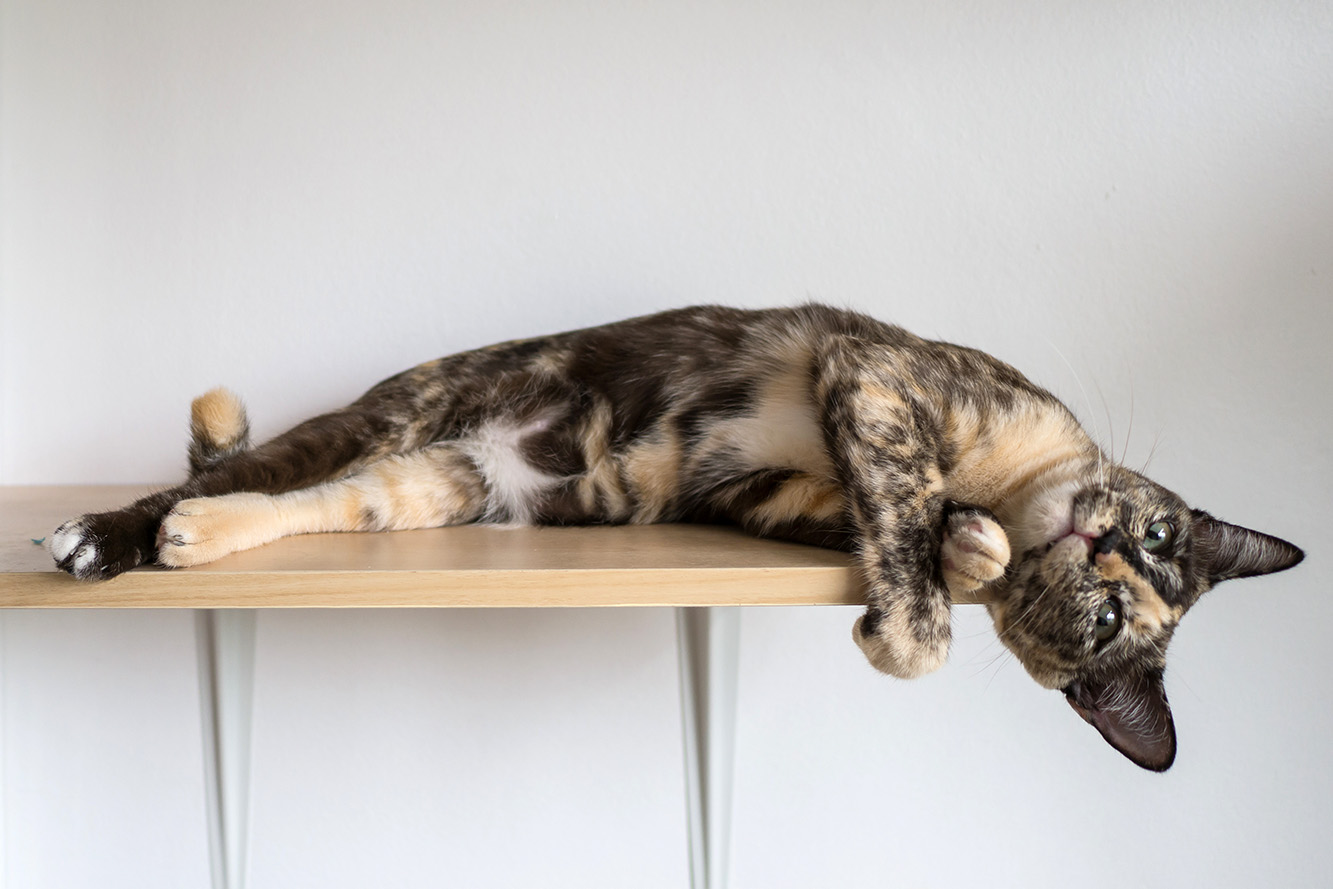
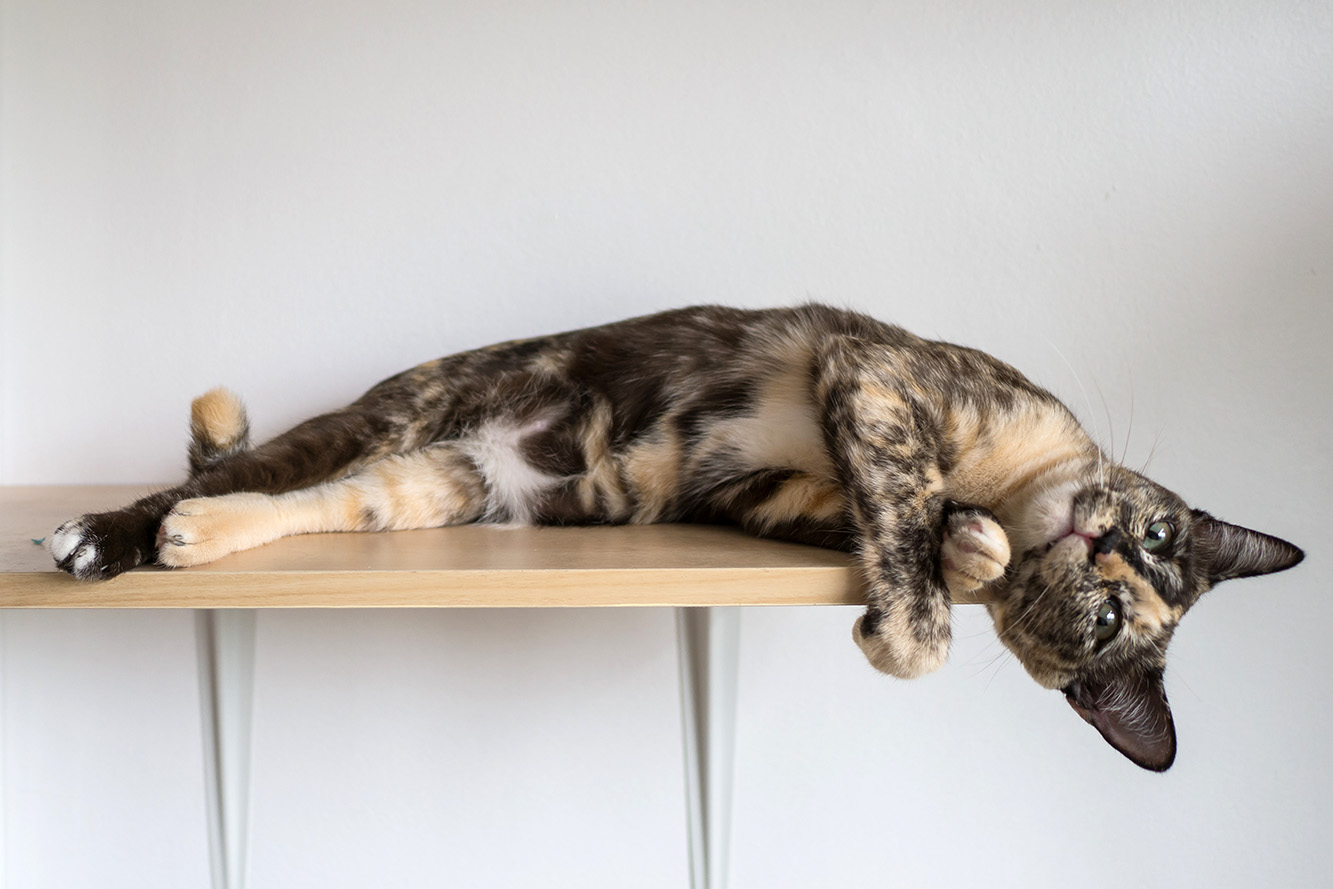
Cats are animals that love to explore.Their world is structured differently from ours—in addition to horizontal space, they also make extensive use of vertical space.This is not only a matter of fulfilling a cat’s instinct to explore, but also an important factor in their sense of security.
A cat in the wild
Although we usually think of cats as friendly, soft-furred creatures napping on the couch, we mustn’t forget that their behavior in the wild is completely different.There’s no room there for the all-day laziness that’s so typical of our kitties.After all, the main rule of survival is simple: eat or be eaten.
The cat is one of those animals that plays a unique dual role in the ecosystem: both predator and prey.They're on the hunt for.70 species of animals smaller than themselves, yet at the same time they can become dinner for some larger predator (most often a canid or a large bird of prey).To protect itself from this danger, the cat has developed various escape strategies.One of the basic rules is that you should get to the nearest high ground.It turns out that cats are excellent sprinters, but long-distance running is extremely exhausting for them.So the solution is: find the nearest tall object in the area (a tree, a pole, a fence, etc.).) and hide there.
In addition, whoever is sitting higher up usually has a strategic advantage and an excellent vantage point for observing the surroundings.That is why, even during intraspecific fights, cats are able to flee from their opponent—for example, up a tree—from where they can effectively defend themselves using their razor-sharp claws.The one who is lower remains at a disadvantage.
A high vantage point also allows you to assess whether there is any danger lurking nearby.This helps the animal feel more confident, thereby increasing its chances of survival.Given all this, it’s no surprise that cats in our homes seek out high spots.
A cat at home
It is often said that cats perceive space in 3D — this means that the cat will analyze its surroundings not only in terms of resources on the ground, but also in terms of elements of the environment that it considers useful for creating observation points or resting spots.As a result, the cat may start unceremoniously knocking small objects off surfaces it considers useful for its own purposes, and no amount of pleading or threats will help.Exploring vertical spaces is part of a cat’s nature—there’s no point in fighting it; instead, it’s better to find a suitable compromise.
Does every cat need to jump higher??
Generally speaking, the answer is: more or less, yes.Climbing is completely natural for cats, so there’s no point in hoping that your cat will be an exception.Yes, there are cases like that, but they are rather the exception.
It makes just as little sense to rely on race.Just because it says somewhere that cats of a certain breed don’t jump much doesn’t mean that a particular cat will follow that rule.The only animals that actually can't jump any higher are those whose legs have been artificially shortened through genetic engineering.However, this is not a choice they have made, but a disability, and special care must be taken with cats of this breed.
It’s worth noting one more thing here: trying to stop your cat from jumping on countertops or tables is pointless.The only thing we can achieve is that our pet will avoid those places when we're around.If, on the other hand, he wants to jump in there, he’ll do it when we’re not around, or he’ll wait until nightfall.Those are the facts.
Cat House Accessories
If you want to create vertical space for your cats, you can, of course, let them use parts of your existing furniture, but it’s also worth considering solutions designed specifically for these demanding household members.There are currently dozens of products on the market developed by companies specializing in "catification"—that is, adapting living spaces to cats' needs and requirements.
When looking at these products, it’s important to keep a few key factors in mind, such as the size of the individual components, their stability and durability, as well as the materials used to make the cat furniture.Shelves or components that are too small may be uncomfortable for your pet, which will discourage them from using them.On the other hand, poorly secured pieces of furniture won’t inspire your cat’s trust, and materials that are prone to damage will mean you’ll have to replace the accessories frequently.
In addition to standard shelves, ladders, and resting platforms, hammocks, or posts that can be used to create a cat staircase, it’s also worth considering incorporating a large scratching post into the space (structures that match the full height of the room often work well), which, when integrated into the cat staircase, further enriches it.
Safety rules
When designing cat shelves, it’s worth considering a few factors related to how your pet will use them on a daily basis.The spaces between the individual elements shouldn't be too large, as this will make it difficult for the pet to move around freely.The vertical distance between the elements should be no more than one meter, as regularly jumping down from greater heights can put strain on the animals’ elbow and shoulder joints.
All components of the cat walkway must also provide the cat with good traction, so we avoid slippery and varnished materials.In addition, sleeping areas should be safe—for example, you can use baskets with high sides to prevent your pet from rolling out of its bed while sleeping and hitting the ground hard.
In multi-cat households, it is also important to design the space so that there are at least two alternative ways down from the catwalk.This prevents one cat from using the blocking mechanism against another in the event of a conflict between them.It’s also important to ensure that the components are securely mounted so that the cat’s jumps don’t compromise the entire structure.
The cat looks down on the world
Shelves are not only a place for play and physical activity, but also for rest and a way to isolate oneself from other members of a social group (whether human or animal).Shelves are particularly recommended in homes with small children and dogs, from whom the cat may simply want to keep its distance.
What if we don't provide our pet with a place like that in our home??He'll probably find them on his own, if he feels the need to.So you can leave it up to the cat and wait for the results, but we recommend removing any delicate knick-knacks from your furniture first, as they might not survive the cat’s urge to explore.
