
Cat love—different from human love, but love nonetheless. Can a cat love its owner??
We often say that we love our pets.But do they love us??It turns out that they do, even if they don't show it openly at first glance.Meanwhile, scientific studies confirm the existence of a deep bond between cats and their owners.It is therefore difficult to dispute the validity of the claim that a cat can love us.
Cats are man's best friend?
In this context, the dog has long held a well-established place—as a social, helpful animal that is often almost completely devoted to its owner.On the other hand, many people associate cats with a certain aloofness, sometimes even haughtiness, and a tendency to look down on those around them.Dogs literally shower us with love, while a cat’s attention and affection must be earned.But is that really the case??
It’s true that cats have their own preferences when it comes to the timing and nature of their social interactions with people, but that doesn’t mean they aren’t interested in their owners.The bonds between these animals and their human family members can be incredibly deep and complex.Here are some examples:
- Cats that greet their owners when they come home: they meow, rub against their legs, and purr.It is nothing more than an expression of joy at seeing each other again.So, if the cat is happy, it means that the person is important to it.
- Cats that lick their owners—especially on the head or face.In cats, social interaction is primarily concentrated around the head, and mutual grooming of this area is a sign of close intimacy combined with a sense of security.So if a cat grooms us, we can safely assume that it cares about us and wants what’s best for us.
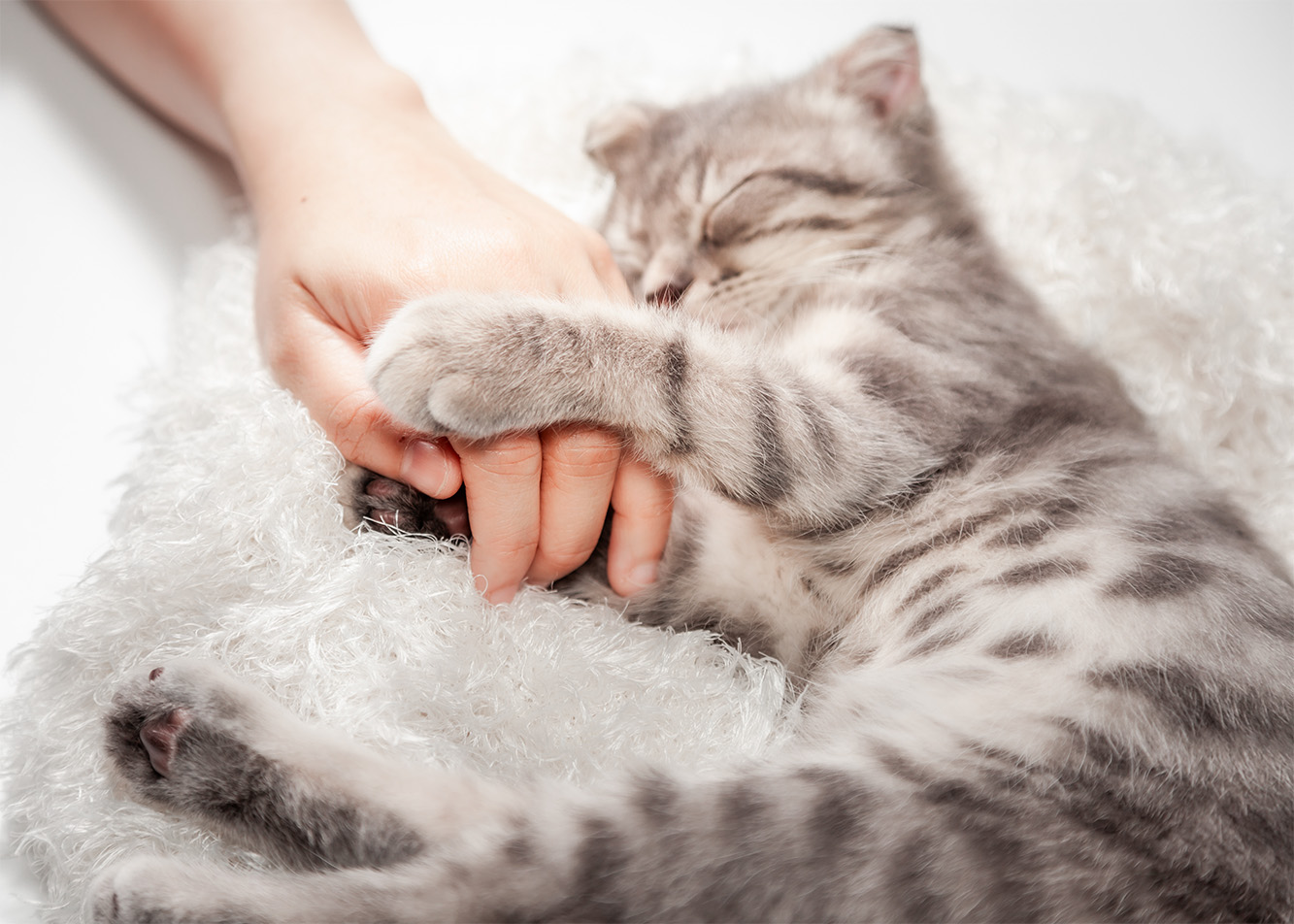
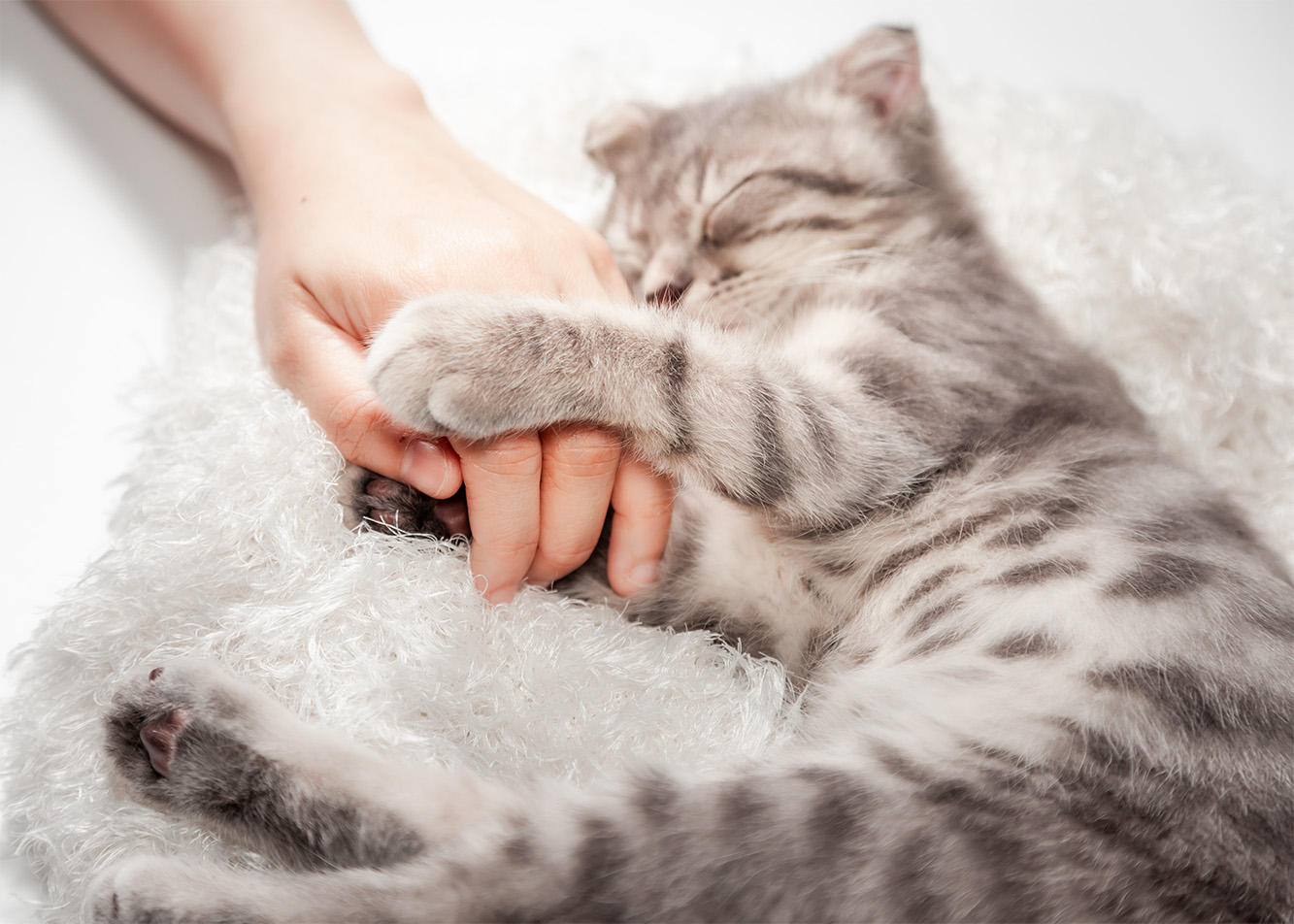
- Sleeping together (e.g., in bed) – cats sleep near people with whom they feel comfortable and can fully relax.So if our cat lies down next to us at night and falls asleep cuddled up against our hand or side, this is another way for them to show us their deep affection and love.
Observations of cats suffering from separation anxiety confirm another point: separation between a pet and its owner can trigger the same psychosomatic symptoms as the severing of the bond between a mother and her child.The panic that overtakes the pet at that moment can lead to physical pain, and only reestablishing contact with its beloved owner provides immediate relief from both physical and psychological symptoms.And while cats obviously don’t consider themselves our offspring, the bond between a pet and its owner is incredibly strong and can have far-reaching consequences.
Since we have become the guardians of our pets’ safety—and they, in turn, derive genuine joy from our company—it seems appropriate to speak of a mutual bond of love between cats and humans.To dispel these doubts, it is worth consulting the research.
What science says about cat-human relationships?
Animal behavior researchers undertook several studies designed to examine cats' reactions when interacting with their owners.The conclusions are as follows:
- 79% of socialized cats that have formed a close bond with their owners exhibit what are known as "social cues"—this means that cats observe us during moments of uncertainty and, based on our reactions, decide for themselves how to behave.If we’re nervous and scared, they’ll react the same way.On the other hand, if we stay calm and relaxed, they’ll follow our lead.
- Another study involved a group of 28 cats aged between one and seven years, of both sexes, which were subjected to the so-called “Stress Test”.During the study, factors such as exploration and movement, as well as alertness and inactivity in the presence of a caregiver or a stranger, were recorded.An analysis of the data revealed that the cats were significantly more interested in exploring when accompanied by a supportive caregiver.On the other hand, when the owners left their pets alone in the room, the pets immediately became less active.
It is therefore worth paying attention to the subtle signals our pets send us—and the ones we can send them as well.
How to say "I love you"?
We have long known that there is a way to convey feelings of mutual affection and positive emotions across species.In cat language, this is expressed by a slow, drawn-out blink, combined with a brief tightening of the eyelids.When cats do this while looking at someone, they’re showing that they trust and love that person.Let’s not forget to give the cat a little wink so it knows how important it is to us.
We can also speak to our pet in a calm, warm voice and gently stroke its head.Let’s remember, after all, that cats are highly empathetic and are very good at picking up on these kinds of subtle cues.
Does my cat love me??
Every caregiver must answer this question for themselves.It’s worth realizing, however, that a cat’s affection doesn’t always require direct physical contact or words.If a cat likes to spend time in the same room as us, follows us around the house, or sleeps with us in the bedroom (without necessarily pushing us off the pillow), we can safely assume that we’re important to it.And from there, it's just a short step to a cat's love.
