
Cat litter box – what should you keep in mind?
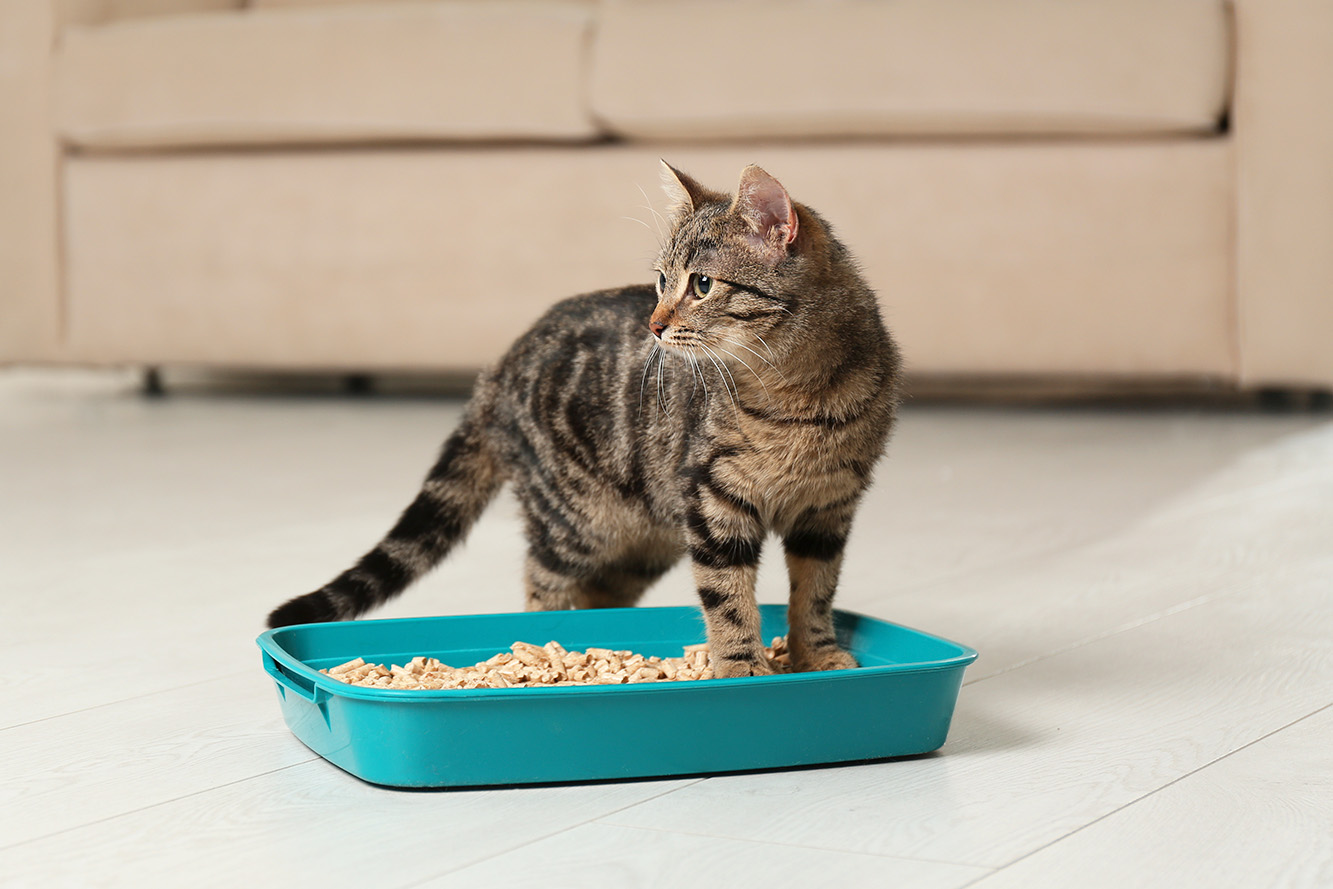

A litter box is one of the most important items in every cat owner's home.Mistakes in its setup may cause a dissatisfied pet to refuse to use it properly.That is why understanding the rules that govern the world of litter boxes is extremely important for avoiding problems down the road.
A litter box for cats, not for humans
This is probably the most important factor when it comes to creating a good litter box area for our pet.So, it doesn't matter what we find visually appealing, where we'd like to place the litter box, or what kind of litter we use in it.If this goes against the cat’s needs, it will result in the cat refusing to use it (and a lot of cleaning up, as well as stress for both parties).So, first and foremost, we must respect the cat’s needs.
A cat litter box should be: spacious and well-lit.Do not place it in cramped, dark spaces; cats need the freedom to choose where to go and an unlimited supply of litter to dig in..When observing cats in the wild, we can notice many similar behaviors: they usually choose secluded spots that also allow them to keep a good watch on their surroundings, look for comfortable and soft surfaces, and they bury their feces thoroughly (this should not be confused with marking—in the latter case, feces are not hidden but left in plain sight, most often on vertical surfaces).In any case, the very act of burying feces is an atavism designed to avoid attracting the attention of larger predators.
Size and placement of the litter box
These elements are essential for properly setting up the litter box area.First of all, the litter box should be large and spacious: it should be 1.5 times the length of the cat’s body (from nose to tail base) and as wide as the cat’s body.
The litter box must be well-ventilated and bright.So that rules out places like closets, dark storage spaces, utility rooms, or windowless bathrooms—in the wild, a cat doesn’t go into a tree hollow to relieve itself, so it won’t feel comfortable in such conditions in our home either.
It should also be easily accessible—so there can be no question of features such as doors or flaps.It’s also a good idea to remove any litter box liners—unfortunately, they trap odors that are very unpleasant for cats.An alternative is to replace them entirely once a week, because otherwise they will only be a burden on a cat’s sensitive sense of smell.
Another consideration is location—the litter box should be placed in a spot that is ALWAYS accessible.So if you’re placing it in a room whose door is sometimes closed, you should cut a special opening in the door for the cat (without a flap, because it’s uncomfortable for the animal to have something sliding across its back).In addition, the litter box should be placed away from other items (food, water, scratching posts, or bedding), and it should not be located in a high-traffic area.So we look for a secluded, well-lit spot that the cat can always reach.
Cleaning Schedule - How Often to Clean the Litter Box?
This is a crucial point, because not everyone realizes just how clean cats are.To meet their high standards, please follow these guidelines:
- Clean the litter box at least twice a day, and the litter used should allow for the daily removal of both urine and feces (e.g., clumping litter),
- We replace and clean the substrate and the litter box at least every 10 days, and preferably once a week,
- In the case of covered litter boxes, the top of the box should also be washed,
- Do not use any chlorine-based detergents to clean litter boxes, as chlorine breaks down when exposed to air, releasing a smell that cats associate with urea, which will make the cleaned litter box seem dirty to your pet,
- It is best to use cleaning products suitable for children, and after washing the container, spray it with a special formula that neutralizes the odor of feces,
- If scratches appear on the bottom of the litter box or a residue that cannot be washed off begins to build up, replace the container with a new one.
What to avoid?
"Hop-in" litter boxes with a top-entry design.The problems that result from this are....in.:
- the strain placed on a cat’s joints when jumping up and down several times a day—this is particularly dangerous for obese and older cats (over 10 years of age),
- the small base area, which can cause the litter box to tip over,
- when the litter box isn't perfectly clean, its design causes the cat to step in its own waste,
- These cages are dark and poorly ventilated,
- In a home with more than one pet, this makes it very easy for one pet to trap the other inside while sitting on top.
Toilet seat covers designed to encourage cats to use the toilet instead of a litter box because:
- prevents the animal from using its natural instinct to bury its waste, which can have a very negative impact on the cat’s mental well-being, leading to the development of litter box-avoidance behaviors in the home.
- may lead to generalization: the cat remembers to jump onto the litter box, but does not turn in the right direction before beginning to defecate,
- The constant need to balance on the edge of the toilet bowl puts a lot of strain on the joints.
How many litter boxes are just right??
There is no single right answer to this question.Some cats, even if they are the only pet in the household, need as many as two or three litter boxes so they always have access to fresh litter—for example, when their owner is away from home.There are also some who happily share a litter box with a companion and don't mind it at all.When keeping multiple cats, the general rule is that you should have as many litter boxes as there are social groups of cats, plus one extra..At the same time, the second rule states: “Cats must not stand in line,” so access to the resource must be unrestricted at all times for every cat.
In my house, four cats use two litter boxes, but that doesn’t mean this rule applies everywhere and all the time.On the contrary—solutions should always be tailored to the specific situation.
At the same time, keep in mind that three litter boxes placed side by side are, in a cat’s mind, a single litter box divided by partitions.When considering how to scale this resource, it is important to remember that cats do not count litter boxes, but rather defecation zones, of which they always have several within their territory under natural conditions—this is primarily due to safety considerations.That’s why, in a household with several cats, we also have to accept that placing all the litter boxes in the bathroom, for example, would be a mistake.
Summary
Choosing the right litter box is more difficult than it might seem at first glance.In addition to choosing the right type and placement, it’s also important to remember that a cat may need different litter boxes at different stages of its life.There are special small litter boxes for kittens, as well as litter boxes with a lower entrance for older cats suffering from illnesses and degenerative conditions of the musculoskeletal system.At the same time, there are also cats that become so attached to their litter boxes that they resist having them replaced—even if it would be for the better.That is why we must approach this issue with great sensitivity, always putting the cat’s comfort first.
