
Cat Safety While Traveling
Although relatively few cats enjoy traveling, practically every pet has to leave home from time to time and go on a trip, whether long or short.To ensure that everything goes smoothly and without complications, it is essential to ensure his safety.
The right carrier is essential
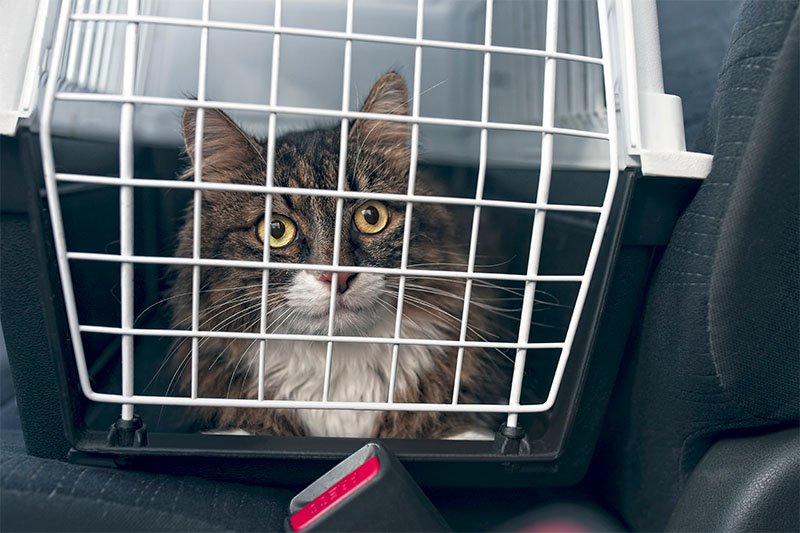
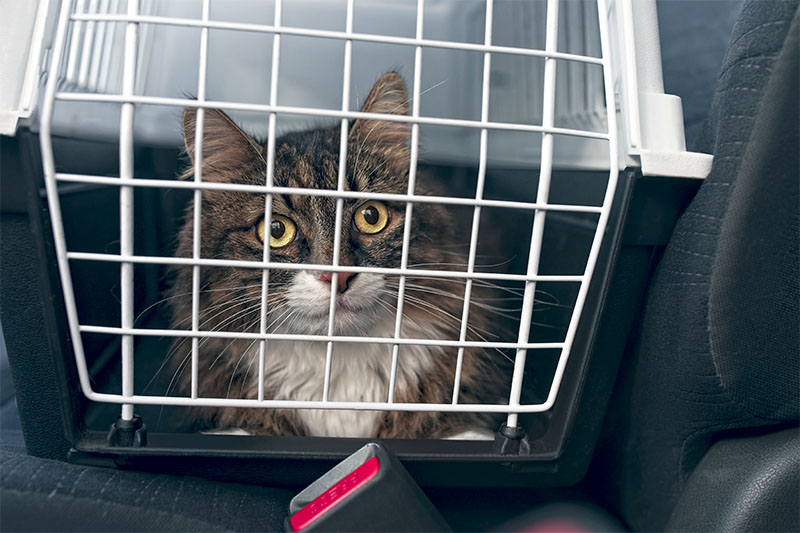
A carrier, just like a litter box, food bowls, or a scratching post, is a must-have in every cat’s home.Even if your cat enjoys being held or walks nicely in a harness and on a leash, a carrier is the piece of equipment that will ensure your cat’s safety in difficult, stressful situations or during long trips.It should be the right size (large enough for the cat to turn around and lie down comfortably inside) and made of durable, easy-to-clean materials.
The best option is one that can be split into two parts (top and bottom) or at least opened easily not only from the side but also from the top.This is particularly useful during a visit to the vet’s office, as many of the examinations can be performed on the cat without having to place it on the examination table, which is significantly less stressful for many animals.
Let’s also remember that the carrier must be suitable for our cat’s weight—if we don’t check its durability in this regard, we may find that the carrier gets damaged when carrying heavier animals (e.g., the handle might break off or the bottom might come loose)..
Transporting a pet carrier in a car
It turns out that the best place to put the carrier in the car is on the floor—preferably in the back, behind the passenger seat.However, if the container is too large to transport, you can place it on the floor in the front of the car or, in station wagons, in the trunk.With this last option, it’s a good idea to secure the carrier with straps so that it doesn’t shift or tip over while maneuvering during the drive.
Interestingly, fabric bags perform best in crash tests, provided that the force of the impact is distributed across a different plane than the zippers used to close the "container".On the other hand, so-called car seat belts—which can be attached to your pet’s harness—usually do not meet any safety standards and simply fall apart in the event of an accident.So their sole purpose is to keep your pet secure in the car so it doesn’t wander around the cabin while you’re driving, and we can’t expect anything more from them.
Minimizing stress while traveling
If your cat doesn't handle travel well, you can try to reduce some of the stress associated with it.We can therefore cover the carrier from the outside to limit the number of stimuli that reach the pet during the trip.It’s also a good idea to talk to your veterinarian about mild remedies to relieve stress and anxiety that you can give your cat before leaving the house (this is especially true in situations where a nervous cat has to visit the vet’s office).
For longer trips or with cats that get very anxious, it’s also a good idea to line the bottom of the carrier with a disposable liner (a soiled liner can be easily removed without even opening the carrier—in most carriers, you can pull it out from the bottom under the door and throw it away).
The cat is meowing on the way—what should I do??
It's best to just focus on reaching your goal.Many cats vocalize during transport to let their owners know they are unhappy and uncomfortable.The problem, however, is that it’s hard to get rid of that discomfort other than by simply ending the trip and arriving at your destination.So, unless it’s a long drive that might require stops along the way, it’s best to focus on getting to your destination as safely and efficiently as possible.
Summary
Even the most well-behaved and calm cat has the right to be frightened by something that happens to it outside the home.That's why you should never carry a cat outside in your arms without proper protection.If the pet breaks free and runs away, the chances of catching up to it and catching it are slim.So there’s no point in exposing him to unnecessary risks and stress.It’s best to make sure you have the right mode of transportation and that your pet is safe well in advance.
CAT BEHAVIOR EXPERT
Małgorzata Biegańska-Hendryk