
Breeding purebred cats – what do you need to know before choosing?
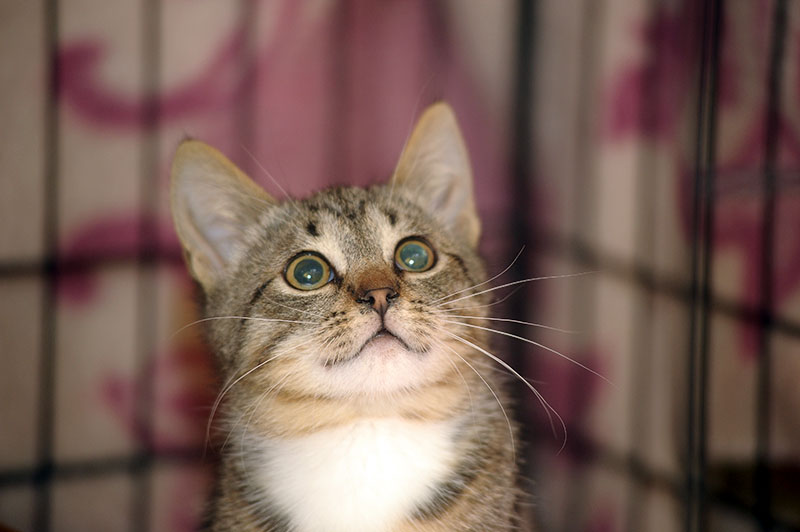
Although stray cats have a certain charm and are absolutely adorable, some people still dream of owning a specific breed.What matters to him may be the pet’s appearance, personality traits, or simply the assurance that the animal comes from a place where it received proper care from the very beginning.Exactly—are you sure??Unfortunately, breeders can vary greatly from one another, so it’s important to know how to choose the right one.
Is every legitimate cattery a good one?
Ten years ago, during the work on amending the Animal Protection Act, an attempt was made to address this issue through legislation.To curb the activities of unlicensed breeders, a provision was added to the law stating that animals in Poland may only be purchased from a registered breeder.The problem, however, is that there is no provision specifying where such a breeding operation is to be registered.The law refers only to breeders “registered with national civic organizations whose statutory purpose is to engage in activities related to the breeding of purebred dogs and cats”.
How can you tell if a breeder is reputable??
Below are a few key points that a good kennel should meet.After all, what matters most in all of this is the person and their attitude.That's why you always have to stay alert and pay attention to every detail so you don't miss anything.
- Membership in the relevant federations
– The World Cat Congress (WCC) is a global organization that currently brings together catteries; its member federations include: FIFe, TICA, WCF, and CFA – we consider only breeders issuing pedigrees with these emblems to be reliable sources from which we can purchase an animal.
- The ideal age to adopt a kitten
– A puppy leaving the kennel must be at least 12 weeks old, and responsible breeders often extend this age limit to as much as 16 weeks.This is related to the course of the early socialization period, which the kitten is supposed to spend entirely in the company of its mother and siblings.8- to 9-week-old kittens should not be placed in new homes.
- Neutering
– Any puppy that comes into our care must be neutered before arriving, unless it is purchased with the right to continue in the breeding program.This responsibility lies with the breeder.
- Pedigree
– Every cat, even those that will not be used for breeding in the future, should come to us with a pedigree.It serves as proof of the dog's lineage and, at the same time, is a document that could be helpful in the future—for example, if the dog is diagnosed with a condition that may have a genetic basis.
- Animal welfare
– It’s definitely better to choose so-called home-based breeders, where the cats are with their caretakers at all times, rather than places where, for example, the cats live in separate buildings and don’t interact with people 24 hours a day.This has a significant impact on their trust in people and can result in a cat, despite having excellent genes, simply being afraid of everyday sounds or the people around it in its new home.That is why proper socialization is very important.
- Research results
– If the cat belongs to a breed prone to certain genetic disorders (e.g., HCM in Maine Coon cats), the breeder should provide test results for the parents confirming that they are free of this condition.
- Cat Purchase Agreement
– It must be signed by both parties for the purchase of the cat to be legal.The kitten should also come with documentation detailing its medical history—preferably a health record that lists its vaccinations, deworming treatments, spaying or neutering, and any medical treatment it may have received.
- Chip
– Not all breeders’ associations require breeders to microchip their animals, but it’s better to choose breeders who do so, as this provides an extra layer of protection for the pet in the future—for example, if it goes missing—and also makes it easier to obtain a pet passport..
- Picking up the cat at the cattery
– because there is a legal ban in Poland on selling animals outside the facility where they were bred, the kitten must be picked up at the place where it was born and raised.That way, you can also meet his mom and siblings right away, as well as the other cats at the cattery.Their behavior can tell us a lot about the conditions in which our future pet grew up, and this is often important information.
- Contact us after your purchase
– It’s very important to have the breeder’s support, and staying in touch after purchasing a kitten allows the owner to address any concerns as they arise and provides better care for the little one.
The points above apply primarily to kittens, but the same rules apply when purchasing adult cats from a breeder.As you can see, choosing the right place for your feline friend to come from is a complicated matter, and it’s worth giving it the attention it deserves.
CAT BEHAVIOR EXPERT
Małgorzata Biegańska-Hendryk