
Brainwork – What Is It??
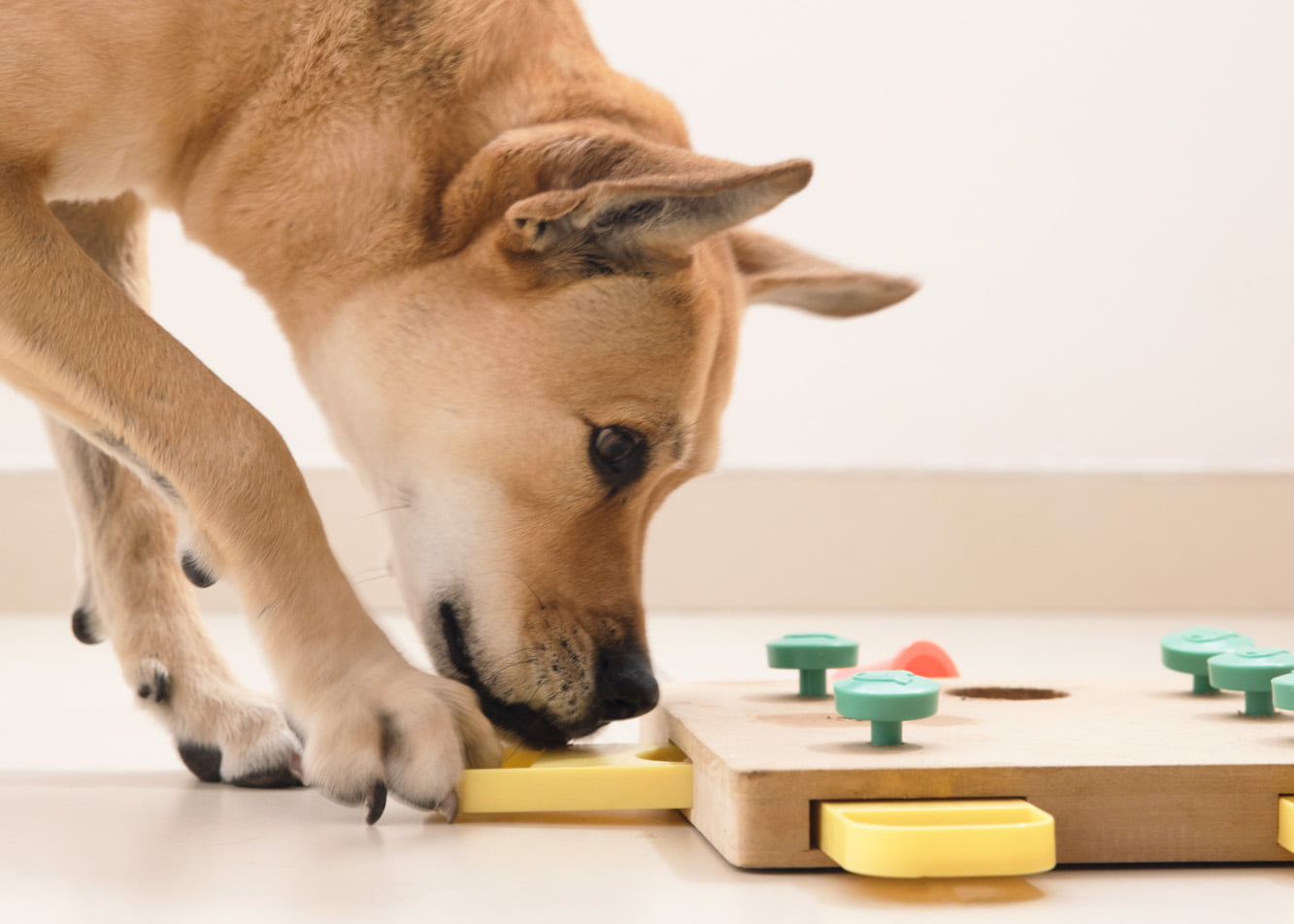
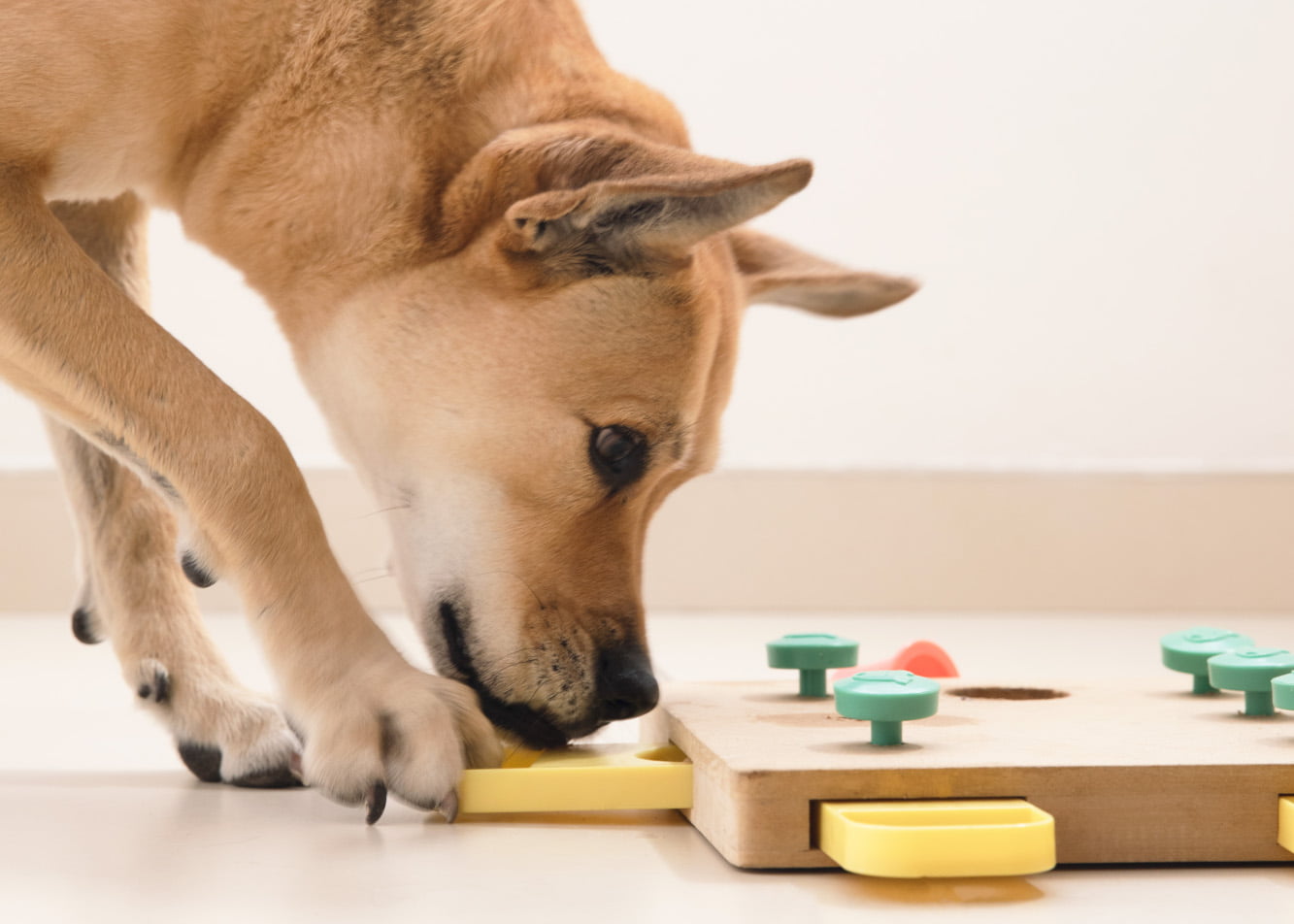
Brainwork is a set of games and activities for dogs that engage their sense of smell and their minds.The difference between nosework and brainwork is that, at a certain stage of training, the dog no longer relies on its strongest sense—smell—but engages its mind.This type of activity is an important part of a dog’s life, because even a small number of repetitions leaves him pleasantly tired.How to introduce brainwork, how it affects our dog, and how to engage your dog’s mind?
How brainwork affects a dog's mind?
Brainwork primarily develops cognitive abilities and teaches dogs to focus.The tasks are designed so that your pet always succeeds.This affects his self-confidence, which is very important for any living being.The mental activities are designed to be suitable for every dog—both shy and bold dogs will enjoy them.
Mental stimulation is good exercise for a dog.It’s a good idea to start recording your training sessions with your dog right from the start; this helps improve your teamwork and makes it easier to assess your progress.
How to implement brainwork?
When introducing any new skill, puzzle toy, or trick, we need to do so gradually so as not to discourage the dog or cause frustration.There are tons of toys on the market with various trapdoors and hiding places.Each one is divided into difficulty levels, which also makes it easier for caregivers to decide which toys to start with.However, to get started, we don’t need any special equipment—items found around the house will do just fine.
Ideas for mental stimulation
Homemade toys aren't just cost-effective; they also allow you to keep improving them and increasing their difficulty level.However, before we start making our own brainwork toys, we need to keep safety in mind.It’s possible that the toy we come up with will have small, loose parts.Some dogs will ignore them, while others may grab them with their teeth; in such situations, we need to watch the dog and, if necessary, distract it with treats and remove the item in question.
Here are a few ideas for toys you can make yourself:
- Cups—we all have plastic cups—like the ones used for sour cream or yogurt.You can make as many as two toys out of them.The first step is to thread a string through them and hang them up.The dog has to nudge it with its nose or paw to turn it so the treats fall out of the bowl.Some people use bottles instead of cups for this game, which can make it more challenging.However, it's better to hang the bottles on a rod rather than on a string.However, whether we’re working with mugs or bottles, if we hang the items lower, it will be easier for the dog to get the treats.Another way to use the cups is in a game where you have several of them, and you fill one with your pet’s favorite food, such as dry food.Each one is filled with paper.The dog must use its nose to find out where the food is, and once it does, it must retrieve it.
- A towel, a blanket, or a scarf—these are other items that might come in handy for several Brainwork challenges.The first game could be "roll" or "sushi".We roll the fabric into a tube, hiding the treats inside, and place a paper ring around it.The dog's task is to remove the ring and get the treats out of the roll.In the simpler version, we roll up the fabric without using a ring, and the dog simply unrolls it to eat the contents.We can also hide the treat roll in a cardboard box or among other objects, which will make the task more difficult.
- Paper rolls, egg cartons, and cookie cutters can also be turned into toys.A very common method involves pouring treats inside and sealing it on both sides; instead of folding the ends over, you can insert a piece of material to block access to the food.You can also use paper egg cartons, which your dog will have to open or tear apart.And when we want to try something different, we can use a muffin tin.Place the food or treats in the indentations and cover them with the balls.The dog will have to pick them up to get the treat.
Summary
There are plenty of ideas for brain games, and coming up with them is also good practice for caregivers.Let’s remember that a dog may have a different approach to solving a puzzle than its owner, which is perfectly acceptable.That is why, during brainwork, we do not correct the dog if it does something differently than we planned.The most important thing is that he solves the puzzle on his own, in his own doggy way.
